
Are exosomes in skincare safe or banned?

Quick answer: Are exosomes in skincare a good idea right now?
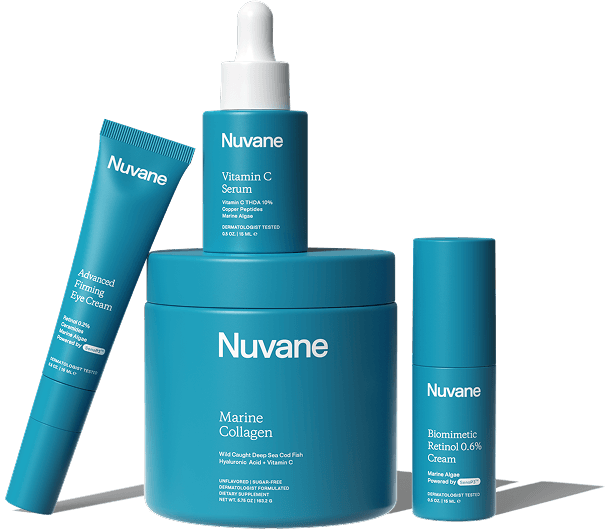
In short: not yet. Topical exosomes are biologically intriguing, but human-origin exosomes are not allowed in UK cosmetics, and the current consumer market suffers from variable sourcing, inconsistent quality control, and unresolved biosafety questions (including virus co-isolation risks). If you want “intelligent signaling” without the regulatory and safety baggage, biomimetic peptides—such as Nuvane’s SenoP3 peptide technology—are the safer, well-characterised alternative.
Key takeaways
- UK position: A UK government spokesperson has confirmed human-origin exosomes are banned in cosmetics sold in the UK; related enforcement sits under the UK Cosmetics Regulation framework. Consumers should report concerns to their local Trading Standards office or Citizens Advice.
- Biosafety gap: Exosomes overlap in size and biophysical traits with enveloped viruses; common enrichment methods can’t guarantee perfect separation, raising theoretical contamination risks for poorly controlled cosmetic products.
- Evidence is early: Published reviews note heterogeneous sources, small trials, and limited standardisation in cosmetic-grade exosome products—hype exceeds validation.
- Practical alternative: Biomimetic peptides deliver targeted cell-communication benefits with defined sequences, doses, and cosmetic-grade manufacturing—a better fit for 2025–2026 skincare trends and for Nuvane’s SenoP3 approach.
What exactly are exosomes in skincare?
Exosomes are nano-sized extracellular vesicles (≈30–150 nm) that cells release to shuttle proteins, lipids, and nucleic acids. In aesthetics, they’re marketed for post-procedure recovery and rejuvenation. Unlike single, defined cosmetic actives, exosomes are complex biologics whose cargo and potency vary with cell source, culture conditions, and processing, which complicates safety, quality control, and labeling for consumer products.
How are exosomes different from familiar cosmetic actives?
- Nature & complexity: Heterogeneous vesicles with multi-cargo payloads vs. single, defined molecules (e.g., peptides).
- Manufacturing: Cell culture + vesicle isolation vs. synthetic peptide chemistry with sequence-level purity.
- Dosing transparency: Cargo variability vs. clear dose–response for peptides.
- Regulatory pathway: Human-origin exosomes implicate human biological frameworks; peptides follow conventional cosmetic ingredient pathways when used at cosmetic levels.
Why does the source of exosomes matter so much?
Exosomes can be derived from plants, fish tissue, cultured animal cells, or human donor material. Source determines regulatory status and risk. Human-origin exosomes are prohibited in UK cosmetics; other sources may be permitted only if the product remains within the cosmetic scope (with no medicinal intent) and meets safety/labeling rules.
What about injections or post-microneedling exosomes?
In the UK, injectable exosomes are treated as medicinal products without marketing authorisation. Even for topical use (e.g., after microneedling), practitioners must avoid using human-origin exosomes and ensure that any non-human material complies with cosmetic law and substantiates claims.
Are there specific safety risks consumers should know about?
Yes. Reviews highlight methodological challenges in purifying exosomes without co-isolating viruses because they share overlapping diameters, densities, and membranes; ultracentrifugation, PEG precipitation, and other routine methods can enrich both. These are precisely why medicinal applications use stringent, multi-step validation—a bar the cosmetic market hasn’t standardised.
Could exosomes over-stimulate unwanted pathways?
Potentially. Exosomes can carry growth factors and microRNAs that modulate cell behaviour. In uncontrolled or concentrated formats, stimulation could be undesirable for certain conditions. Current consumer products rarely disclose cargo, dose or release testing to medical-grade standards.
How strong is the cosmetic evidence base today?
There are encouraging in-vitro data and small early studies, but rigorous, standardised, peer-reviewed cosmetic trials remain limited. Several independent reviews emphasize that formulations, sources, and doses vary widely, making cross-product claims unreliable for consumers.
What exactly is banned in the UK—and why does that matter to you?
A Department for Business and Trade spokesperson has confirmed: “Exosomes of human origin are banned in cosmetics sold in the UK.” If you’re a consumer, that means any clinic or product claiming human-derived exosomes is out of compliance with the UK framework for cosmetics. Report concerns to your local Trading Standards office or Citizens Advice.
How do exosomes compare with biomimetic peptides?
Bottom line: If you want defined signaling with transparent safety and dose control, biomimetic peptides are the safer, more predictable route in 2025–2026.
What are biomimetic peptides, and why are they the safer bet?
Peptides are short, synthetic (or nature-identical) sequences designed to mimic precise biological messages—e.g., signal peptides (matrix support), carrier peptides (trace mineral delivery), neuro-modulating peptides (expression lines), and enzyme-inhibiting peptides (protease balance). They benefit from decades of cosmetic use, sequence-level quality control, and repeatable dosing.
Where does Nuvane’s SenoP3 fit?
SenoP3 is Nuvane’s triple-peptide strategy, designed to harmonize three pillars of youthful skin behavior: matrix support, barrier resilience, and senescence-aware calming—without human biologicals. (See Nuvane documentation for concentration ranges and pairing guidance.)
What does the science say about separating exosomes from viruses?
Why is separation difficult? Exosomes and many enveloped viruses overlap in size (tens to low hundreds of nm), density and membrane characteristics. Techniques like ultracentrifugation, PEG precipitation, and size-exclusion chromatography do not guarantee virus-free fractions without additional, stringent validation.
What this means for skincare: Until standardised manufacturing and release testing become routine for cosmetic exosome products—and regulators issue explicit technical guidance—the risk-benefit calculus favours avoiding exosome-labeled cosmetics, particularly those with unclear origin or documentation.
If I skip exosomes, what should I choose instead?
Peptide-forward strategies with the strongest track record include:
- Signal peptides for collagen/ECM homeostasis.
- Barrier-support peptides paired with lipids/ceramides to reduce TEWL.
- Neuro-relaxing peptides for expression-line softening.
- Antioxidant/anti-inflammatory peptide systems to blunt photoaging cascades.
- These categories have defined dosing and reproducible purity, aligning with consumer safety expectations.
What trends will shape peptide science in 2026—and where does SenoP3 land?
Expect multi-peptide ensembles, smarter delivery systems (e.g., micro-emulsions, film-formers), and senescence-aware design that balances renewal with tolerance. Transparency—publishing dose, purity, and in vitro/in vivo endpoints—will separate science from hype. SenoP3 aligns with these themes by focusing on multi-pathway renewal without cellular cargo.
How should I build a peptide-first routine if I’m avoiding exosomes?
Goal: consistent signaling + barrier integrity + photoprotection.
AM (daily)
-
Gentle cleanser → 2) Antioxidant/peptide serum → 3) Barrier peptide moisturiser → 4) Broad-spectrum SPF (last).
PM (daily)
-
Cleanser → 2) Signal-peptide serum (collagen support) → 3) Lipid/ceramide-peptide cream.
2–3×/week
Low-irritation exfoliation; avoid stacking strong actives on the same night to protect the barrier and peptide efficacy.
Clinic add-ons
Request peptide-enhanced aftercare rather than any exosome-labeled product; ask for INCI lists and concentrations.
How long will it take to see results with peptides?
Most peptide routines deliver hydration and smoothness within 2–4 weeks and texture/firmness improvements within 8–12 weeks, assuming consistent use and daily SPF application. This mirrors the timelines for epidermal turnover and dermal remodeling reported across the peptide literature.
What are the most common myths about exosomes in beauty?
- “If it’s offered in a clinic, it must be legal.” Not necessarily—human-origin exosomes are not allowed in UK cosmetics, and clinics have removed promotions after inquiries.
- “Plant exosomes are the same as human exosomes.” No—composition and cargo differ; claims must be source- and dose-specific.
- “Exosomes are just like peptides.” They’re not. Exosomes are heterogeneous biologics; peptides are defined molecules with clear dose, purity and mechanisms in cosmetics.
How does Nuvane approach science-backed skincare without exosomes?
Goal: Deliver smart signaling with safety and clarity.
Nuvane prioritises biomimetic, non-cellular actives at transparent, cosmetic-appropriate dosing. The SenoP3 peptide system reflects this philosophy: a tri-axis design balancing matrix cues, barrier signaling, and senescence-aware calm—without human biologicals. For product-level details (INCI names, concentrations, pairing), see the Nuvane project documentation and ingredient list.
FAQs
1) How do I verify if a product contains human-origin exosomes?
Request the INCI list and source documentation. If the brand can’t confirm non-human origin, avoid it; human-origin exosomes are not allowed in UK cosmetics.
2) Are “exosome-inspired” or “exosome-like” products safer?
Often, they’re synthetic vesicles or peptide-lipid systems, rather than true biologics. Still assess dose, data, and safety.
3) Can exosomes be safe if manufactured perfectly?
Medicinal-grade processes can mitigate risks, but cosmetics aren’t regulated to the same standard. Until standards and approvals are in place, consumers shouldn’t shoulder that risk.
4) What should clinics use post-microneedling instead?
Barrier-supporting peptides, hyaluronic aci,d and ceramides with transparent INCI and concentrations have established safety.
5) Do peptides replace retinoids?
Not necessarily. Peptides + retinoids can be complementary; peptides are often better tolerated for daily use and can maintain results between retinoid cycles.
6) How do I pair SenoP3 with my routine?
Use a SenoP3-containing serum or cream twice daily. Layer it with SPF in the morning and a gentle cleanser.
7) Are oral peptides helpful for skin?
Some oral collagen peptides have been shown to benefit hydration and dermal density; however, topical peptides remain the primary cosmetic route.
8) Will exosomes become mainstream later?
Possibly—if standardized manufacturing, source transparency, robust clinical trials, and clear regulation are implemented. Until then, peptide-led strategies are the safer, smarter choice.
Where can I learn more about Nuvane’s science—and what makes it unique?
For formulation-level data—including INCI names for the SenoP3 triple-peptide system (copper tripeptide-1, palmitoyl tripeptide-38, acetyl hexapeptide-8), supporting actives (e.g., retinol, niacinamide, THD ascorbate, ceramides, marine algae) and pairing guidance across the routine—consult the Nuvane project documentation and ingredient list. These references outline how SenoP3 targets matrix renewal, expression-line softening and resilience within cosmetically acceptable concentrations and routines, offering science-backed, non-cellular signaling that avoids the regulatory and biosafety pitfalls of exosome-labeled products.
References (PubMed-style)
[1] van Niel G, D’Angelo G, Raposo G. Shedding light on the cell biology of extracellular vesicles. Nat Rev Mol Cell Biol. 2018;19(4):213–228.
[2] Urbanelli L, Buratta S, Tancini B, Emiliani C. Extracellular vesicles and viruses: coevolution and shared properties. Membranes (Basel). 2023;13(4):397.
[3] Gurunathan S, Kang M-H, Kim J-H. Exosomal transmission of viruses: a two-edged sword. Cell Commun Signal. 2022;20(1):96.
[4] Chen L, Yi Y, Li J, et al. Exosomes in combating skin aging: mechanisms and challenges. Stem Cell Res Ther. 2025;16:474.
[5] Jang J, et al. Exosomes for skin treatment: therapeutic and cosmetic applications. Dermatol Adv Pract. 2024; review.
[6] Cicia D, et al. Bioactive peptides in cosmetics: categories and functions. Cosmetics. 2023;10(4):111.
[7] Office for Product Safety & Standards. Regulation 1223/2009 & the Cosmetic Products Enforcement Regulations (Great Britain). Updated May 4, 2023.
[8] Guardian reporting. UK clinics offering banned human-exosome treatments; government confirms ban in cosmetics. March 29, 2025.
[9] Enhance Insurance Knowledge Hub. Exosomes in Aesthetic Practice: UK classification and risks. 2024.
[10] Allure. Exosome product boom outpaces science; regulation gaps. 2025.
Related search terms:
“Are exosomes legal in UK cosmetics?”, “exosomes vs peptides skincare”, “virus contamination risk exosomes”, “biomimetic peptide routine”, “SenoP3 peptide technology”, “post-microneedling aftercare peptides”, “cosmetic product safety UK”, “UK exosome ban cosmetics”.
How to use this information right now
- If a product or clinic mentions exosomes, request source (human? plant? fish? cell-culture?), INCI and safety assessment.
- In the UK, avoid any product claiming human-origin exosomes; report concerns to Trading Standards or Citizens Advice.
- Prefer biomimetic peptide systems—including Nuvane’s SenoP3—for defined, reproducible signaling without the biosafety baggage of exosomes. See the Nuvane documentation and ingredient list for formulation-level details and to explore the brand’s unique, science-backed peptides and supporting actives.
Find the most effective anti-aging products for you by taking the free skin assessment.
Enjoyed this article? Add Nuvane as a preferred source on Google.