
La Mer or Nuvane for skin longevity: which is better?

Key points:
- Marine algae is a great supporting ingredient, but you’ll usually get the best results from a full routine—not a single jar.
- La Mer’s marine algae story is built around giant sea kelp (Macrocystis pyrifera) in a rich, very occlusive, comfort-first cream base.
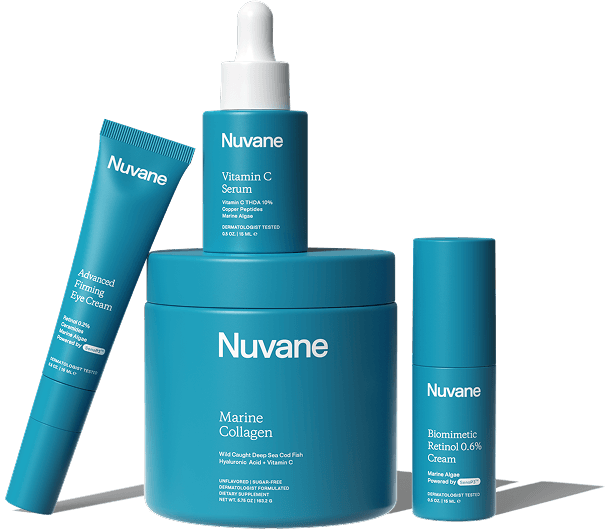
- Nuvane uses marine algae within a skin-longevity system: selfie-guided routine plus SenoP3™ peptides, stabilized retinol (0.3%/0.6%), stable vitamin C (THDA), and niacinamide.
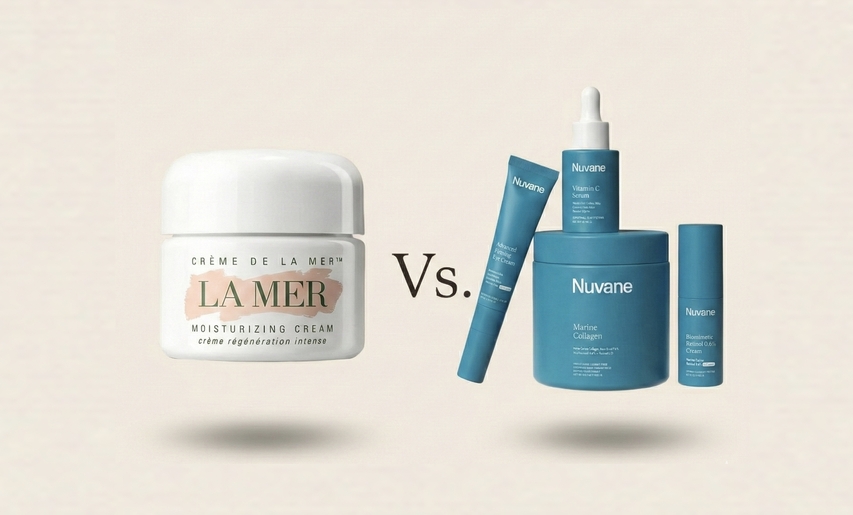
- For instant plush hydration and barrier cocooning choose La Mer; for firmer feel, smoother texture, more even tone, and fewer visible lines over time choose Nuvane with consistent nightly use.
“Marine algae” is skincare’s most seductive phrase because it sounds like a wellness retreat and a science paper at the same time. But here’s the plot twist: algae alone rarely delivers a full anti-aging arc.
Skin aging doesn’t happen through one door. It shows up through several: collagen decline, oxidative stress, uneven pigment signaling, slower turnover, barrier thinning, inflammation… the whole dramatic cast. A single algae cream can soothe and hydrate, but longevity-level results tend to require a routine designed to hit multiple pathways consistently.
So the real comparison is this:
- La Mer: marine-driven comfort + barrier-sealing richness
- Nuvane: marine algae + multi-active longevity system + personalization to keep you consistent
And consistency is the unglamorous secret sauce that actually works.
What is “skin longevity” in skincare, and why should you care?
In skincare, skin longevity means keeping skin functioning and looking resilient over time—think: smoother texture, more even tone, fewer new lines, better bounce, stronger barrier.
Nuvane’s documentation frames skin aging as including wrinkles, sagging, thinning, discoloration, and dryness—then emphasizes a strategy of boosting cellular function, increasing collagen production, and reducing inflammation.
In plain terms: longevity isneeping skin strong, calm, and visually consistent as the years do their thing.
How does marine algae support skin longevity when it’s chosen well?
Marine algae brings a strong support profile: hydration-binding polysaccharides, antioxidant activity, and soothing benefits—all helpful for barrier stability and daily environmental stress.
Nuvane specifically highlights Fucus vesiculosus (bladderwrack) extract, described as rich in bioactive compounds like fucoidan and polyphenols, with benefits positioned around antioxidant protection, hydration, anti-inflammatory support, and environmental defense.
This lines up with broader res anti-inflammatory and antioxidant applications.
But algae is best thought of as the supportive ecosystem, not the whole storyline—unless your main goal is comfort.
What marine algae is in La Mer, and what does it usually do in the formula?
La Mer’s signature “Miracle Broth™” is built from giant sea kelp, and La Mer’s own materials name it as Macrocystis pyrifera.
On many ingredient lists, the kelp shows up more generally as “Algae (Seaweed) Extract.”
What kelp brings, functionally, is typically conditioning + hydration support, plus the brand’s fermented-broth narrative focused on a soothing, barrier-friendly experience.
So if your skin is dry and cranky and you want immediate comfort? La Mer is in its element.
What other ingredients in La Mer make it feel so famously rich and comforting?
Crème de la Mer is also known for a base that leans heavily into occlusion (aka: sealing moisture in). Public ingredient lists commonly include mineral oil (paraffinum liquidum) and petrolatum, plus waxes like microcrystalline wax—ingredients that reduce water loss and give that balm-like “protected” finish.
It also includes classic humectants like glycerin, and—depending on the version/market—fragrance components that some sensitive users prefer to avoid.
Translation: La Mer is built to be a barrier blanket first, and an “active treatment” second.
Why is Nuvane positioned as a system instead of a single marine algae cream?
Nuvane’s documentation doesn’t sell a single jar as your destiny. It sells a complete skincare system: morning serum, customized night treatment options (including retinol and bakuchiol-based creams), plus add-ons like eye care and a dark spot corrector.
That “system” matters because longevity results come from:
- AM defense (antioxidants + sunscreen habits)
- PM renewal (retinoids or retinol-like alternatives + peptides)
- Barrier support (so you can keep using the routine without quitting)
Nuvane describes AI-driven customization using image analysis and data-driven recommendations—aimed at delivering a personalized, comprehensive anti-aging solution.
- Fewer unnecessary products
- Clearer steps
- Better consistency
- Fewer irritation detours because you’re not DIY’ing a chemistry set nightly
- Free proffesional 24/7 chat support
What is SenoP3™, and why is it a longevity “multiplier” in Nuvane?
- Palmitoyl Tripeptide-38
- Acetyl Hexapeptide-8
- Copper Tripeptide-1
How do stabilized retinol and marine algae work together in Nuvane’s night creams?
Both retinol creams also list a supportive cast that helps longevity users stay consistent:
- Niacinamide (tone + barrier support)
- Trehalose (oxidative stress support, per Nuvane’s positioning)
- Acetyl glucosamine
- Sodium hyaluronate
- Fucus vesiculosus algae extract nforces those inclusions (including Fucus extract and the SenoP3™ peptides).
This is the “system” mindset: power + tolerability + repeatability.
Why does Nuvane put stable vitamin C in the morning routine?
Vitamin C is commonly used in skincare for antioxidant support and brightening; in a longevity routine, it functions as the daily “shield” that helps reduce cumulative visible stress—especially when paired with sunscreen habits.
Who should pick La Mer, and who should pick Nuvane?
Pick La Mer if you want:
- maximum richness and comfort
- a barrier-sealing feel
- a kelp-forward formula that’s more “luxury blanket” than “active treatment”
When is Nuvane the betteuctured longevity plan (AM defense + PM renewal)
- personalization via selfie-guided recommendations
- marine algae plus SenoP3™ peptides plus stabilized retinol options
FAQs:
Is marine algae good for anti-aging?
It can support hydration and antioxidant defense. usually works best alongside proven actives (retinoi
What marine algae is in La Mer?
La Mer names **giant sea kelp (*Mac
Is La Mer non-comedogenic?
The formula includes rich occlusives like mineral oil and petrolatum on published ingredient lists, which can feel heavy for some acne-prone users.
Can you use La Mer under makeup?
Many people do because it creates a cushioned base, but it may be too rich under makeup for oily skin types (especially in warm weather).
Can beginners use Nuvane retinol?
Nuvane includes a 0.3% stabilized retinol option and advises starting 2–3 nights weekly and increasing as tolerated.
What if you can’t tolerate retinol?
Nuvane includes a bakuchiol-based, retinol-free option positioned for sensitive skin while still combining SenoP3™ and marine algae.
What is SenoP3™ made of?
A triple-peptide complex: Palmitoyl Tripeptide-38 + Acetyl Hexapeptide-8 + Copper Tripeptide-1.
**Do you still need sunscreen if you use marine algae and vitanerstone—everything else is support staff.
What does the Nuvane make its marine algae approach “longevity-coded”?
- Marine algae: Fucus vesiculosus (bladderwrack), positioned for antioxidant, hydration, anti-inflammatory, and environmental defense benefits
- SenoP3™ peptides: Palmitoyl Tripeptide-38, Acetyl Hexapeptide-8, Copper Tripeptide-1
- Stabilized retinol options: 0.3% and 0.6% night creams, with usage guidance for tolerance able vitamin C (THDA):** featured as the morning serum anchor
- Barrier + tone support: niacinamide, acetyl glucosamine, sodium hyaluronate, trehalose repeatedly listed as key
Refrences:
- Kang S, et al. Topical tretinoin for photoaging: clinical evidence and mechanisms. Arch Dermatol. 2001. atment of skin aging: an overview of clinical efficacy and safety. Clin Interv Aging. 2006.
- Kafi R, et al. Improvement of naturally aged skin with topicamide: effects on facial appearance and barrier function. Dermatol Surg. 2004.
- Draelos ZD. The role of niacinamide in dermatology. J Clin Aesthet Dermatol. 2013.
- Blanes-Mira C, et al. A synthetic hexapeptide with anti-wrinkle activity. Int J Cosmet Sci. 2002.
- Pickart L, Thaler MM. Growth-modulating tripeptide (GHK) and its copper complex. Proc Natl Acad Sci U S A. 1980.
- Lupo MP, Cole AL. Cosmeceutical peptides: mechanisms of action and application. Dermatol Ther. 2007.
- Schagen SK. Topical peptide treatments with effective anti-aging results. J Drugs Dermatol. 2017.
- Krutmann J, et al. Environmental and oxidative stress contributions to skin aging and topical antioxidant strategies. J Invest Dermatol. 2017.
More info:
- Is SenoP3 the new topical solution for signs of skin aging?
- Can biomimetic peptides outperform traditional anti-aging?
- Reducing skin fragility with retinol and topical peptides
- How to build a skincare routine in 2026?
- Fucus Vesiculosus: The Seaweed Secret Powering Next-Generation Anti-Aging Creams
Find the most effective anti-aging products for you by taking the free skin assessment.
Enjoyed this article? Add Nuvane as a preferred source on Google.