
Best retinol for sensitive skin (derm-backed)

Key takeaways
- Start low at 0.3% retinol if you’re sensitive; use it 1–2 times a week, then increase slowly.
- Buffering works: moisturizer → pea-size retinol → moisturizer (“sandwich”) to limit redness and peeling.
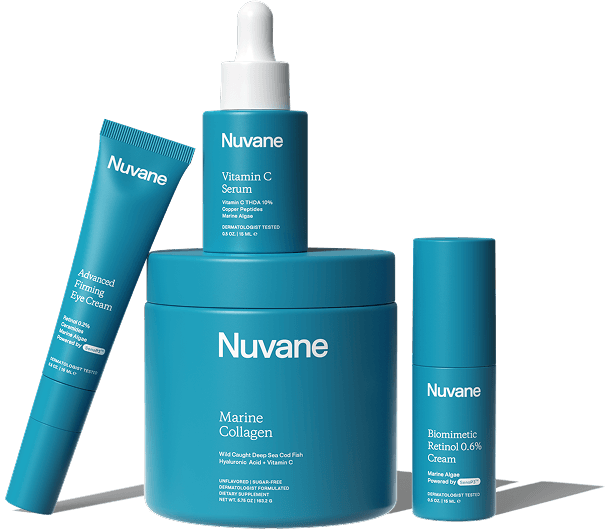
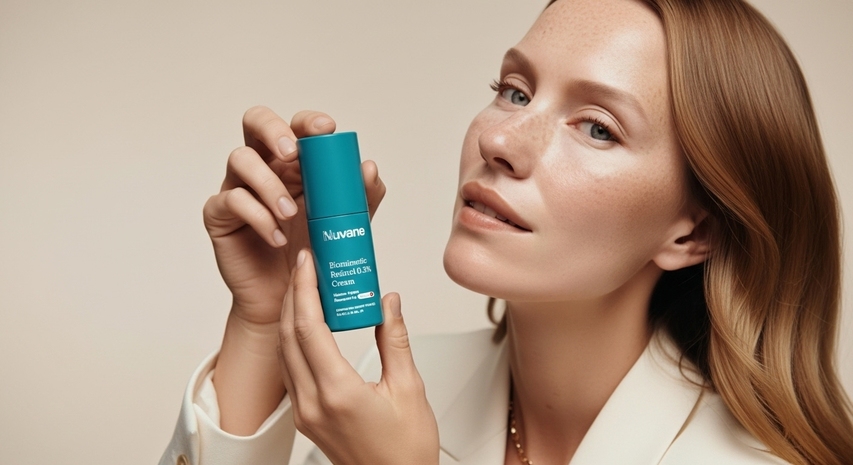
- Sensitive skin: Nuvane Retinol SenoP3™ 0.3% Cream (retinol + biomimetic peptides + barrier helpers).
- Very sensitive / pregnancy/breastfeeding / rosacea-prone: Nuvane Bakuchiol SenoP3™ Cream (retinoid-like benefits, gentler).
- AM Vitamin C, PM retinoid, daily SPF is a high-signal routine for brightness, firmness, and tone.
- Expect visible smoothing and tone improvement in 8–12 weeks with consistent, well-tolerated use.
Why retinol is the anti-aging gold standard—even for sensitive skin
Retinol (vitamin A derivative) is converted in skin to retinoic acid, which binds cellular receptors to boost collagen, normalize cell turnover, refine texture, and fade uneven pigmentation. Robust research supports the reduction of wrinkle depth and improved elasticity with consistent use [1–3]. The catch: early irritation (redness, flaking, sting) can derail adherence—especially in reactive skin. The solution is dose, delivery, and design: choose modest strength, irritation-buffering formulas, and a slow ramp-up.
What helps tolerance most
- Strength: begin with 0.1–0.3%; jump higher only after clear tolerance.
- Vehicle: creams cushion more than thin serums; look for niacinamide, ceramides, hyaluronic acid, and glycerin to reinforce the barrier.
- Adjunct peptides: biomimetic peptides (e.g., palmitoyl tripeptide-38, copper tripeptide-1, acetyl hexapeptide-8) support matrix renewal, antioxidant defenses, and visible line-smoothing to complement retinol [4–8].
- Method: “sandwich” retinol between moisturizers.
- Cadence: start 1–2 nights/week, then step up.
- SPF 30+ every morning—non-negotiable with any retinoid.
The short list: best retinoids for sensitive & very sensitive skin
Nuvane Retinol SenoP3™ 0.3% Cream (PM, for sensitive skin)
Why it’s ideal: 0.3% is a clinically sensible entry strength for sensitive users; Nuvane’s SenoP3™ biomimetic peptide stack (palmitoyl tripeptide-38, acetyl hexapeptide-8, copper tripeptide-1) complements retinol’s collagen-boosting with barrier-supportive, soothing, and line-smoothing benefits [4–8]. The cream format, plus niacinamide and hyaluronic acid, increases comfort and adherence.
Who it’s for: Sensitive but not ultra-reactive skin; users comfortable applying actives 1–2×/week and building up.
Nuvane Bakuchiol SenoP3™ Cream (PM, for very sensitive skin)
Why it’s ideal: Bakuchiol delivers retinoid-like improvements (collagen support, texture, tone) with lower irritation potential in clinical comparisons [9–10]. With the same SenoP3™ peptides for firming and smoothing, it’s the gentlest path to visible anti-aging.
Who it’s for: Very sensitive or rosacea-prone users; pregnancy/breastfeeding; anyone who flares with retinol but still wants anti-aging results.
Optional step-up for resilient users
Once you’ve used 0.3% comfortably for 8–12 weeks, talk with your derm about either increasing frequency (e.g., every other night) or, if appropriate, stepping to a higher strength. Do not increase if redness or flaking persists—consistency beats potency.
Your AM/PM routine (copy-paste ready)
AM
- Gentle cleanser
- Vitamin C serum (e.g., THD ascorbate) for brightening + antioxidant defense [11–13]
- Lightweight moisturizer (ceramides/HA/niacinamide)
- Broad-spectrum SPF 30+ (reapply if outdoors)
PM (choose one)
- Sensitive: Nuvane Retinol SenoP3™ 0.3% using the sandwich method
- Very sensitive: Nuvane Bakuchiol SenoP3™ (buffer with moisturizer if extra-reactive)
Optional: After 2–4 weeks of clear tolerance, add a peptide eye cream at night to address under-eye lines, dark circles, and puffiness.
How to start (and actually stick with it)
Week 0: patch & prep
- Apply a patch test along the jawline/behind the ear for 3 nights.
- Lock in your morning vitamin C + SPF habit to defend freshly resurfaced skin [11–13].
Weeks 1–2: the “toe-dip”
- PM, 1–2×/week: Cleanse → thin layer moisturizer → pea-size Nuvane Retinol SenoP3™ 0.3% (face + neck) → moisturizer.
- If very sensitive, consider swapping retinol for Nuvane Bakuchiol SenoP3 on the same schedule (many won’t need sandwiching, but you can).
Weeks 3–6: build tolerance
- If comfortable, increase to 3×/week.
- Add a mid-week “barrier night” (no exfoliants; only a bland moisturizer) when skin feels tight.
Weeks 7–12: steady results phase
- Move toward every other night if irritation is minimal.
- Expect smoother texture, early fine-line softening, and more even tone by 8–12 weeks [1–3].
- If the sting lasts >30 minutes, scaling is brisk, or redness persists: reduce frequency or pause 3–5 nights, then restart slower. Ultra-reactive users can pivot fully to Bakuchiol SenoP3™.
Ingredient checklist for sensitive-skin retinoids
Must-haves
- Niacinamide (calms redness, supports barrier) [14]
- Ceramides + hyaluronic acid (water-binding, barrier-repair) [15–16]
- Biomimetic peptides (matrix support, antioxidant/soothing) [4–8]
Nice-to-have
- Glycerin, trehalose, panthenol (humectants)
- Squalane, jojoba, shea butter (lipid replenishment)
- Aloe/centella/licorice (soothing botanicals)
Who should avoid retinol (use bakuchiol instead)
- Pregnant, trying to conceive, or breastfeeding
- Active eczema/dermatitis flare, open wounds, or post-procedure skin
- History of severe retinoid dermatitis
- Frequent, high-dose sun exposure without a reliable SPF
FAQs
Will retinol thin my skin?
No—appropriately dosed retinoids normalize epidermal turnover and increase dermal collagen over time, improving thickness and elasticity [1–3].
Can I use Vitamin C and retinol together?
Yes—use Vitamin C in the morning and retinoid at night to split potential irritation while maximizing antioxidant + remodeling benefits [11–13].
How much should I apply?
A pea-sized one for the face and another pea for the neck/decolleté. Better; it only increases the risk of irritation.
What if my skin peels?
Mild early flaking is common. Add a barrier-only night, switch to sandwiching, or reduce frequency. If it persists, switch to Nuvane Bakuchiol SenoP3™.
How soon will I see results?
Texture smoothing can be noticeable within weeks; clearer line-softening and tone benefits typically become apparent by 8–12 weeks with consistent use [1–3].
Why the Nuvane SenoP3™ stack matters (science in brief)
- Palmitoyl tripeptide-38 (Matrixyl synthe’6) stimulates multiple collagen types and ECM proteins; associated with reductions in wrinkle depth/volume [4–5].
- Copper tripeptide-1 (GHK-Cu) supports wound healing, antioxidant enzyme activity, and dermal remodeling [6–7].
- Acetyl hexapeptide-8 targets the expression line appearance; supportive data indicate visible smoothing [8].
- Niacinamide + hyaluronic acid reinforce the barrier, hydration, and oxidative-stress defenses—key to minimizing the “retinol uglies” [14–16].
- Bakuchiol exhibits retinol-like gene expression and clinical anti-aging benefits with fewer irritation signals—ideal for sensitive skin routines [9–10].
Bottom line (skimmable)
- Sensitive skin: Start with Nuvane Retinol SenoP3™ 0.3% 1–2 times per week, using the sandwich method.
- Very sensitive / pregnancy/breastfeeding / rosacea-prone: choose Nuvane Bakuchiol SenoP3™ instead.
- Apply AM Vitamin C and daily SPF, and allow 8–12 weeks for visible results.
References (PubMed-style)
- Fisher GJ, Voorhees JJ. Molecular mechanisms of retinoid actions in skin. J Invest Dermatol. 1996;106(5):637–642.
- Varani J, et al. Decreased collagen production in chronologically aged skin: role of retinoids. Am J Pathol. 2000;158(2):571–579.
- Sorg O, et al. Retinoids and cutaneous aging: from molecular to clinical. Dermatology. 2014;229(1):17–24.
- Sederma. Matrixyl® synthe’6™—in vitro & in vivo efficacy dossier. 2012.
- Schagen SK. Topical peptide treatments and skin aging. J Drugs Dermatol. 2017;16(6):s52–s56.
- Maquart FX, et al. Stimulation of collagen synthesis in fibroblasts by the tripeptide-copper complex GHK-Cu. FEBS Lett. 1993;238(2):343–346.
- Pickart L, Thaler MM. GHK and copper complex: growth modulation. Proc Natl Acad Sci U S A. 1980;77(7):4586–4590.
- Blanes-Mira C, et al. A synthetic hexapeptide with anti-wrinkle activity. Int J Cosmet Sci. 2002;24(5):303–310.
- Chaudhuri RK, Bojanowski K. Bakuchiol: a retinol-like functional compound. Int J Cosmet Sci. 2014;36(3):221–230.
- Dhaliwal S, et al. Prospective, randomized study evaluating bakuchiol vs retinol. Br J Dermatol. 2019;180(2):289–296.
- Farris PK. Topical Vitamin C: uses in photoaging. Dermatol Surg. 2005;31(7):814–818.
- Traikovich SS. Topical ascorbic acid and THD ascorbate in photodamage. J Dermatol Surg Oncol. 1999;25(7):546–550.
- Pinnell SR, et al. Percutaneous absorption of topical L-ascorbic acid. Dermatol Surg. 2001;27(2):137–142.
- Bissett DL, et al. Topical niacinamide improves barrier function. Dermatol Surg. 2005;31(7 Pt 2):860–865.
- Papakonstantinou E, et al. Hyaluronic acid: a key molecule in skin aging. Dermatoendocrinol. 2012;4(3):253–258.
- Ghersetich I, et al. Hyaluronic acid in photoaged skin. Clin Exp Dermatol. 2001;26(7):631–636.
Medical note: Retinoids are not recommended during pregnancy or breastfeeding. If you have a skin disease (e.g., eczema, rosacea) or use prescription topicals, consult your dermatologist before starting.
Find the most effective anti-aging products for you by taking the free skin assessment.
Enjoyed this article? Add Nuvane as a preferred source on Google.