
Can topical argireline really mimic botox?

Quick Answer
Argireline (acetyl hexapeptide-8) is not a one-to-one replacement for botulinum toxin injections—but it is the closest you can get to “Botox-like” effects without needles. It works as a topical, neuromodulating peptide that gently relaxes expression lines. Clinical data indicate that it can reduce wrinkle depth by approximately 20–30% within 30 days when used consistently, especially when combined with other actives, such as retinol, vitamin C, bakuchiol, and biomimetic peptides like SenoP3.
Key Takeaways
- Argireline is a “Botox-like” peptide, not a true substitute — it mimics part of the botulinum toxin mechanism at the skin surface but is milder, shorter-acting, and depends on daily use.
- Clinical studies report up to ~30% wrinkle depth reduction after 30 days of twice-daily use, especially around crow’s feet and forehead lines.
- When Argireline is combined with SenoP3™ (Palmitoyl Tripeptide-38, Copper Tripeptide-1, and Argireline), retinol, vitamin C, and bakuchiol, you get multi-pathway anti-aging: neuromodulation, collagen stimulation, antioxidant protection, and barrier repair.
- Nuvane formulas leverage this synergy by pairing SenoP3™ with retinol night creams, a stabilized vitamin C serum, bakuchiol cream, and targeted eye/dark-spot care—offering one of the most comprehensive injection-free strategies to soften lines and improve skin quality.
What does it really mean to call Argireline a “botox-like” peptide?
Argireline (acetyl hexapeptide-8) is a biomimetic neuropeptide designed to imitate part of the SNAP-25 protein, which is crucial for neurotransmitter release at the nerve–muscle junction. By mimicking this segment, it interferes with the assembly of the SNARE complex, so fewer neurotransmitters are released and the underlying facial muscles contract less intensely.
In simple terms:
Repeated expression → constant micro-contractions → etched-in lines.
Argireline reduces those micro-contractions → softer expression lines over time.
A foundational clinical study on Argireline reported that a cream containing 10% Argireline reduced the depth of periorbital wrinkles by up to 30% after 30 days of twice-daily use. However, unlike injectable botulinum toxin, Argireline:
- Only acts topically (does not reach deeper muscles the same way)
- Has a milder neuromodulating effect
- Requires continuous daily use to maintain results
So it is not a one-to-one injectable alternative, but it is one of the closest topical options we have in terms of mechanism and visible effect.
How do botulinum toxin injections and argireline differ mechanistically?
How does botulinum toxin smooth wrinkles?
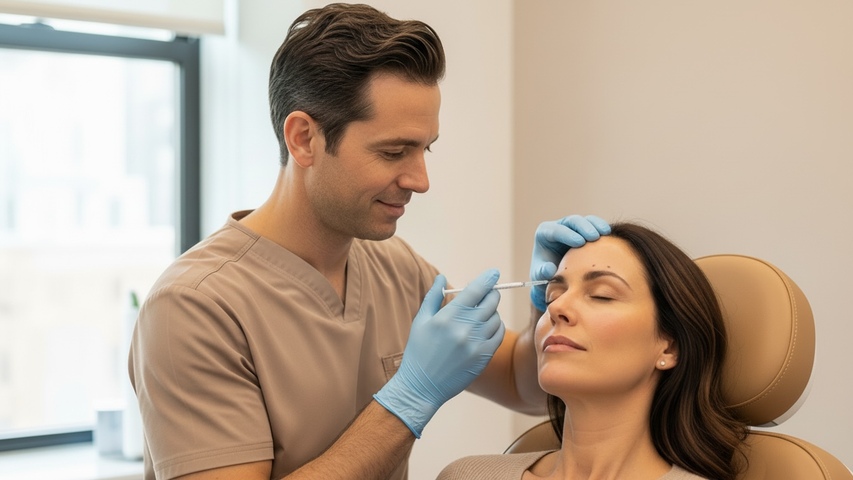
Botulinum toxin type A (what most people mean when they say “Botox”) is injected into target muscles. It:
- Binds to presynaptic nerve terminals
- Gets internalized into the neuron
- Cleaves SNARE proteins (like SNAP-25)
- Blocks acetylcholine release, leading to temporary, targeted muscle paralysis
This produces a strong, localized, and prolonged relaxation of the injected muscle and the overlying wrinkles.
How does Argireline work at the skin level?
Argireline, by contrast:
- It is applied to the skin surface
- Mimics the N-terminal end of SNAP-25
- Destabilizes SNARE complex formation
- Decreases the neurotransmitter release that drives repetitive micro-contractions
This gives a subtler, more superficial “muscle-relaxing” effect compared with injections.
Bottom line:
- Injectable neuromodulators: Deep, strong, long-lasting, but invasive.
- Argireline: Gentle, superficial, shorter-acting—but likely the closest you can get to neuromodulator-like results from a topical product when used correctly and consistently.
What does the clinical evidence say about argireline?
Which key studies support its anti-wrinkle effects?
- Blanes-Mira et al. (2002) demonstrated a 30% reduction in wrinkle depth around the eyes after 30 days of using 10% Argireline cream in healthy volunteers.
- Subsequent clinical reviews and onco-esthetic work have confirmed its utility not only for wrinkles but also for camouflaging scars and improving the visibility of dynamic lines.
- A recent dermatology review concluded that while the efficacy of pure Argireline varies between studies, multi-ingredient formulas containing acetyl hexapeptide-8 demonstrate more consistent and clinically meaningful wrinkle reduction, with a strong safety profile and no serious adverse events reported.
Reported benefits include:
- Reduced wrinkle depth and volume (especially crow’s feet and forehead lines)
- Softer expression intensity
- Smoother surface texture and improved perceived youthfulness
Why does argireline work better in multi-peptide complexes like Senop3™?
What is SenoP3™, and how does Argireline fit into it?
SenoP3™ is Nuvane’s triple biomimetic peptide complex, combining:
- Palmitoyl Tripeptide-38 – stimulates collagen I, III, IV, fibronectin, laminin-5, and hyaluronic acid, improving dermal density, elasticity, and wrinkle depth.
- Copper Tripeptide-1 (GHK-Cu) – boosts collagen and elastin, enhances wound healing, and improves antioxidant defenses, helping to repair UV-damaged skin.
- Acetyl Hexapeptide-8 (Argireline) – relaxes expression lines by modulating neuromuscular activity.
Together, they deliver:
- Up to 45% reduction in wrinkle depth in peptide-based clinical models
- About 25–30% improvement in firmness and elasticity versus generic moisturizers
In SenoP3™, Argireline is not alone—it is reinforced by structural and regenerative peptides that:
- Rebuild the extracellular matrix
- Improve the supportive “scaffolding” under the skin
- Provide a more botulinum-toxin-adjacent overall effect: less movement and stronger structure
This is why products containing SenoP3™ (such as Nuvane’s retinol creams, bakuchiol cream, eye cream, and dark spot corrector) can visibly smooth static and dynamic lines while also thickening and firming the dermis over time.
How does Argireline perform when combined with Retinol?
Why pair a neuromodulating peptide with retinol?
Retinol remains the gold-standard topical for:
- Increasing cell turnover
- Stimulating collagen
- Reducing fine lines and pigmentation
When you combine retinol + Argireline + SenoP3™:
- Argireline/SenoP3™ → relax expression lines and rebuild the matrix
- Retinol → accelerates renewal, refines texture, and boosts collagen
- Together → smoother surface, shallower folds, and less repetitive creasing over time
Nuvane’s Biomimetic Retinol 0.3% and 0.6% creams do exactly this: they pair stabilized retinol with SenoP3™, niacinamide, hyaluronic acid, trehalose, and marine algae to maximize anti-aging while buffering irritation.
This combination is particularly powerful for:
- Forehead lines
- Crow’s feet
- Nasolabial softening
- General loss of firmness and rough texture
How Does Argireline Work With Vitamin C and Antioxidants?
Why add vitamin C to an Argireline routine?
Vitamin C (especially stabilized forms like tetrahexyldecyl ascorbate) provides:
- Collagen support
- Brightening of uneven tone
- Potent antioxidant protection against UV and pollution
A peptide + vitamin C pairing tackles both movement-based wrinkles and environmental damage.
Nuvane’s Vitamin C serum utilizes a stable, lipid-soluble vitamin C, marine algae, copper peptides, and supportive actives, designed to be applied under peptide or retinol creams in the morning.
Used together with an Argireline/SenoP3™ product, vitamin C:
- Protects newly synthesized collagen
- Helps maintain the structural benefits from Palmitoyl Tripeptide-38 and copper peptides
- Brightens dull skin, so softened lines are less noticeable overall
How does Argireline synergize with Bakuchiol?
Bakuchiol is a plant-derived “phyto-retinol” shown to deliver retinol-like benefits (improved fine lines, firmness, and pigmentation) with less irritation, making it ideal for sensitive skin.
In Nuvane’s Biomimetic Bakuchiol Cream, bakuchiol is paired with:
- SenoP3™ peptides (including Argireline)
- Niacinamide
- Sodium hyaluronate
- Trehalose
- Marine algae
- Centella asiatica
This gives a “gentle anti-aging stack” for users who:
- Cannot tolerate strong retinoids
- Are you pregnant or breastfeeding (where retinoids are generally avoided)
- Have very reactive or barrier-impaired skin
The synergy looks like this:
- Argireline / SenoP3™ → reduce dynamic wrinkles and rebuild structure
- Bakuchiol → improves collagen, firmness, and even tone without classic retinoid irritation
- Niacinamide & algae → calm, brighten, and strengthen the barrier
For many users, this is the closest needle-free routine to injectable outcomes they can safely use daily.
In which Nuvane products can argireline and Senop3™ be found?
Within the Nuvane system, SenoP3™ (and thus Argireline) appears in:
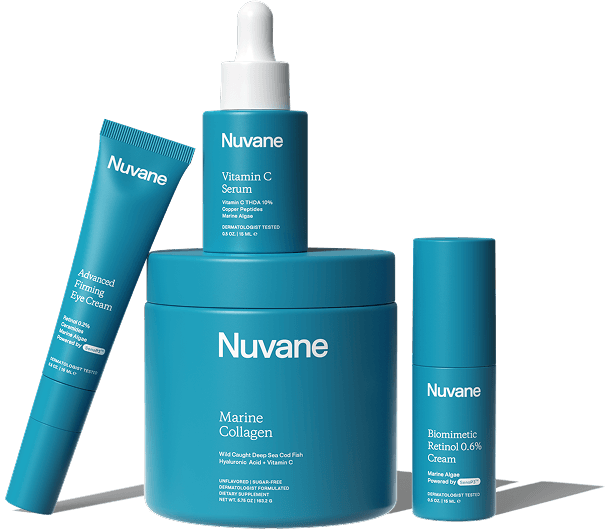
- Biomimetic Retinol 0.3% Cream – early anti-aging and prevention
- Biomimetic Retinol 0.6% Cream – advanced signs of aging
- Biomimetic Bakuchiol Cream – retinol-free alternative
- Advanced Firming Eye Cream – targeted for crow’s feet, puffiness, and dark circles
- Regenerative Dark Spot Corrector – combines brightening + peptide anti-aging
This integrated approach means you’re not relying solely on Argireline. You’re stacking:
- Neuromodulation
- Collagen remodeling
- Barrier support
- Brightening and antioxidant protection
— which is how you get the most “botox-like” visible improvement possible from completely topical, non-invasive skincare.
How should you use argireline-containing products for the best results?
What is an ideal daily routine with SenoP3™?
Morning
- Gentle cleanse
- Vitamin C serum (for protection and collagen)
- Peptide-rich moisturizer or SenoP3™ product if indicated
- Broad-spectrum SPF 30+ on all treated areas
Evening
- Cleanse
- Nuvane retinol or bakuchiol cream (depending on tolerance)
- Targeted SenoP3™ eye cream and/or dark spot corrector
- Hydrating moisturizer if needed
Consistent use over 8–12 weeks is essential for achieving maximum benefits in line depth, firmness, and skin texture.
FAQs
How close is Argireline really to botulinum toxin injections?
It works on a similar neurotransmitter pathway, but only at the skin surface, and with significantly lower potency. It is not a one-to-one alternative—but from a topical perspective, it is one of the closest functional analogs currently available.
How long will it take to see results with Argireline?
Most studies report improvements in 30 days, with continued smoothing over 8–12 weeks when used twice daily.
Can Argireline replace my neuromodulator injections entirely?
For deep, established dynamic wrinkles, injections remain the stronger option. Many people use Argireline-rich products to extend the time between injection visits or as a gentler alternative when they prefer to avoid needles.
Is Argireline safe for long-term daily use?
Yes. Published data and reviews indicate a favorable safety profile, with no serious adverse events reported when used topically in cosmetic concentrations. MDPI+1
Can I layer Argireline with retinol?
Absolutely. They target different mechanisms and complement each other. Nuvane’s biomimetic retinol creams are formulated precisely this way, adding SenoP3™ to retinol for enhanced results with minimal irritation.
What about vitamin C or acids—are they compatible with peptides?
Yes. Vitamin C, niacinamide, and gentle acids can be used in conjunction with Argireline as part of a structured routine, especially in professionally formulated systems like Nuvane’s, where pH and compatibility are already controlled.
Is it more effective to use Argireline in a targeted serum or as part of a full routine?
Evidence suggests that multi-ingredient formulas and comprehensive regimens (peptides + retinoids/vitamin C, hydration, and SPF) deliver more consistent and visible results than single-ingredient serums alone.
References
- Blanes-Mira C, Clemente J. A synthetic hexapeptide (Argireline) with anti-wrinkle activity. Int J Cosmet Sci. 2002;24(5):303–310.
- Palmieri B, Noviello A. Skin scars and wrinkles temporary camouflage in dermatology and oncoesthetics: focus on acetyl hexapeptide-8. Clin Ter. 2020;171(6):e539–e548.
- Hirpara BA, Pham C. Acetyl hexapeptide-8 as a topical alternative to botulinum toxin: a review of the literature. J Drugs Dermatol. 2024;23(4):876–880.
- Mukherjee S, Date A. Retinoids in the treatment of skin aging. Clin Interv Aging. 2014;9:473–480.
- Dhaliwal S, Rybak I. Prospective, randomized, double-blind assessment of bakuchiol and retinol for facial photoageing. Br J Dermatol. 2019;180(2):289–296.
- Schagen SK, Zampeli V. Topical peptide treatments with effective anti-aging results. J Drugs Dermatol. 2017;16(6):s50–s55.
- Pullar JM, Carr AC. A review of vitamin C’s role in skin health. Nutrients. 2017;9(8):866–878.
- Wang JV, Saedi N. Scientific review of the aesthetic uses of botulinum toxin type A. Arch Craniofac Surg. 2021;22(1):1–9.
- Maramaldi G, Esposito E. Biomimetic peptides in dermatology and cosmetics: mechanisms and clinical use. Int J Cosmet Sci. 2020;42(6):559–570.
- Kang S, Griffiths CE. Topical retinoids in the management of photoaging. J Am Acad Dermatol. 1997;36(5 Pt 2):S29–S36.
Find the most effective anti-aging products for you by taking the free skin assessment.
Enjoyed this article? Add Nuvane as a preferred source on Google.