
How can anti-glycation skincare transform aging skin?


Quick Answer
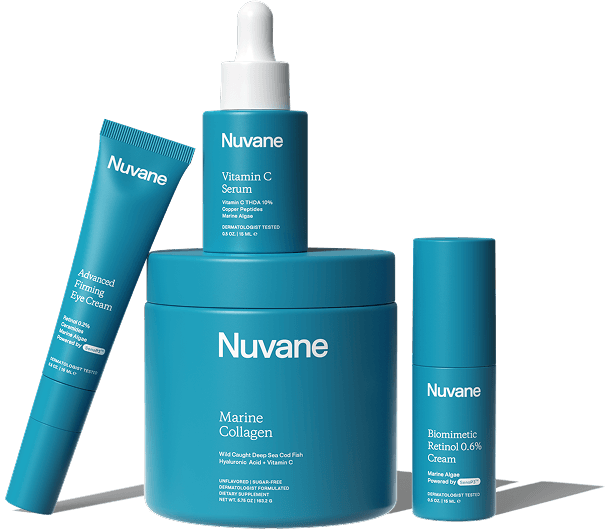
Anti-glycation skincare helps women over 40 combat one of the most overlooked causes of skin aging — sugar binding to collagen and elastin, forming stiff, brittle molecules known as Advanced Glycation End Products (AGEs). These weaken skin structure and accelerate wrinkles, sagging, and dullness. Nuvane’s SenoP3 complex combines peptides, antioxidants, and botanical actives to defend against glycation, rebuild resilience, and visibly rejuvenate mature skin.
Key Takeaways
- Glycation damages collagen and elastin, accelerating visible aging and loss of firmness.
- Anti-glycation ingredients protect and repair the skin matrix by preventing AGE formation.
- A low-glycemic diet and healthy lifestyle enhance skincare results.
- Nuvane’s SenoP3 complex offers multi-stage protection, combining plant antioxidants, peptides, and amino acids to restore youthful skin elasticity.
What Is Skin Glycation and Why Does It Matter After 40?
Glycation is a natural biological reaction between sugars (like glucose and fructose) and structural proteins such as collagen and elastin. These proteins form the skin’s internal scaffolding — the foundation of firmness, tone, and smooth texture. When sugar molecules attach to them, they form Advanced Glycation End Products (AGEs) — rigid compounds that make the skin less flexible and more prone to wrinkles and sagging [1].
After age 40, glycation accelerates due to slower cellular repair, hormonal changes, and decreased collagen renewal. The skin’s once-resilient framework begins to weaken, showing signs of laxity around the jawline, neck, and cheeks.
How Does the Glycation Process Affect Skin Over Time?
Glycation unfolds in three progressive stages:
- Attachment: Sugars bind to skin proteins.
- Transformation: These sugar-protein complexes undergo oxidation and turn into AGEs.
- Structural Breakdown: AGEs stiffen collagen fibers and trigger free radical damage, weakening surrounding cells.
This cascade — sometimes called the “caramelization of skin” — silently undermines firmness long before visible aging appears [2].
Why Is Glycation Worse After 40?
Women over 40 experience several biochemical shifts that intensify glycation:
- Reduced collagen turnover: Aging slows replacement of damaged proteins.
- Hormonal fluctuations: Estrogen decline diminishes the skin’s natural repair capacity.
- Lifestyle accumulation: Years of UV exposure, sugar intake, and stress compound AGE buildup.
- Oxidative stress: Diminished antioxidant defenses leave proteins more vulnerable to sugar damage [3].
- The result: a visible decline in firmness, radiance, and texture — often first noticeable around the eyes, mouth, and jawline.
What Are the Signs of Glycation on the Skin?
- Dull, uneven tone
- Sagging jawline and cheeks
- Fine lines that deepen quickly
- Rough or thickened skin texture
- Reduced elasticity, especially around eyes and mouth
Unlike dehydration or sun damage, these changes persist even with moisturizers, because they originate deep within the dermal structure.
How Do Anti-Glycation Ingredients Work in Skincare?
Anti-glycation actives target this internal process through three main mechanisms:
1. Prevention — Blocking Sugar-Protein Binding
Compounds like carnosine and aminoguanidine intercept sugars before they attach to collagen.
2. Interruption — Halting the AGE Cascade
Polyphenols, flavonoids, and peptides neutralize reactive molecules that trigger AGE formation.
3. Repair — Restoring Flexibility to Stiffened Proteins
Advanced peptides and bioactives stimulate fibroblast activity, encouraging new, healthy collagen to replace glycated fibers [4].
Together, these mechanisms deliver visible improvements in tone, firmness, and elasticity.
Which Ingredients Have Proven Anti-Glycation Effects?
Scientific studies highlight several bioactives effective against glycation:
- Carnosine: A dipeptide that traps reactive sugars and inhibits AGE formation.
- Green tea polyphenols: Powerful antioxidants that reduce oxidative stress.
- Centella asiatica extract: Rich in triterpenoids that stabilize collagen structure.
- Peptides: Signal fibroblasts to produce new collagen, improving resilience.
- Grape seed extract: Contains proanthocyanidins that prevent collagen crosslinking.
These compounds form the backbone of next-generation anti-aging formulations [5].
What Makes Nuvane’s Anti-Glycation Approach Unique?
Nuvane’s anti-aging strategy focuses on multi-level protection through its proprietary SenoP3™ complex — an advanced bioactive blend specifically engineered to address glycation at its source.
Nuvane’s SenoP3 Technology Includes:
- Biopeptide complexes that shield collagen from AGE-related stiffness.
- Plant-based antioxidants (including flavonoid-rich extracts) to neutralize free radicals.
- Amino acids and phytonutrient cofactors that restore protein flexibility.
- Botanical adaptogens that improve skin’s metabolic balance and resistance to oxidative stress.
Together, these components prevent new AGEs from forming, while encouraging the regeneration of smoother, more elastic tissue.
How Does Nuvane Support Skin Renewal Beyond Anti-Glycation?
Nuvane’s formulations don’t just prevent glycation — they help the skin actively recover from past damage. Ingredients work synergistically to:
- Reinforce dermal structure with collagen-supporting peptides.
- Improve microcirculation and nutrient delivery to skin cells.
- Enhance hydration retention within the extracellular matrix.
- Restore natural luminosity through cellular renewal.
This comprehensive strategy transforms the look and feel of mature skin — delivering results that extend beyond hydration into true structural rejuvenation.
How Do Lifestyle and Diet Influence Glycation?
Skincare alone can’t neutralize the full glycation burden — lifestyle factors also matter [6]:
- High-sugar foods: Spike glucose, accelerating AGE formation.
- Excess alcohol: Promotes oxidative stress and cellular dehydration.
- UV exposure: Stimulates glycoxidation in dermal collagen.
- Smoking: Generates carbonyl compounds that intensify sugar damage.
Best Practices for Low-Glycation Living
- Choose low-glycemic carbohydrates.
- Increase antioxidant-rich foods (berries, greens, omega-3 sources).
- Stay hydrated to support cellular detoxification.
- Prioritize quality sleep to reduce cortisol-driven glycation.
How to Build an Effective Anti-Glycation Skincare Routine
A targeted routine can optimize results:
- Cleanser: Use a gentle, antioxidant-rich formula to remove impurities without stripping the barrier.
- Serum: Apply a peptide- or carnosine-based serum morning and night.
- Moisturizer: Seal hydration with a collagen-supporting cream fortified with SenoP3.
- SPF: Daily broad-spectrum sunscreen prevents UV-induced glycoxidation.
- Weekly exfoliation: Encourage cell turnover for improved absorption of actives.
Pairing topical treatments with dietary mindfulness yields optimal skin restoration [7].
Why Clinical Data Matters in Anti-Glycation Skincare
Validated studies confirm that anti-glycation compounds can:
- Reduce collagen crosslinking [8]
- Improve measurable elasticity [9]
- Enhance visible firmness and tone [10]
Such findings distinguish clinically grounded skincare like Nuvane’s from superficial moisturizers or trend-based claims.
FAQs
1. What makes glycation different from other aging factors?
Glycation stiffens skin proteins from within, while sun and pollution damage occur externally. Both must be managed for complete anti-aging care.
2. Can I reverse glycation damage completely?
While existing AGEs can’t be fully removed, consistent use of anti-glycation products and lifestyle changes can dramatically restore elasticity.
3. Are anti-glycation creams safe for all skin types?
Yes. Most use non-irritating plant-based antioxidants and peptides suitable for sensitive skin.
4. How long until I see results?
Visible improvements in tone and firmness typically appear after 8–12 weeks of consistent use.
5. Can I combine anti-glycation products with retinol or vitamin C?
Absolutely. These combinations amplify collagen protection and rejuvenation.
6. Does Nuvane’s SenoP3 work on dullness as well as wrinkles?
Yes. SenoP3 supports microcirculation and antioxidant defense, restoring glow and even tone.
7. Is glycation only a concern after 50?
No. Glycation begins much earlier, but becomes more visible after 40, when collagen production declines.
8. How does Nuvane differ from typical anti-aging skincare?
Nuvane directly targets sugar-induced collagen damage — addressing one of aging’s root causes rather than its symptoms.
Conclusion: Why Target Glycation for Ageless Skin
For women over 40, glycation is one of the most underestimated yet transformative frontiers in skincare. By targeting the molecular bonds that stiffen collagen, anti-glycation skincare helps maintain the skin’s structure, smoothness, and youthful resilience.
Nuvane’s SenoP3™ complex, supported by advanced peptides, antioxidants, and amino acids, offers a multi-dimensional solution: preventing glycation, repairing existing damage, and reviving luminosity. Backed by scientific validation and evidence-based formulation, Nuvane represents the future of mature skin care — where beauty meets biochemistry.
References
- Brownlee M. Advanced glycation end products in skin aging. N Engl J Med. 2001.
- Gkogkolou P, Böhm M. Advanced glycation end products: Key players in skin aging? Dermatoendocrinol. 2012.
- Pageon H. Glycation and skin aging. Clin Dermatol. 2011.
- Vistoli G, et al. Advanced glycoxidation and lipoxidation end products: Mechanisms of formation. Free Radic Res. 2013.
- Katta R, Desai SP. Diet and dermatology: The role of dietary intervention in skin aging. J Clin Aesthet Dermatol. 2014.
- Draelos ZD. Anti-glycation skin care. J Cosmet Dermatol. 2018.
- Bissett DL, et al. Effective ingredients for anti-aging skin care. Dermatol Ther. 2017.
- Uribarri J, et al. Dietary AGEs and aging. Ann N Y Acad Sci. 2010.
- Monnier VM. Skin AGEs and collagen cross-linking. Gerontology. 2006.
- Cerami C. Role of AGE formation in skin aging and disease. Ann N Y Acad Sci. 1998.
Related Search Terms
anti-glycation skincare • AGEs and skin aging • collagen protection peptides • SenoP3 Nuvane ingredients • mature skin elasticity • anti-aging peptides • glycation prevention skincare • women over 40 skincare routines • Nuvane bioactive technology
Find the most effective anti-aging products for you by taking the free skin assessment.
Enjoyed this article? Add Nuvane as a preferred source on Google.