
How does low estrogen affect skin aging?


What is the quick answer on estrogen and skin aging?
Estrogen is a major “skin-support” hormone. When estrogen fluctuates (perimenopause) and then declines (menopause), skin commonly becomes drier, thinner, less firm, and more reactive, with faster collagen loss and slower repair. The most effective strategy is not a single ingredient, but a routine that targets the biology estrogen supports: collagen signaling, barrier lipids + hydration, antioxidant defense, inflammation control, and pigment regulation—with consistent sunscreen and a tolerable nightly renewal step.
- Estrogen decline can accelerate visible aging by reducing collagen and elastin support and dermal thickness—especially in the first postmenopausal years.
- Dryness and sensitivity are “hormone-signature” symptoms: the barrier becomes slower to recover and more reactive.
- A smart routine mimics estrogen’s protective roles using non-hormonal actives (signal peptides, retinoids or retinol-alternatives, stable vitamin C, barrier builders, and anti-inflammatory botanicals).
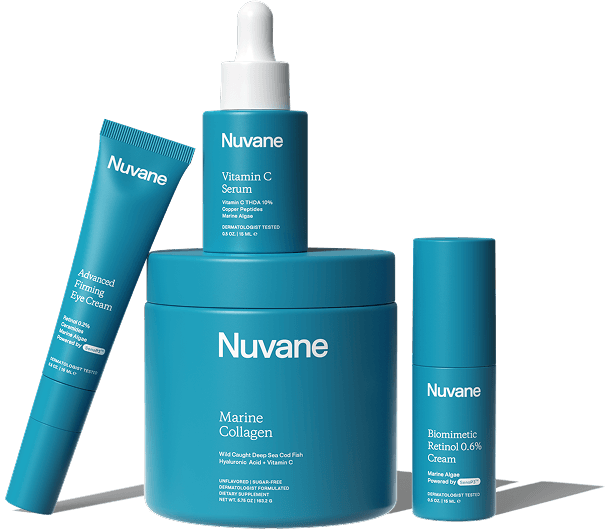
- Nuvane’s approach centers on SenoP3™ biomimetic peptides, along with clinically familiar actives (retinol, bakuchiol, stable vitamin C, niacinamide, marine algae, hyaluronic acid) to support firmness, tone, and resilience.
What is “hormonal skin aging”?
Hormonal skin aging refers to the structural and functional changes in the skin associated with shifting sex hormones, especially estrogen. While intrinsic aging happens gradually over time, estrogen decline can feel sudden: many people describe a rapid shift to skin that looks and feels “different,” including crepiness, dullness, new dryness, and less elasticity.
What are the most common signs of estrogen-related skin changes?
- Dryness that “doesn’t respond” to your usual moisturizer
- Increased sensitivity (stinging, redness, intolerance to actives)
- Loss of firmness (jawline/neck and under-eye, especially)
- Fine lines that deepen faster, texture changes, and slower healing
- Uneven tone (more visible hyperpigmentation patterns)
How is intrinsic aging different from extrinsic aging, and why does estrogen matter for both?
Intrinsic aging is driven by genetics and internal biology (including hormones). Extrinsic aging is driven by the environment (UV, pollution, smoking, stress, sleep). Estrogen matters because it influences how resilient your skin is to external stress—so when estrogen declines, the same sun exposure or stress load may suddenly produce more visible damage.
What does estrogen help skin do under normal conditions?
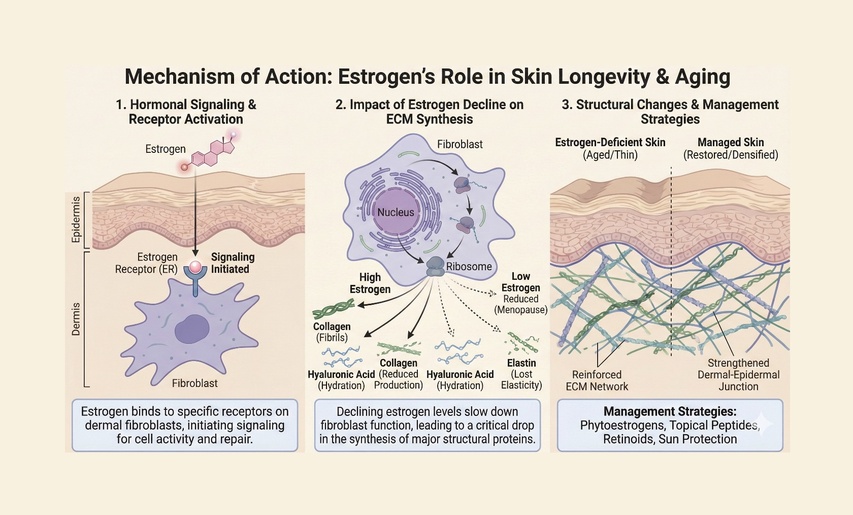
Estrogen interacts with receptors in skin cells (including keratinocytes and fibroblasts) and supports:
- Collagen and elastin maintenance (firmness + rebound)
- Hydration pathways (including natural moisturizing factors and glycosaminoglycans)
- Barrier recovery (less transepidermal water loss)
- Wound healing and turnover (smoother texture, faster recovery)
- Anti-oxidative and anti-inflammatory balance (less “inflammaging”)
Why does collagen loss accelerate when estrogen declines?
Collagen is the scaffold that keeps skin dense and firm. With estrogen decline, signaling for collagen production becomes less active, while signals for collagen breakdown can become more influential. The result is often a noticeable change in:
- Dermal density (skin feels thinner)
- Elastic recoil (less “bounce back”)
- Wrinkle depth (creases etch in faster)
What areas show hormonal aging first?
Common early “tell” zones:
- Neck and jawline (crepiness, laxity)
- Periorbital area (fine lines, puffiness, fragility)
- Perioral area (lines + texture changes)
- Hands and décolletage (thinness + pigmentation)
Why does menopausal skin get drier and more reactive?
Midlife dryness is often a barrier-repair issue, not just a hydration issue. When barrier recovery slows, skin loses water more easily and becomes more reactive to common stressors (wind, hot showers, strong actives).
What is the difference between “dry skin” and “dehydrated skin”?
- Dry skin: lacks lipids/oils (barrier feels compromised, flaky, rough)
- Dehydrated skin: lacks water (tightness, fine “crinkle” lines)
- Many people in perimenopause experience both, so your routine must include lipid support + water-binding hydration.
How should you assess hormonally aging skin at home or in a clinic?
Instead of focusing only on wrinkles, assess the four pillars:
Is your barrier resilient?
- Stinging with products that are never used to sting
- Persistent tightness after cleansing
- Flaking despite “rich” creams
Is your skin rebuilding collagen effectively?
- New laxity (jawline/neck)
- Skin looks “thinner” or more crepey
- Fine lines deepen faster
Is inflammation driving symptoms?
- Redness, flushing, rosacea-like sensitivity
- “Hot” or reactive skin without a clear trigger
Is pigment behaving differently?
- Dark spots are more noticeable or stubborn
- Uneven tone that returns quickly after treatment
What are the best non-hormonal strategies to support estrogen-depleted skin?
A high-performance, non-hormonal plan targets the same protective roles estrogen is used to cover:
How do you rebuild barrier strength first?
Look for routines that include:
- Ceramides + barrier-friendly emollients
- Humectants (glycerin, hyaluronic acid, trehalose)
- Gentle cleansing and fewer fragrance triggers
Nuvane formulas commonly pair humectants, such as glycerin, trehalose, and sodium hyaluronate, with barrier-supporting ingredients, such as ceramide NP, in key products.
How do you signal collagen without overwhelming sensitive skin?
Collagen support works best when you combine:
- Cell-communication peptides (signal peptides)
- A tolerable vitamin A pathway (retinol or retinol alternative)
- Antioxidant support (stable vitamin C, botanical polyphenols)
Nuvane’s core anti-aging complex centers on SenoP3™, a tri-peptide system designed to address firmness, lines, and resilience through multiple pathways.
What makes peptides especially relevant for perimenopausal and menopausal skin?
Midlife skin often needs high efficacy with low irritation. Biomimetic peptides can be ideal because they “signal” skin to behave more youthfully without relying on strong exfoliation.
What is SenoP3™ and how does it work?
SenoP3™ combines three biomimetic peptides:
- Palmitoyl Tripeptide-38 (supports extracellular matrix and dermal structure)
- Copper Tripeptide-1 (supports repair signaling and antioxidant defenses)
- Acetyl Hexapeptide-8 (helps soften expression-related lines)
Together, this peptide synergy is poised to improve the appearance of wrinkles, firmness, and texture compared with basic moisturization alone.
How do retinol and retinol alternatives fit into hormonally aging skincare?
Retinoids remain one of the best-studied topical categories for lines, texture, and tone. The key in midlife is dose + consistency + barrier buffering.
How can you choose between retinol and bakuchiol?
- Choose retinol if you want the most direct renewal pathway and can tolerate a gradual ramp-up.
- Choose bakuchiol if you are sensitive/reactive, pregnant/breastfeeding, or simply need a gentler nightly option.
Nuvane’s night options include retinol-based creams (0.3% and 0.6%) and a bakuchiol-based alternative, paired with supportive ingredients like niacinamide, acetyl glucosamine, trehalose, hyaluronic acid, and marine algae extract.
Why is stable vitamin C a smart “morning anchor” for midlife skin?
In estrogen-depleted skin, oxidative stress tends to feel louder—especially with UV exposure. A stable vitamin C derivative can help support radiance and antioxidant defense with less irritation.
Nuvane’s morning serum features tetrahexyldecyl ascorbate (THD ascorbate) alongside supportive ingredients and SenoP3™-adjacent peptide technology in the broader regimen.
What role do adaptogens and polyphenols play in estrogen-depleted skin?
When estrogen declines, skin can behave like it’s under chronic stress: more inflammation, more oxidative burden, slower recovery. Adaptogenic and polyphenol-rich actives (for example, resveratrol) are studied for their potential to:
- Help neutralize oxidative stress
- Support calmer inflammatory signaling
- Improve visible texture and resilience over time
Important nuance: Adaptogens don’t “replace estrogen.” They aim to support the stress-resilience pathways that become more important when estrogen is lower.
What is a practical Nuvane-style routine for hormonally aging skin?
What should you do in the morning?
- Gentle cleanse
- Stable vitamin C serum
- Moisturizer (barrier-supporting)
- Broad-spectrum sunscreen (non-negotiable)
Nuvane’s system is designed around a morning antioxidant step and a personalized night treatment, supported by SenoP3™ and barrier-friendly ingredients.
What should you do at night?
- Cleanse
- Choose one: retinol 0.3% (beginner), retinol 0.6% (experienced), or bakuchiol (sensitive skin)
- Optional targeted add-ons (eye, dark spot) as needed
Nuvane’s night creams include SenoP3™ peptides plus hydration and barrier-support actives; optional products include an advanced firming eye cream and a dark spot corrector with brightening and renewal ingredients.
How often should you increase retinol use in midlife skin?
- Start 2–3 nights/week
- Increase only when you’re calm (no stinging, peeling, or persistent redness)
- If irritation happens: reduce frequency, add richer moisturizer, keep sunscreen consistent
What should you know about “inside-out” support in midlife skin?
Skin aging is not only a surface issue—dermal structure relies on amino acids, antioxidant status, and a balance of overall inflammation. Nuvane’s system includes an oral hydrolyzed marine collagen approach positioned for inside-out support alongside topical care.
FAQs:
1) Why did my skin suddenly look older during perimenopause?
Hormone fluctuations can change barrier recovery, hydration, inflammation signaling, and collagen balance—so the visible shift can feel rapid even if your routine didn’t change.
2) Does estrogen loss mainly cause wrinkles or dryness?
Often both, but many people notice dryness and sensitivity first, then firmness changes, followed by deeper lines.
3) Can skincare “replace estrogen”?
No. Skincare can’t replace systemic hormones, but it can support the functions estrogen protects, especially the barrier, collagen signaling, and oxidative defense.
4) How long until I see results from a midlife-focused routine?
Barrier comfort can improve in days to a few weeks. Firmness and wrinkle changes typically take 8–12+ weeks of consistent use.
5) What if retinol irritates me now but didn’t before?
That’s common in hormonally changing skin. Reduce frequency, simplify actives, rebuild barrier support, and consider a gentler path (like bakuchiol) until tolerance returns.
6) What’s the difference between peptides and retinol?
Retinol drives cellular renewal pathways; peptides act as signals that can support firmness and texture with typically lower irritation potential—many routines use both strategically.
7) Should I focus on my neck differently from my face?
Yes. Neck skin is often the first to show hormonal changes and can be more sensitive to them. Use the same principles—barrier first, then gentle collagen signaling—without over-exfoliating.
8) Is sunscreen still necessary if my main issue is hormones?
Yes. Estrogen decline can make skin more vulnerable to UV-driven collagen loss and pigmentation—sunscreen is foundational.
References:
[1] Brincat M. Hormone replacement therapy and the skin. Maturitas. 2000.
[2] Calleja-Agius J, Brincat MP. The effect of menopause on the skin and other connective tissues. Gynecol Endocrinol. 2012.
[3] Thornton MJ. Estrogens and aging skin. Dermatoendocrinol. 2013.
[4] Verdier-Sévrain S. Effect of estrogens on skin aging and the potential role of SERMs. Clin Interv Aging. 2007.
[5] Affinito P, et al. Effects of postmenopausal hormone therapy on skin collagen. Menopause. 1999.
[6] Kligman AM, et al. Topical retinoids in photoaging: clinical and histologic effects. J Am Acad Dermatol. 1986.
[7] Mukherjee PK, et al. Bakuchiol: a retinol-like functional compound for acne and photoaging. Int J Cosmet Sci. 2014.
[8] Ratz-Łyko A, Arct J. Resveratrol as an active ingredient for cosmetic and dermatological applications. J Cosmet Laser Ther. 2019.
[9] Baumann L. Skin ageing and its treatment. J Pathol. 2007.
[10] Farage MA, Miller KW, Maibach HI. Characteristics of the aging skin. Adv Wound Care. 2013.
Find the most effective anti-aging products for you by taking the free skin assessment.
Enjoyed this article? Add Nuvane as a preferred source on Google.