
How is mitochondrial health crucial to your skin’s longevity


Quick Answer:
Healthy mitochondria are the powerhouses behind your skin’s youthful glow. They fuel every cell repair, collagen synthesis, and detoxification process. When mitochondrial function declines, the skin loses its firmness, elasticity, and radiance, accelerating visible aging.
Key Takeaways
- Mitochondria provide the cellular energy that powers collagen production, skin renewal, and antioxidant defense.
- Damaged mitochondria accelerate visible aging by increasing oxidative stress and reducing cell turnover.
- Supporting mitochondrial health through a balanced diet, targeted skincare actives, and healthy lifestyle habits can help extend skin vitality.
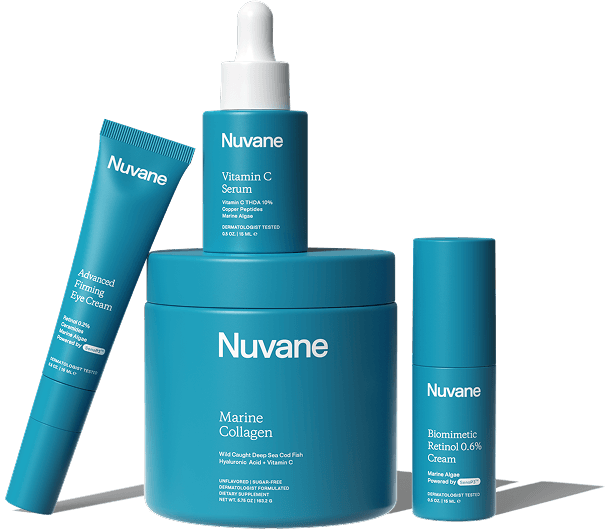
- Nuvane’s formulations, such as SenoP3, utilize bioactive ingredients specifically designed to enhance mitochondrial function and protect against oxidative stress.
What Exactly Are Mitochondria, and Why Do They Matter for Skin?
Mitochondria are specialized organelles often described as the power plants of our cells. They generate adenosine triphosphate (ATP), the molecule that supplies energy for all cellular activities — from protein synthesis to detoxification.
In the skin, mitochondria are present in every cell, particularly in fibroblasts and keratinocytes. These cells rely heavily on ATP to produce collagen, elastin, and protective lipids that maintain the skin barrier.
When mitochondrial efficiency declines — due to age, UV exposure, pollution, or stress — skin cells lose their capacity to renew. This manifests as wrinkles, dullness, loss of firmness, and slower wound healing.
How Does Mitochondrial Decline Contribute to Visible Skin Aging?
The aging process is deeply linked to mitochondrial decline. Scientific research indicates that with each decade, mitochondria accumulate DNA damage and oxidative stress, resulting in a decrease in ATP production and an increase in free radical leakage.
This imbalance triggers several key signs of aging:
- Reduced Collagen Synthesis – Fibroblasts need ATP to produce collagen types I and III. Mitochondrial dysfunction limits this ability, resulting in thinner, less elastic skin.
- Weakened Skin Barrier – Keratinocyte energy depletion compromises lipid synthesis, making the skin more vulnerable to dehydration and irritation.
- Oxidative Damage – Malfunctioning mitochondria release reactive oxygen species (ROS), damaging proteins, lipids, and DNA — a process central to photoaging.
- Inflammatory Signaling – Damaged mitochondria activate inflammatory pathways, contributing to redness and tissue degradation.
- Over time, these mechanisms collectively accelerate a process known as cellular senescence, a hallmark of aging skin.
What Factors Damage Mitochondrial Function in the Skin?
Several intrinsic and extrinsic factors impair mitochondrial performance:
- UV Radiation: Exposure to UVA and UVB rays generates ROS that directly damages mitochondrial DNA (mtDNA).
- Environmental Pollution: Heavy metals, particulate matter, and toxins impair oxidative phosphorylation — the process mitochondria use to produce energy.
- Poor Nutrition: Diets low in antioxidants, essential fatty acids, and cofactors like CoQ10 or NAD+ precursors reduce mitochondrial efficiency.
- Stress and Sleep Deprivation: Chronic cortisol elevation and disruption of the circadian rhythm lower mitochondrial biogenesis.
- Aging: Natural mtDNA mutations accumulate over time, reducing ATP output and increasing oxidative burden.
How Can You Support Mitochondrial Health for Long-Term Skin Vitality?
Preserving mitochondrial integrity involves both preventive and restorative strategies.
1. Optimize Cellular Energy with Key Nutrients
Mitochondria rely on a range of micronutrients to function efficiently:
- Coenzyme Q10 (CoQ10): A vital electron transport molecule that also acts as an antioxidant.
- Nicotinamide Riboside (NR) / NMN: Precursors to NAD+, which supports ATP synthesis and DNA repair.
- Alpha-lipoic acid: Regenerates other antioxidants like vitamin C and E.
- Omega-3 Fatty Acids: Enhance mitochondrial membrane fluidity.
- Magnesium and B-Vitamins: Essential for energy metabolism.
2. Use Targeted Skincare with Mitochondrial-Active Ingredients
Modern dermal science focuses on “mitochondrial rejuvenation” — targeting the skin’s energy factories directly.
Key active ingredients include:
- Peptides (e.g., energy-transfer peptides) to stimulate mitochondrial enzymes.
- Antioxidant complexes like resveratrol, green tea polyphenols, and astaxanthin neutralize ROS.
- Plant-derived adaptogens such as ginseng and Rhodiola promote mitochondrial biogenesis.
- Topical NAD+ boosters that enhance energy metabolism and DNA repair capacity.
Nuvane’s SenoP3 formulation incorporates mitochondrial-energizing compounds designed to enhance fibroblast vitality, thereby helping to restore collagen density and elasticity.
3. Protect Against Environmental Stress
Daily SPF protection, air pollution defense serums, and antioxidant-rich moisturizers shield mitochondria from cumulative oxidative stress.
4. Prioritize Lifestyle Habits that Enhance Mitochondrial Renewal
Regular exercise, proper hydration, intermittent fasting, and consistent sleep patterns stimulate mitochondrial biogenesis and enhance skin microcirculation — both essential for maintaining long-term radiance.
What Is the Role of NAD+ in Skin Longevity?
NAD+ (nicotinamide adenine dinucleotide) is one of the most critical molecules for mitochondrial health. It acts as a coenzyme in energy production and supports DNA repair enzymes, specifically sirtuins.
As we age, NAD+ levels decline dramatically, resulting in slower cellular regeneration and a weakened defense against oxidative stress.
Supporting NAD+ synthesis — through precursors like niacinamide, NR, or NMN — has been shown to improve mitochondrial efficiency, enhance fibroblast activity, and reduce the depth of wrinkles [1][2].
Can Mitochondria Influence Collagen and Elasticity Directly?
Yes. Fibroblasts — the skin’s collagen-producing cells — rely on mitochondrial ATP to synthesize and organize collagen fibers. When mitochondrial output declines:
- Collagen assembly slows down
- Elastin cross-linking becomes irregular
- The extracellular matrix loses integrity
This results in sagging and fine lines. By improving mitochondrial respiration and protecting mtDNA, collagen synthesis can be reactivated, restoring structure and bounce to the skin [3][4].
How Does Oxidative Stress Affect Mitochondrial Function?
Oxidative stress is both a cause and consequence of mitochondrial dysfunction. When mitochondria produce ATP, they inevitably generate ROS as byproducts. In young, healthy cells, these are neutralized by enzymes like superoxide dismutase (SOD) and catalase.
However, with age or chronic exposure to UV radiation and pollution, this balance breaks down. ROS levels rise, damaging mitochondrial membranes and DNA, which further impairs energy output.
This creates a vicious cycle that accelerates cell aging.
Antioxidant-rich formulations and nutrients such as CoQ10, astaxanthin, and vitamin C can break this cycle, restoring mitochondrial resilience [5][6].
What Are Early Signs of Mitochondrial Decline in Skin?
You may notice:
- Persistent dullness or grayish undertone
- Slower healing after blemishes or procedures
- Increased sensitivity or redness
- Loss of firmness and elasticity
- Uneven texture or thinness
These are signs that cellular energy metabolism is faltering — often years before deeper wrinkles appear. Addressing mitochondrial health early helps maintain youthful skin function well into later decades.
What Cutting-Edge Research Links Mitochondria to Skin Longevity?
Emerging studies in dermatology and molecular biology have established mitochondria as central regulators of biological aging. Recent findings show:
- Mitochondrial DNA damage correlates with the severity of clinical photoaging [7].
- Mitochondrial-targeted antioxidants reduce wrinkle formation and improve dermal density [8].
- Sirtuin activation, via NAD+ and polyphenols, enhances mitochondrial biogenesis and prolongs fibroblast lifespan [9].
- Mitophagy (mitochondrial renewal) is essential to prevent senescent cell accumulation in skin tissue [10].
These discoveries underscore that supporting mitochondria is not just an anti-aging strategy — it’s a longevity mechanism for skin vitality.
How Does Nuvane’s SenoP3 Support Mitochondrial Health?
Nuvane’s SenoP3 complex was formulated to enhance mitochondrial resilience through the synergistic action of bioactive compounds. Drawing from mitochondrial biology and longevity science, it combines:
- CoQ10 derivatives for energy production and antioxidant defense
- Polyphenol-rich plant extracts for sirtuin activation and oxidative protection
- Amino acid cofactors supporting collagen synthesis and fibroblast activity
- Cell-protective peptides that reduce inflammatory signaling and improve mitochondrial membrane integrity
FAQs
1. How long does it take to see results from improving mitochondrial health?
Visible improvements — such as increased brightness and firmness — often appear within 6–8 weeks, depending on age and consistency.
2. Can diet alone repair damaged mitochondria in the skin?
While diet helps, combining nutrient intake with targeted topical actives delivers faster, localized benefits.
3. Are mitochondrial-boosting products suitable for all skin types?
Yes. Energy-supportive ingredients like CoQ10 and niacinamide are generally well-tolerated by both sensitive and mature skin.
4. Is mitochondrial health only relevant for aging skin?
No. Even younger skin benefits from supporting mitochondrial efficiency, especially under high UV or pollution exposure.
5. Can lifestyle changes reverse mitochondrial decline?
Yes. Exercise, sleep optimization, and diets rich in antioxidants can significantly enhance mitochondrial function.
6. What happens if mitochondrial decline is left unaddressed?
Skin becomes thinner, slower to heal, and more prone to sagging, redness, and uneven tone.
7. How does stress impact mitochondrial health?
Chronic stress elevates cortisol and impairs mitochondrial biogenesis, accelerating cellular fatigue and inflammation.
8. Is mitochondrial rejuvenation the future of anti-aging skincare?
Yes. Current longevity research increasingly centers on mitochondrial optimization as the key to cellular youth.
Final Thoughts: Why Mitochondria Are the Skin’s True Fountain of Youth
Mitochondrial health determines how long your skin remains vibrant, firm, and resilient. By nourishing these cellular powerhouses — through intelligent skincare, proper nutrition, and holistic wellness — you preserve your skin’s ability to repair, protect, and regenerate itself.
References
-
Bogan KL, Brenner C. Nicotinic acid, nicotinamide, and nicotinamide riboside: molecular mechanisms and metabolic effects. Annu Rev Nutr. 2008.
-
Mills KF et al. Long-term administration of nicotinamide mononucleotide mitigates age-associated physiological decline in mice. Cell Metab. 2016.
-
Quan T et al. Matrix-degrading metalloproteinases in photoaging of human skin. J Investig Dermatol Symp Proc. 2009.
-
Fisher GJ et al. Mechanisms of photoaging and chronological skin aging. Arch Dermatol. 2002.
-
Balaban RS et al. Mitochondria, oxidants, and aging. Cell. 2005.
-
Shigenaga MK et al. Oxidative damage and mitochondrial decay in aging. Proc Natl Acad Sci USA. 1994.
-
Birch-Machin MA et al. Mitochondrial DNA deletions in human skin reflect photo-oxidative damage and photoaging. J Invest Dermatol. 1998.
-
Pullar JM et al. The role of antioxidants in skin aging: new insights. J Clin Med. 2019.
-
Cantó C, Auwerx J. Targeting sirtuin 1 to improve metabolism: all you need is NAD+? Pharmacol Rev. 2012.
-
Leduc-Gaudet JP et al. Mitochondrial degradation and mitophagy in aging. Biochim Biophys Acta. 2021.
Related Search Terms:
mitochondrial skincare, NAD+ for skin, oxidative stress and aging, fibroblast energy metabolism, cellular rejuvenation, CoQ10 skincare, mitochondrial antioxidants, longevity skincare science
Find the most effective anti-aging products for you by taking the free skin assessment.
Enjoyed this article? Add Nuvane as a preferred source on Google.