
How to fight skin discoloration after 40?


How to Fight Skin Discoloration Naturally and Effectively After 50
Quick Answer: The fastest, gentlest way to fade discoloration after 50 is a three-phase approach: block new pigment formation, remove existing pigment, and prevent pigment transfer. Evidence-backed actives, such as Vitamin C, Niacinamide, Retinoids, Tranexamic Acid, Azelaic Acid, Kojic Acid, Licorice Extract, and Arbutin, deliver visible improvements within 6–12 weeks when paired with daily SPF.
Key Takeaways
- Skin discoloration after 50 results from photoaging, hormonal changes, and reduced cell turnover.
- A three-phase plan—block, remove, prevent—ensures long-term clarity without irritation.
- Clinically proven ingredients (Vitamin C, Niacinamide, Retinoids, Tranexamic Acid) support visible brightening.
- Daily SPF is essential to protect progress and prevent recurrence.
What is skin discoloration, and how does it change after 50?
What is hyperpigmentation?
Hyperpigmentation is the overproduction of melanin, the pigment responsible for skin color. It appears as dark patches or uneven tone when melanocytes are overstimulated.
What causes discoloration to worsen with age?
- Sun exposure: UV light triggers the production of melanin.
- Hormonal shifts: The decline in estrogen after menopause affects melanocyte activity.
- Inflammation: Post-inflammatory hyperpigmentation (PIH) follows acne or irritation.
- Slower cell renewal: Aging slows desquamation, allowing pigment to linger.
- Oxidative stress: Free radicals from pollution or stress amplify pigment production.
After 50, these mechanisms overlap—leading to stubborn sunspots, melasma-like patches, and uneven tone that resist quick fixes.
How does a three-phase brightening strategy work for mature skin?
Phase 1 — How do you block new pigment formation?
Goal: Calm the enzyme tyrosinase and neutralize triggers of melanin synthesis.
Top Ingredients:
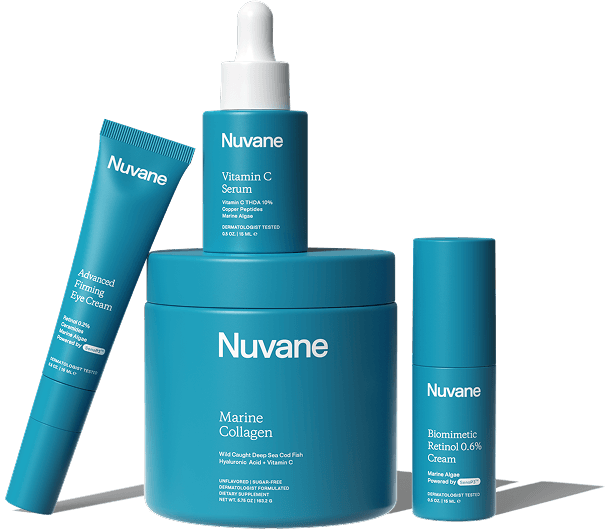
- Vitamin C (THD Ascorbate): Potent antioxidant that inhibits tyrosinase and enhances radiance. Featured in Nuvane’s Vitamin C Serum for its stability and deep penetration【11†source】.
- Niacinamide (5%): Regulates melanocyte activity and strengthens the barrier【8†source】.
- Tranexamic Acid: Reduces UV-induced pigment pathways.
- Kojic Acid & Licorice Root Extract: Natural tyrosinase inhibitors that soothe irritation【11†source】.
- Arbutin: A hydroquinone derivative offering gentle brightening.
Phase 1 Summary: Focus on daily antioxidants (Vitamin C + Niacinamide) to prevent new dark spots while reinforcing skin resilience.
Phase 2 — How do you remove existing pigment without irritation?
Goal: Gently boost cell turnover to fade dark spots and even texture.
Core Ingredients:
- Retinol (0.3–0.6%): Gold-standard for photoaging, enhancing cell renewal and collagen production【8†source】【11†source】.
- Azelaic Acid: Dual-action brightener with anti-inflammatory benefits.
- Alpha Hydroxy Acids (AHAs): Lactic and mandelic acids dissolve dull cells while remaining gentle on mature skin.
Nuvane’s Biomimetic Retinol Creams (0.3% and 0.6%) combine Retinol, Niacinamide, and the SenoP3™ peptide complex, achieving visible texture refinement with minimal irritation【11†source】.
Phase 2 Summary: Slow and steady exfoliation yields smoother, brighter skin without compromising the barrier.
Phase 3 — How do you prevent pigment transfer?
Goal: Inhibit melanin transfer to surface cells to sustain clarity.
Top Ingredients:
- Niacinamide: Reduces melanosome transfer between cells.
- Soy Extracts: Diminish pigment parceling.
- Retinoids: Normalize cell communication, maintaining balanced tone.
Phase 3 Summary: Maintain results with barrier-strengthening and pigment-transfer control ingredients.
How long until you see results?
- Post-inflammatory marks: 4–6 weeks
- Sunspots: 8–12 weeks
- Melasma: 12+ weeks with strict SPF
Consistency is key—melanin buildup develops over time, and fading occurs gradually.
What does a brightening routine after 50 look like?
Morning Routine:
- Gentle, pH-balanced cleanser
- Vitamin C + Niacinamide serum (e.g., Nuvane Vitamin C Serum)
- Moisturizer with ceramides or peptides
- Broad-spectrum SPF 30+
Evening Routine:
- Cleanse (double-cleanse if using sunscreen/makeup)
- Active step: Retinol, AHA, or Azelaic Acid (alternate)
- Barrier-repair cream (peptides, ceramides, hyaluronic acid)
Weekly: 1–3 AHA nights for controlled exfoliation.
Why is SPF non-negotiable for brightening?
UV exposure reactivates melanogenesis, reversing progress. Daily broad-spectrum SPF 30+ protects against UV-A, UV-B, and blue light damage.
Best Practices:
- Apply daily, even indoors.
- Reapply every 2 hours outdoors.
- Use hats and sunglasses for added defense.
Which lifestyle habits help prevent discoloration?
- Hydrate: Supports renewal and barrier repair.
- Eat antioxidants: Berries, greens, nuts, combat oxidative stress.
- Manage stress: Reduces inflammatory pigmentation triggers.
- Avoid smoking: Prevents vascular and oxidative damage.
- Sleep well: Enhances repair during nighttime cell turnover.
What if topicals aren’t enough?
Professional treatments like chemical peels, microneedling, or pigment-targeting lasers can complement home care. However, results require ongoing SPF and pigment-blocking maintenance to last.
How does the Nuvane Regenerative Dark Spot Corrector target all three phases?
Nuvane’s Regenerative Dark Spot Corrector integrates Niacinamide, Retinol, Alpha Arbutin, Bakuchiol, and the SenoP3™ biomimetic peptide complex—creating a synergistic formula that acts across all brightening phases【8†source】【11†source】:
- Blocks new pigment: Niacinamide, Licorice Extract, and Arbutin inhibit tyrosinase.
- Removes existing pigment: Retinol and Bakuchiol accelerate cell renewal.
- Prevents transfer: SenoP3™ peptides support barrier and structural repair.
Its inclusion of Fucus Vesiculosus marine algae extract provides antioxidant and anti-inflammatory protection [11†source].
Who it’s for: Mature skin seeking brightening with minimal irritation and enhanced firmness. Clinical improvement typically appears within 6–8 weeks of consistent use.
What makes SenoP3™ unique in brightening and anti-aging synergy?
SenoP3™ combines three clinically proven peptides:
- Copper Tripeptide-1 (GHK-Cu): Boosts collagen, elastin, and antioxidant defenses【10†source】.
- Palmitoyl Tripeptide-38: Rebuilds dermal structure, increasing collagen I and III synthesis【10†source】.
- Acetyl Hexapeptide-8: Relaxes expression lines and improves micro-circulation【10†source】.
Together, they enhance cellular repair, elasticity, and even tone, complementing pigment-reduction pathways.
Clinical data show up to 45% wrinkle depth reduction and 30% firmness increase in 8 weeks when these peptides are combined【9†source】【10†source】.
Why does “consistency over strength” matter after 50?
Mature skin has thinner barriers and slower healing. Overuse of high-strength acids or retinoids can trigger a rebound effect, leading to increased pigmentation. Balanced, consistent use of actives—like those in Nuvane’s peptide-stabilized formulations—ensures progress without irritation.
FAQs
-
Can pigmentation be permanently removed?
Not always, but long-term fading is achievable with maintenance (SPF + actives). -
Can Vitamin C and Retinol be combined?
Yes—Vitamin C in the morning, Retinol at night, to minimize irritation. -
How can I prevent new dark spots from forming?
Daily SPF, antioxidants, and Niacinamide are essential. -
Do natural ingredients really work?
Yes—Arbutin, Licorice, and Soy Extracts have strong research backing. -
Can sensitive skin use acids?
Start with lactic or mandelic acid 1–3 times weekly. -
How does menopause affect pigmentation?
Hormonal decline increases melanin activity and barrier fragility. -
What’s the difference between melasma and age spots?
Melasma: hormonally triggered, symmetrical patches. Age spots: UV-induced isolated spots. -
Is hydroquinone necessary?
Not for most—modern combinations, such as Niacinamide, Tranexamic Acid, and Arbutin, offer excellent results.
Where can you learn more about Nuvane’s science-backed ingredients?
Refer to the Nuvane ingredient documentation for deeper insights into concentrations, encapsulation technology, and synergistic peptide design. The formulas—particularly the Regenerative Dark Spot Corrector and Vitamin C Serum—reflect Nuvane’s philosophy: clinical potency with gentle delivery systems【11†source】.
Key References
- Burke KE. Interaction of vitamins C and E as better cosmeceuticals. Dermatol Ther. 2007.
- Bissett DL, et al. Topical niacinamide reduces pigmentation and improves barrier function. J Cosmet Dermatol. 2006.
- Lim JT. Treatment of melasma using kojic acid in a gel formulation. Clin Exp Dermatol. 1999.
- Saeedi M, et al. Licorice as a natural skin lightening agent. J Dermatolog Treat. 2019.
- Lee JH, et al. Effect of tranexamic acid on melasma: a meta-analysis. J Am Acad Dermatol. 2017.
- Kang S, et al. Retinoids and photoaging: molecular basis and clinical applications. J Am Acad Dermatol. 2001.
- Ditre CM, et al. Effects of alpha hydroxy acids on photoaged skin. J Am Acad Dermatol. 1996.
- Kircik LH. The role of azelaic acid in hyperpigmentation. J Drugs Dermatol. 2011.
- Yoon HS, et al. The role of soy extracts in melanin regulation. Int J Mol Sci. 2020.
- Gilchrest BA. Aging and photoaging of the skin: physiologic changes and clinical implications. N Engl J Med. 2013.
Related Search Terms
skin discoloration after 50, hyperpigmentation treatment, natural age spot removal, melasma remedies, vitamin C niacinamide brightening, retinol for mature skin, tranexamic acid pigmentation, natural skin brighteners, SenoP3 peptides, even skin tone after menopause
Quick Recap: A three-phase plan—block, remove, prevent—using clinically supported actives (Vitamin C, Niacinamide, Retinoids, Tranexamic Acid) and SPF is the fastest, safest way to fade discoloration after 50. For a gentle, science-driven option, explore Nuvane’s Regenerative Dark Spot Corrector, powered by SenoP3™ peptides and encapsulated actives for mature skin health
Find the most effective anti-aging products for you by taking the free skin assessment.
Enjoyed this article? Add Nuvane as a preferred source on Google.