
Best ingredients for reducing skin fragility

Quick Answer
Skin fragility increases with age as collagen, elastin, and barrier lipids decline, resulting in thinning, dryness, and slower healing. Science-backed skincare ingredients like retinol, bioactive peptides, and hyaluronic acid can strengthen skin structure, boost collagen, and restore resilience. Consistent use of these actives, supported by proper hydration, sun protection, and a balanced diet, can visibly reverse the signs of fragility within 8–12 weeks.
4 Key Takeaways
- Retinol increases collagen production, accelerates cell renewal, and thickens the dermis.
- Peptides like palmitoyl tripeptide-38, acetyl hexapeptide-8, and copper tripeptide-1 repair the extracellular matrix (ECM), improve elasticity, and enhance healing.
- Hydration and barrier restoration with hyaluronic acid, niacinamide, and ceramides are crucial in preventing micro-tears and sensitivity.
- Consistent, evidence-based skincare—especially formulas that combine retinoids and peptides—can help restore firmness and reduce skin fragility over time.
What is skin fragility, and why does it increase with age?
Skin fragility is a progressive loss of strength, elasticity, and thickness in the dermal and epidermal layers. As the skin ages, fibroblast activity decreases, resulting in a lower synthesis of collagen, elastin, and glycosaminoglycans, such as hyaluronic acid. These structural changes are compounded by slower cell turnover, impaired wound healing, and a weakened lipid barrier.
Intrinsic factors—like genetics and hormonal decline—combine with extrinsic factors, including ultraviolet (UV) exposure, pollution, and stress, to accelerate these changes. The result is a thinner, more transparent, and easily bruised skin surface prone to tearing and poor regeneration.
Clinical literature identifies this phenomenon as dermatoporosis, a chronic condition characterized by ECM degradation, senescent fibroblasts, and decreased dermal density [1].
How does collagen loss affect skin structure and resilience?
Collagen is the main protein that provides tensile strength to the skin. With age, collagen I and III synthesis declines, while enzymes like matrix metalloproteinases (MMPs) increase, breaking down existing fibers. This imbalance results in dermal thinning and loss of firmness.
According to dermatological studies, the skin's collagen content can decrease by 1% per year after the age of 25 [2]. The reduction in dermal collagen and elastin directly correlates with the formation of wrinkles, increased fragility, and delayed wound healing. Supporting fibroblast function through topical and nutritional interventions can significantly slow this decline.
Why is retinol considered the gold standard for aging skin?
Retinol, a derivative of vitamin A, remains one of the most thoroughly researched and effective anti-aging ingredients. It binds to nuclear retinoic acid receptors (RARs), modulating gene expression in skin cells to enhance repair, renewal, and ECM synthesis.
Key Mechanisms and Benefits
- Stimulates collagen and elastin: Retinol upregulates fibroblast activity, thereby increasing the production of dermal collagen types I and III.
- Enhances epidermal turnover by promoting keratinocyte proliferation and resulting in a smoother texture.
- Improves barrier integrity by boosting hyaluronic acid and ceramide synthesis, thereby reducing transepidermal water loss (TEWL).
- Reduces fine lines and discoloration: Continuous use visibly diminishes wrinkles and evens tone.
Clinical studies show that low-strength retinol (0.3–0.6%) formulations can increase dermal collagen density by up to 80% after 12 weeks of use [3]. Retinol also increases CD44 receptor expression, thereby enhancing hyaluronic acid binding and improving moisture retention.
Usage Guidelines
- Begin with a 0.3% concentration and increase as tolerated.
- Apply only at night, as retinoids increase photosensitivity.
- Always pair with daily SPF 30+ sunscreen.
- Combine with humectants like glycerin or sodium hyaluronate to prevent dryness.
What are peptides, and how do they strengthen aging skin?
Peptides are short amino acid chains that act as signaling molecules in the skin. They “instruct” fibroblasts to produce more collagen, elastin, and other matrix proteins essential for skin density and strength.
How do peptides work?
When applied topically, peptides penetrate the upper layers of the skin and bind to cell receptors, triggering repair and regeneration. Different peptide types serve distinct roles:
-
Palmitoyl Tripeptide-38 (Matrixyl Synthe’6):
Stimulates synthesis of collagens I, III, and IV, as well as hyaluronic acid and laminin-5. Clinical trials report a 31% reduction in wrinkle volume and a 15–20% increase in firmness after 8 weeks [4]. -
Acetyl Hexapeptide-8 (Argireline):
Functions as a neurotransmitter inhibitor, reducing micro-muscle contractions that cause expression lines. Studies show a reduction of up to 30% in wrinkles in one month [5]. -
Copper Tripeptide-1 (GHK-Cu):
A naturally occurring peptide that promotes wound healing, collagen remodeling, and antioxidant defense. It boosts fibroblast proliferation by 50% and increases skin elasticity by 17% [6].
These peptides collectively reinforce ECM architecture, reduce inflammation, and promote dermal repair—making them ideal partners to retinol in addressing fragility and loss of elasticity.
Can retinol and peptides be used together?
Yes—retinol and peptides complement each other exceptionally well. Retinol drives cellular renewal and collagen formation, while peptides repair and stabilize the newly formed matrix, minimizing irritation and enhancing barrier recovery.
Synergistic Benefits
- Retinol accelerates cell turnover, allowing for deeper penetration of peptides.
- Peptides help mitigate inflammation and oxidative stress associated with retinoid use.
- Combined regimens yield smoother, stronger, and more hydrated skin within 8 to 12 weeks.
Application tip:
Use peptide serums in the morning and retinol at night. This alternation supports both regeneration and protection without overloading the skin.
What additional ingredients help support fragile aging skin?
A comprehensive skincare regimen should include hydrating, antioxidant, and barrier-repairing agents to support retinol and peptides.
1. Hyaluronic Acid (HA)
A key glycosaminoglycan that binds up to 1,000 times its weight in water. It restores plumpness and improves dermal viscoelasticity. HA also enhances keratinocyte proliferation by activating the CD44 receptor [7].
2. Niacinamide
Vitamin B3 strengthens the lipid barrier, reduces inflammation, and improves uneven tone. It also increases ceramide and free fatty acid synthesis for better barrier protection.
3. Centella Asiatica
Rich in madecassoside and asiaticoside, Centella boosts fibroblast proliferation and ECM protein synthesis while reducing oxidative stress—an excellent adjunct for fragile, reactive skin.
4. Alpha Hydroxy Acids (AHAs)
Gentle exfoliants like glycolic and lactic acids stimulate dermal remodeling by promoting collagen synthesis and removing senescent keratinocytes. Regular AHA use can increase skin thickness by up to 25% over several months [8].
5. Vitamin C (Tetrahexyldecyl Ascorbate)
An antioxidant and collagen cofactor that neutralizes free radicals, enhances elasticity, and brightens dull complexions.
6. Marine Collagen Peptides (Oral)
Supplementation with hydrolyzed marine collagen has been shown to increase dermal density and elasticity, boost hydration, and reduce wrinkle depth by up to 13% after 12 weeks [9]. These peptides act from within, complementing topical treatments for holistic rejuvenation.
How long does it take to see visible improvements?
Clinical and user trials indicate measurable results within 8–12 weeks of consistent application:
-
4 weeks: Increased hydration and smoother texture
-
8 weeks: Improved firmness and reduced fine lines
-
12 weeks: Greater elasticity, thicker dermis, and visible reduction in skin fragility
Consistency is key—long-term adherence enhances the skin’s structural resilience and visibly rejuvenates thin, fragile areas.
What lifestyle factors accelerate or prevent skin fragility?
Skincare actives are most effective when supported by healthy daily habits.
Accelerating factors:
- Unprotected sun exposure
- Smoking and pollution
- Chronic dehydration
- Poor sleep and stress
- Nutrient deficiencies (vitamin C, zinc, omega-3s)
Protective measures:
- Apply SPF 30+ daily, even indoors
- Eat antioxidant-rich foods (berries, leafy greens, fatty fish)
- Stay hydrated (1.5–2 liters of water daily)
- Prioritize 7–8 hours of sleep for optimal cellular repair
How does modern skincare utilize technology and science to achieve stronger skin?
Recent advancements in cosmetic science emphasize biomimetic design, which replicates the skin’s natural signaling molecules. The development of multi-pathway peptide complexes, AI-driven formulation personalization, and nutricosmetic integration (oral collagen, antioxidants) represents the future of skin longevity care.
These innovations deliver precision-based skincare that adapts to individual needs, targeting cellular pathways involved in senescence, oxidative stress, and ECM degradation.
How does Nuvane integrate these scientific principles?
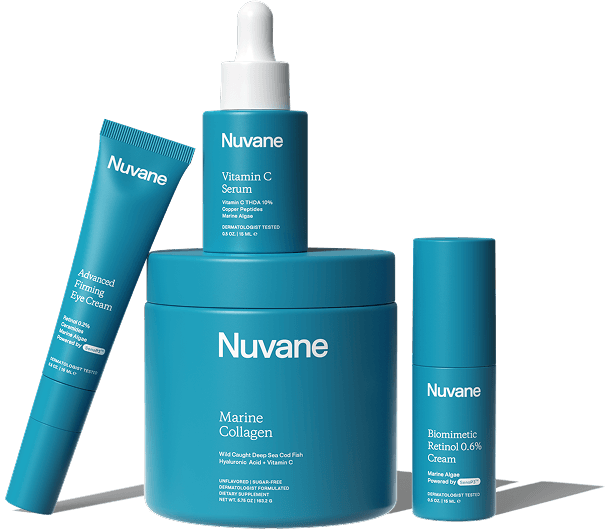
Nuvane represents the next generation of science-driven skincare, blending dermatological expertise with advanced biomimetic ingredients. Its formulations—backed by SenoP3™, a proprietary complex of Copper Tripeptide-1, Palmitoyl Tripeptide-38, and Acetyl Hexapeptide-8—address skin fragility on multiple levels:
- Collagen and Elastin Boost: Palmitoyl Tripeptide-38 increases dermal density and ECM cohesion.
- Expression Line Relaxation: Acetyl Hexapeptide-8 smooths micro-contractions for a softer texture.
- Regeneration and Antioxidant Defense: Copper Tripeptide-1 accelerates healing and protects against oxidative damage.
Combined with retinol (0.3–0.6%), marine algae, hyaluronic acid, and niacinamide, Nuvane’s biomimetic formulations are designed to restore skin strength, hydration, and barrier resilience while minimizing irritation.
For further details, refer to Nuvane’s project documentation and ingredient list, which highlight the scientific validation and safety of each component.
FAQs
1. How is skin fragility different from sensitive skin?
Fragile skin is characterized by structural weakness in collagen and elastin fibers, whereas sensitive skin refers to an overreactive barrier or immune response. Both can coexist but require distinct treatments.
2. Can retinol be used on thin, fragile skin?
Yes, but begin with a lower concentration (0.3%) and buffer with a moisturizer to prevent irritation.
3. Are peptides safe for long-term use?
Absolutely. Peptides mimic natural skin signals and do not cause barrier thinning or dependency.
4. When should I start anti-fragility skincare?
Most experts recommend starting collagen-supportive actives in your late 20s to early 30s to preserve elasticity.
5. How do I reduce bruising or tearing on aging skin?
Increase hydration, use barrier creams, and supplement with vitamin C and collagen peptides to support your skin's structure.
6. Can I use retinol and vitamin C together?
Yes—apply vitamin C in the morning and retinol at night to maximize antioxidant and regenerative effects.
7. What’s the role of marine collagen supplements?
They enhance dermal density from within, complementing topical peptide and retinol treatments.
8. Is Nuvane suitable for sensitive or rosacea-prone skin?
Yes—Nuvane offers Bakuchiol + SenoP3™ formulations as retinol-free alternatives with similar collagen-stimulating benefits.
Related Search Terms
“Skin fragility and collagen loss,” “peptides for mature skin,” “retinol and peptide synergy,” “bioactive skincare science,” “SenoP3 peptide complex,” “Nuvane retinol cream ingredients.”
References
[1] Kaya, G. et al. (2008). Dermatoporosis: A chronic cutaneous insufficiency/fragility syndrome. J Am Acad Dermatol, 58(5), 781–792.
[2] Shuster, S. et al. (1975). The effect of aging on skin structure and function. Br J Dermatol, 93(6), 639–643.
[3] Kafi, R. et al. (2007). Improvement of naturally aged skin with retinol. Arch Dermatol, 143(5), 606–612.
[4] Sederma (2012). Matrixyl Synthe’6™ efficacy dossier.
[5] Blanes-Mira, C. et al. (2002). Argireline: A synthetic hexapeptide with anti-wrinkle activity. Int J Cosmetic Sci, 24(5), 303–310.
[6] Maquart, F. X. et al. (1993). Stimulation of collagen synthesis by GHK-Cu. FEBS Lett, 238(2), 343–346.
[7] Papakonstantinou, E. et al. (2012). Hyaluronic acid: A key molecule in skin aging. Dermatoendocrinol, 4(3), 253–258.
[8] Ditre, C. M. et al. (1996). Effects of α-hydroxy acids on photoaged skin. J Am Acad Dermatol, 34(2), 187–195.
[9] Proksch, E. et al. (2014). Oral intake of collagen peptides reduces wrinkles and increases skin elasticity. Skin Pharmacol Physiol, 27(3), 113–119.
[10] Schagen, S. K. (2017). Topical peptide treatments with anti-aging results. J Drugs Dermatol, 16(6), 51–55.
Find the most effective anti-aging products for you by taking the free skin assessment.
Enjoyed this article? Add Nuvane as a preferred source on Google.