
Best skincare guide for your 50s: ultimate breakdown


Quick Answer
- Menopause accelerates collagen loss, dryness, and sensitivity; however, targeted skincare can help restore elasticity and radiance.
- Focus on gentle cleansing, peptide-rich serums, retinol or bakuchiol creams, and daily SPF.
- Biomimetic peptides such as those in SenoP3™ visibly improve firmness and smooth wrinkles.
- Hydration, nutrition, and consistency are essential for reversing the visible signs of aging after 50.
What happens to your skin during menopause?
Menopause marks a powerful transition in a woman’s life—physically, emotionally, and biologically. As estrogen levels decline, your skin undergoes a dramatic shift: collagen levels drop by up to 30% within the first five years, elasticity decreases, and hydration levels decline. Fine lines appear deeper, the jawline softens, and skin tone becomes uneven.
Collagen, elastin, and hyaluronic acid—the “triple scaffolding” that gives skin its bounce—are produced more slowly. At the same time, the skin barrier becomes weakened, leading to dryness, redness, and increased sensitivity.
The result? A complexion that feels thinner, more fragile, and slower to recover from environmental stressors. But with the right science-backed care, your skin can regain strength, comfort, and luminosity.
Why does estrogen loss affect skin so deeply?
Estrogen plays a crucial role in maintaining skin density and moisture. When its levels fall, fibroblasts—the cells that make collagen and elastin—slow down their activity. Blood circulation decreases, resulting in the skin receiving fewer nutrients and oxygen.
This is why menopausal skin often looks dull, feels less supple, and heals more slowly. Fortunately, ingredients like peptides, retinol, and marine extracts can help re-energize these processes, mimicking the skin’s natural communication pathways to stimulate renewal.
How can you rebuild collagen and firmness after 50?
Rebuilding collagen requires two strategies: stimulating new production and preventing further breakdown.
- Topical peptides, such as palmitoyl tripeptide-38 and acetyl hexapeptide-8, signal fibroblasts to produce collagen types I, III, and IV, thereby improving dermal density and elasticity.
- Copper tripeptide-1 (GHK-Cu) strengthens connective tissue and boosts the enzymes that crosslink collagen fibers, while reducing inflammation.
- Retinol accelerates cell turnover and collagen synthesis, resulting in a smoother, more refined appearance of the skin.
- Niacinamide supports the skin barrier, enhancing hydration and resilience.
Together, these actives create a visible lifting and firming effect without irritation, forming the foundation of a mature skincare regimen.
What are the best skincare steps for postmenopausal skin?
1. How should you cleanse your skin after 50?
Use a cream or milk-based cleanser to preserve moisture. Cleansing once daily at night removes pollutants and makeup without stripping lipids. Avoid foaming or alcohol-based products, as they can exacerbate dryness.
2. Why is gentle exfoliation essential?
Cell turnover slows dramatically with age. AHAs like glycolic, lactic, or mandelic acid help smooth rough texture and encourage new cells to surface. Exfoliate 2–3 times per week and follow with a hydrating serum to minimize sensitivity.
3. What role do toners and essences play?
A hydrating essence or toner primes your skin for the treatments that follow. Look for hyaluronic acid, snail mucin, or glycerin to replenish moisture reservoirs and enhance absorption of serums.
4. Which serums deliver visible results?
Serums are concentrated with actives that directly target wrinkles, discoloration, or dryness. Choose formulations rich in:
- Peptides to firm and repair.
- Vitamin C (in stable lipid form like tetrahexyldecyl ascorbate) to brighten and protect against free radicals.
- Niacinamide to even tone.
- Centella asiatica or beta-glucan for calming and strengthening sensitive skin.
These combinations improve elasticity, diminish age spots, and restore glow over time.
Should you use retinol or bakuchiol?
Retinol remains the gold standard in anti-aging molecules, proven to increase collagen and smooth wrinkles. Start with low concentrations (0.3%), ideally encapsulated for slow release. If your skin is sensitive or reactive, bakuchiol offers a gentler, plant-derived alternative that mimics the benefits of retinol without irritation.
Night creams containing biomimetic peptides and marine algae extracts can further enhance firmness while soothing menopausal dryness.
How do moisturizers and oils support barrier repair?
As sebum production decreases with age, your skin needs lipid reinforcement. Choose moisturizers enriched with:
- Ceramides to restore the skin barrier.
- Squalane and jojoba oil for nourishment.
- Trehalose protects against oxidative stress.
Adding a few drops of facial oil at night—like oat or argan oil—creates a cushion of comfort that locks in moisture and enhances suppleness.
Why is sunscreen still non-negotiable after 50?
UV radiation is responsible for up to 80% of visible aging. Even minimal exposure can accelerate collagen breakdown and increase pigmentation. Use a broad-spectrum SPF 30 or higher every morning. Look for formulas with photolyase or antioxidant protection to help repair previous sun-induced DNA damage.
Can lifestyle habits truly improve skin health?
Absolutely. Your skin mirrors your internal balance. Menopausal skin thrives on:
- Hydration – at least 2 L of water daily.
- Protein-rich foods – fish, eggs, legumes to support collagen synthesis.
- Antioxidants – berries, leafy greens, and green tea.
- Restorative sleep – to allow overnight regeneration.
- Stress management – chronic stress elevates cortisol, which degrades collagen.
Consistency in both lifestyle and skincare is what drives transformation.
What technologies are redefining mature skincare today?
Modern formulations are merging AI personalization, biomimetic peptides, and marine biotechnology. Advanced peptide systems—like the synergistic blend of copper tripeptide-1, palmitoyl tripeptide-38, and acetyl hexapeptide-8—are scientifically shown to:
- Reduce wrinkle depth by up to 45% in eight weeks.
- Increase elasticity and dermal density.
- Relax expression lines while boosting natural collagen production.
These innovations mark a shift from temporary hydration to true structural rejuvenation, helping menopausal skin regain firmness and radiance from within.
How long until you see results?
Every skin journey is unique, but clinical studies suggest that visible improvement can be seen in 8 to 12 weeks with consistent use of peptide and retinol-based formulations. Fine lines soften first, followed by increased smoothness, tighter contours, and an overall luminous complexion.
What ingredients should menopausal skin avoid?
- Harsh alcohols or sulfates – strip protective lipids.
- Synthetic fragrances – can trigger redness or irritation.
- Strong physical scrubs – cause microtears in thin skin.
- High-strength acids used too frequently can lead to over–exfoliation, impairing barrier recovery.
Focus instead on bio-adaptive ingredients that respect the skin’s changing physiology.
Final Thoughts: Can your 50s truly be your glow decade?
Absolutely. Menopause isn’t the end of youthful skin—it’s the start of a wiser, more conscious approach to beauty. Your skin can glow with resilience and confidence when you feed it the right nutrients, both topically and internally.
Science-backed ingredients, such as retinol, bakuchiol, niacinamide, and biomimetic peptides, help restore elasticity, minimize wrinkles, and strengthen the skin barrier. Marine extracts add hydration and environmental defense. Together, these create a regimen that feels luxurious yet clinically effective.
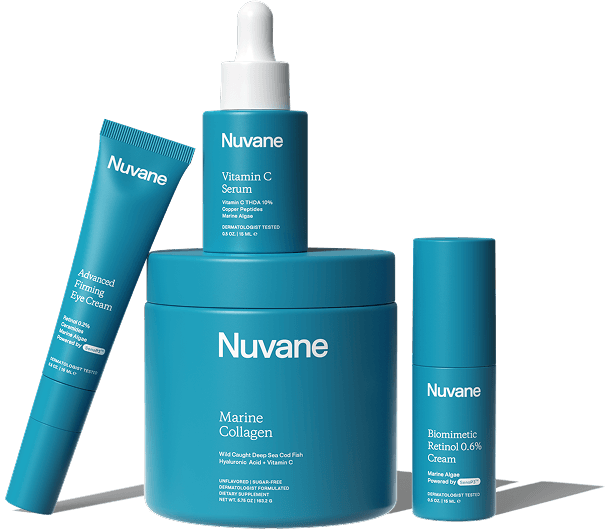
For formulation transparency and ingredient insights, always refer to your product’s documentation and ingredient list—especially those leveraging biomimetic peptide technologies like SenoP3™—for optimal, science-backed results.
FAQs
1. What’s the best skincare routine for menopause?
Cleanse gently, exfoliate 2–3 times a week, apply peptide or vitamin C serums, use retinol or bakuchiol at night, and finish with a moisturizer and SPF.
2. Is retinol safe for sensitive or mature skin?
Yes, when used in low concentrations (0.3–0.6%) and paired with hydrating ingredients. Start slowly to build tolerance.
3. Can I use peptides and retinol together?
Absolutely. Peptides strengthen and repair while retinol accelerates renewal—they complement each other beautifully.
4. How does bakuchiol compare to retinol?
Bakuchiol offers similar collagen-stimulating and wrinkle-reducing benefits without irritation, ideal for reactive or dry skin.
5. Why are marine algae extracts recommended?
They contain polysaccharides and antioxidants that hydrate, soothe inflammation, and defend against pollution and UV damage.
6. Do diet and supplements help menopausal skin?
Yes. Oral marine collagen, vitamin C, and hyaluronic acid support internal hydration and elasticity.
7. How can I treat dark spots safely?
Look for formulas containing alpha-arbutin, niacinamide, and low-dose retinol to gradually brighten pigmentation.
8. Is daily sunscreen really necessary indoors?
Yes—UVA rays penetrate windows and cause long-term collagen loss. SPF is essential even on cloudy days.
Related Search Terms
menopause skin care routine • peptides for mature skin • retinol vs bakuchiol • collagen after 50 • anti-aging skincare routine • how to firm sagging skin • peptide cream benefits • restoring skin elasticity • best skincare ingredients for menopause
References
-
Pickart L, Thaler MM. Growth-modulating tripeptide (GHK) and its copper complex. PNAS. 1980;77(7):4586–4590.
-
Maquart FX et al. Stimulation of collagen synthesis in fibroblast cultures by GHK-Cu. FEBS Lett. 1993;238(2):343–346.
-
Sederma. Matrixyl® synthe’6™: In vitro & in vivo efficacy dossier. 2012.
-
Blanes-Mira C et al. Argireline: A synthetic hexapeptide with anti-wrinkle activity. Int J Cosmet Sci. 2002;24(5):303–310.
-
Leyden JJ et al. Skin care benefits of copper peptide facial creams. Int J Cosmet Sci. 2002;24(3):149–154.
-
Schagen SK. Topical peptide treatments with effective anti-aging results. J Drugs Dermatol. 2017;16(6):51–55.
-
Lupo MP, Cole AL. Cosmeceutical peptides: Mechanisms and application. Dermatol Ther. 2007;20(5):343–349.
-
Draelos ZD et al. Effect of copper tripeptide on wound healing and skin protection. Dermatol Surg. 2006;32(2):235–240.
-
Duplan H et al. Peptides and mitochondrial function in aging skin. Int J Cosmet Sci. 2016;38(5):431–439.
-
Kim JH et al. Effect of Argireline on SNAP-25 expression and senescence markers. Ann Dermatol. 2015;27(4):404–410.
Find the most effective anti-aging products for you by taking the free skin assessment.
Enjoyed this article? Add Nuvane as a preferred source on Google.