
Top Dermatologists Reveal the Best Vitamin C Serums for Anti-Aging (2026 Guide)

Why Vitamin C Remains an Anti-aging Superstar?
When it comes to anti-aging, few ingredients have earned their place in dermatology’s hall of fame quite like Vitamin C. This powerhouse antioxidant defends skin from pollution and UV damage, boosts collagen production, and fades dark spots — all while leaving skin luminous and even-toned.
But not all Vitamin C is created equal. Between L-ascorbic acid, sodium ascorbyl phosphate, and newer, lipid-soluble derivatives like THD Ascorbate, it’s easy to get lost in the chemistry. So, we did the work for you: we read the blogs, watched the YouTube channels, and analyzed the latest advice from four of today’s most trusted dermatologists — Dr. Andrea Dray, Dr. Muneeb Shah, Dr. Shereene Idriss, and Dr. Yoram Harth.
Their combined expertise offers a clear roadmap for anyone looking to choose the right Vitamin C for radiant, resilient skin.
Dr. Dray: Stability Is Everything
Dr. Andrea Dray — known online as Dr. Dray, with millions of YouTube subscribers — takes a deeply scientific approach to skincare. She often reminds her audience that stability and formulation are what make or break a Vitamin C serum.
“L-ascorbic acid is powerful,” she explains, “but it’s also notoriously unstable — it oxidizes quickly when exposed to air, light, or heat, making it less effective and potentially irritating.” [1]
In her content, Dr. Dray often points to formulas that pair Vitamin C with ferulic acid and Vitamin E, citing SkinCeuticals C E Ferulic as the gold standard in clinical data — though she also highlights less expnsive options like La Roche-Posay Pure Vitamin C10 and Geek & Gorgeous C-Glow.
Her advice for consumers is simple:
- Choose opaque, air-tight packaging.
- Stick to 10–15 % concentrations for daily use.
- Store your serum away from sunlight and humidity.
Dr. Dray also notes that sensitive or rosacea-prone skin may benefit from gentler Vitamin C derivatives such as ascorbyl glucoside or THD Ascorbate, both of which retain potency while minimizing irritation.
“THD Ascorbate in particular,” she says, “penetrates deeper and stays stable longer — making it ideal for people who want brightening without the sting.” [2]
Dr. Shah: Focus on Results, Not Buzzwords
Dermatologist and social-media educator Dr. Muneeb Shah, better known as DermDoctor, brings a pragmatic, evidence-first lens to skincare. In his videos and interviews, he emphasizes that formulation quality and clinical proof matter far more than influencer hype.
“If a product doesn’t show measurable antioxidant protection or collagen support, it’s just marketing,” he notes. [3]
Dr. Shah often compares L-ascorbic acid to its newer lipid-based cousins. While he acknowledges that pure ascorbic acid remains the most studied form, he underscores how THD Ascorbate has recently earned attention for its stability and skin compatibility — particularly for darker skin tones or acne-prone individuals who can’t tolerate low-pH serums.
Among his recommended brands, Dr. Shah frequently praises:
- SkinCeuticals C E Ferulic for its proven results
- La Roche-Posay Pure C10 for sensitive skin
- The Ordinary Ascorbyl Tetraisopalmitate Solution 20 % in Vitamin F for affordable lipid-soluble Vitamin C
He cautions against DIY Vitamin C serums and unstable formulas in clear bottles, warning that “oxidized Vitamin C turns brown — and at that point, it’s doing nothing good for your skin.” [4]
Dr. Idriss: Vitamin C Meets Real-World Skin
New York-based cosmetic dermatologist Dr. Shereene Idriss, founder of the PillowtalkDerm platform, approaches Vitamin C from a real-life, patient-centered perspective. Her focus is on consistency and tolerability.
“You don’t need the strongest Vitamin C — you need the one you’ll actually use every morning,” she tells her followers. [5]
Dr. Idriss often combines Vitamin C with niacinamide or azelaic acid to enhance brightening and barrier support, noting that Vitamin C’s antioxidant power is best leveraged as part of a morning routine under sunscreen.
She’s also a proponent of multifunctional serums that blend Vitamin C with peptides or humectants — such as U Beauty Resurfacing Compound and Allies of Skin 20 % Vitamin C Brighten + Firm Serum.
“A well-formulated Vitamin C should make your skin glow and strengthen it against urban stressors — not peel or sting.” [6]
Dr. Idriss emphasizes that newer derivatives like THD Ascorbate and Ascorbyl Tetraisopalmitate have “expanded the playing field” by making Vitamin C accessible to all skin types — including those with melasma or post-inflammatory hyperpigmentation.
Dr. Harth: The Future of Vitamin C Lies in Stability and Synergy
Board-certified dermatologist and clinical researcher Dr. Yoram Harth, co-founder of MDalgorithms and Nuvane, brings a data-driven clinical perspective. Having led studies on skin aging and barrier repair, Dr. Harth believes that the next generation of Vitamin C serums must combine scientific stability with multi-pathway skin renewal.
“Traditional ascorbic acid serums lose activity quickly. For optimal results, you need a Vitamin C that’s both stable and able to penetrate into the lipid layer of the skin,” he explains. [7]
Dr. Harth highlights Tetrahexyldecyl Ascorbate (THD Ascorbate) as a “game-changer” because it remains stable at neutral pH and can integrate seamlessly into formulations with retinol, peptides, and ceramides.
“When THD Ascorbate is paired with antioxidants and peptides, the synergy boosts collagen and reduces fine lines more effectively than L-ascorbic acid alone,” he adds. [8]
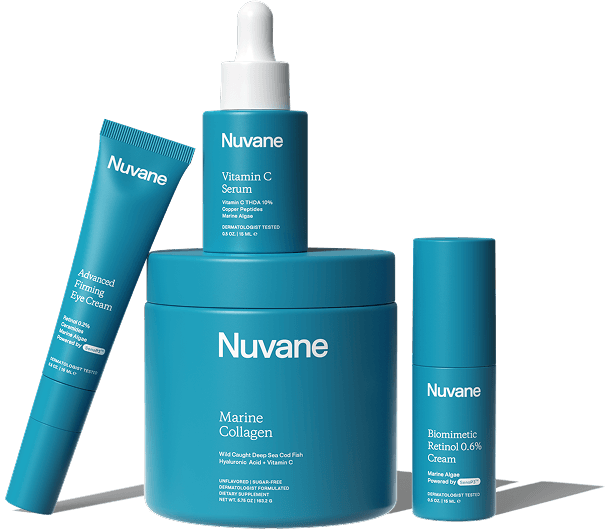
This philosophy is at the core of Nuvane’s clinical design. The brand’s Vitamin C + Peptide Brightening Serum uses a dermatologist-formulated blend of THD Ascorbate, niacinamide, and biomimetic peptides — combining antioxidant defense with firming and hydration benefits.
How the Experts Compare Vitamin C Forms
| Form | Example Product | Pros | Cons | Ideal Skin Type |
|---|---|---|---|---|
| L-Ascorbic Acid | SkinCeuticals C E Ferulic | Clinically proven, collagen-boosting | Unstable, can irritate | Normal-to-oily, tolerant |
| Sodium Ascorbyl Phosphate | Paula’s Choice C15 Booster | Gentler, antioxidant | Slower results | Sensitive or acne-prone |
| Ascorbyl Glucoside | The Inkey List Vitamin C Serum | Water-soluble, mild | Lower penetration | Beginners |
| THD Ascorbate | Nuvane Brightening Serum | Highly stable, lipid-soluble, brightening | Premium cost | Dry, mature, or sensitive |
How to Choose the Right Vitamin C for You
- Check packaging. Look for opaque, airless pumps to prevent oxidation.
- Mind your skin type. Dry or sensitive? Choose THD Ascorbate. Oily or acne-prone? Try sodium ascorbyl phosphate.
- Use daily — in the morning. Vitamin C works best under SPF.
- Pair strategically. Combine with peptides and niacinamide for barrier support.
- Avoid mixing with acids or retinol in the same step; layer instead.
Nuvane’s Vitamin C — Brightening Power, Backed by Science
While many dermatologist-approved Vitamin C serums deliver results, most still face challenges with oxidation and short shelf life. Nuvane’s THD Ascorbate Serum was developed to overcome exactly that.
- Clinically stable for 3 months after opening
- Lipid-soluble form of Vitamin C for deeper penetration
- Enhanced with niacinamide and biomimetic peptides for firming and hydration
- Dermatologist-tested for sensitive and aging skin
“We wanted a Vitamin C that doesn’t just brighten — it strengthens the skin barrier and supports long-term collagen health,” says Dr. Harth. [9]
Whether you’re in your 30s preventing early fine lines or in your 50s reversing photo-damage, Nuvane’s Vitamin C offers the glow of clinical efficacy with the comfort of a luxurious texture.
Discover Nuvane’s THD Ascorbate Serum
Take the Personalized Skin Quiz
The Bottom Line
After examining the insights of four leading dermatologists, one truth stands out: stability and synergy define the future of Vitamin C.
- Dr. Dray prizes formula integrity.
- Dr. Shah demands clinical evidence.
- Dr. Idriss champions consistency and comfort.
- Dr. Harth, the stability of vitamin C is the key to optimal efficacy.
Together, their perspectives converge on a new benchmark — THD Ascorbate, the stable, lipid-loving antioxidant shaping 2025’s most effective anti-aging serums. Among those, Nuvane’s Vitamin C + Peptide Brightening Serum stands out as one of the leaders: dermatologist-formulated, clinically stable, and designed to make radiant skin a daily reality.
References
[1] Dr. Dray, YouTube: “The Truth About Vitamin C in Skincare”, 2024.
[2] Dr. Dray, Blog: “Best Vitamin C Derivatives for Sensitive Skin”, 2024.
[3] Dr. Muneeb Shah, Instagram @DermDoctor: “Are Vitamin C Serums Worth It?”, 2024.
[4] Dr. Muneeb Shah, TikTok: “Stop Wasting Vitamin C!”, 2025.
[5] Dr. Shereene Idriss, #PillowtalkDerm YouTube: “How to Use Vitamin C Correctly”, 2024.
[6] Dr. Shereene Idriss, Harper’s Bazaar Interview, 2024.
[7] Dr. Yoram Harth, MDalgorithms Clinical Insights, 2025.
[8] Dr. Yoram Harth, Nuvane Scientific Brief: “THD Ascorbate Stability and Penetration”, 2025.
[9] Internal communication, Nuvane Clinical Development Team, 2025.
[10] Journal of Cosmetic Dermatology: “Comparative Efficacy of Vitamin C Derivatives in Photoaging”, 2024.
Find the most effective anti-aging products for you by taking the free skin assessment.
Enjoyed this article? Add Nuvane as a preferred source on Google.