
Best ways to fix a damaged skin barrier fast


Quick answer:
- A fragile skin barrier shows up as redness, stinging, flaking, and tightness—yet with the right reset, comfort often returns within 1–2 weeks.
- Short, soothing routines with ceramides, cholesterol, fatty acids, glycerin, panthenol, and colloidal oatmeal help quickly reduce transepidermal water loss (TEWL).
- Reintroduce potential irritants (retinoids, exfoliating acids, potent vitamin C) gradually and on alternate nights only after your skin has calmed down.
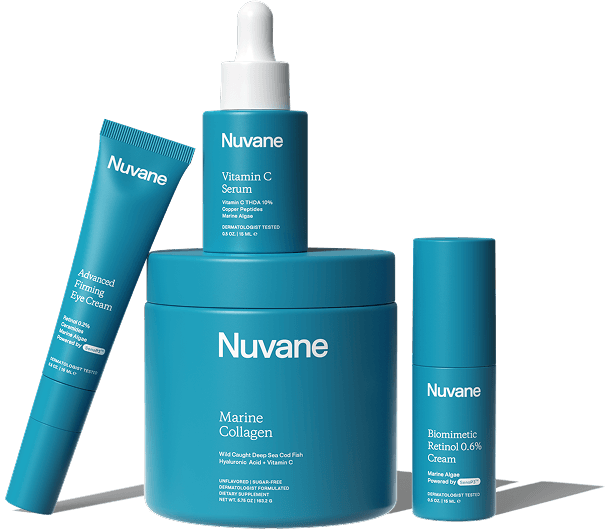
- Nuvane’s SenoP3™ complex is designed to fortify barrier lipids, calm visible redness, and support resilient, hydrated skin; see Nuvane documentation for full ingredient details.
What exactly is your “skin barrier,” and why does it matter?
Your skin barrier lives in the outermost layers of the epidermis—primarily the stratum corneum. Picture “bricks and mortar”: the bricks are flattened skin cells; the mortar is a lipid matrix rich in ceramides, cholesterol, and free fatty acids. When balanced, this structure keeps precious water in and environmental stressors out. When disrupted, water escapes (higher TEWL), irritants sneak in, and the result is tight, reactive, or inflamed skin. The barrier also sits under a slightly acidic “acid mantle” (pH 5–5.5), which favors healthy surface flora and helps fend off unwanted microbes. A steady, healthy barrier influences everything from comfort to how well active perform, especially in thinner, movement-prone areas like the neck.
How can you tell if your barrier needs a reset?
Common signs include persistent redness or warmth, stinging from products that never used to sting, new flakiness or rough patches, makeup catching on dry spots, and a “tight,” itchy feel after cleansing. For deeper skin tones, look for increased sensitivity, changes in shine, or an ashy, uneven texture rather than obvious redness. If several of these pop up together—especially after a streak of peels, scrubs, retinoids, or hot showers—assume your barrier is asking for a break.
What are the five barrier-repair phases that actually work?
Below is a practical, evidence-guided framework that’s gentle enough for reactive skin and clear enough to follow without guesswork.
Phase 1: Should you stop (almost) everything for 48–72 hours?
Yes. Strip your routine down to the bare minimum while your skin “cools.” That means: a mild, pH-respecting cleanser once nightly, lukewarm water, soft towel pats (no rubbing), and a bland, fragrance-free moisturizer. If even that tingles, layer an occlusive ointment (rich in petrolatum) as your last step to reduce TEWL while the skin settles. During this pause, favor physical sun protection (shade, hats, UV clothing). If a sunscreen stings, take a day or two off and use shade/cover while you troubleshoot gentler options later.
Phase 2: What are the best soothing “first-aid” ingredients?
Aim for buffers that replenish water and lipids, plus calm visible redness:
- Glycerin & hyaluronic acid (HA): humectants that bind water to the stratum corneum.
- Ceramides + cholesterol + fatty acids: rebuild the lipid “mortar.” Look for formulas that include all three.
- Panthenol (pro-vitamin B5) & allantoin: comfort itchy, tight skin.
- Colloidal oatmeal: contains avenanthramides with well-documented soothing properties.
- Squalane: lightweight lipid that reduces tightness without heaviness.
- Ectoin & beta-glucan: osmo-protective and barrier-supporting agents that help skin handle environmental stress.
- Low-dose urea (≤5%): humectant/keratolytic that smooths without over-exfoliating at low levels.
- Zinc oxide ointment (spot use): can calm localized, angry areas; keep it simple and fragrance-free.
Use a short routine, day and night, for 3–7 days:
- Gentle cleanse (p.m. only).
- Mist or pat water on damp skin (optional).
- Humectant serum or toner (glycerin, HA, beta-glucan).
- Barrier cream (ceramides/cholesterol/fatty acids, panthenol).
- Occlusive dab on the driest spots at night (petrolatum-rich ointment).
Phase 3: When and how should you stay gentle as you rebuild daily habits?
Once your skin feels less hot and tight, keep water tepid, keep showers brief, and keep fabrics soft (no scratchy scarves against the neck). Space products: 60–90 seconds between layers helps limit sting. Avoid foaming cleansers that leave a squeak. At this stage, your “wins” come from consistency, not from adding more products.
Phase 4: How do you reintroduce favorite actives without relapsing?
Think “one new thing, three quiet nights.” Patch test each new product along the jaw or behind an ear for 2–3 consecutive nights. If there’s no persistent burning, you can roll it into the routine:
- Niacinamide ≤5%: start here. It supports barrier lipids, refines tone, and pairs well with almost everything.
- Azelaic acid (low–mid strength): helpful for redness and tone, but can tingle; introduce after niacinamide.
- Antioxidants: if pure ascorbic acid stings, consider lipid-soluble vitamin C derivatives (e.g., tetrahexyldecyl ascorbate) that are generally gentler while still supporting brightening and free-radical defense.
- Retinoids: try “once weekly” for 2–3 weeks, then twice weekly, and so on. Sandwich with moisturizer if needed.
- Exfoliating acids: add later, on a night separate from retinoids, and keep frequency low. Enzyme-based or lactic-dominant blends are often better tolerated than aggressive glycolic routines.
If you feel heat or see flaking beyond a light “dust,” drop back to the prior step for a week.
Phase 5: What does a steady barrier-first routine look like (face and neck)?
Morning
- Gentle cleanse or rinse with water.
- Hydrating layer (glycerin/HA/beta-glucan).
- Barrier cream with ceramides/cholesterol/fatty acids + niacinamide.
- Daily sun protection (choose a texture your skin likes).
- Optional: antioxidant serum if tolerated.
Evening
- Gentle cleanse.
- Humectant layer.
- Treatment (azelaic/niacinamide/retinoid—on assigned nights only).
- Barrier cream; add a petrolatum dab on the driest areas.
- Neck gets the same love: apply upward strokes, use lighter pressure, and treat it as its own “zone” when testing actives because it’s often more reactive.
Which ingredients are true barrier MVPs—and how do they help?
Do ceramides, cholesterol, and fatty acids really make a difference?
Yes—the “big three” are foundational to the lipid matrix. Formulas that approximate the skin’s natural ratios help reduce TEWL and visibly soften roughness. Over time, they make skin feel less “thirsty,” improve flexibility, and support tolerance to actives.
Why are humectants (like glycerin and HA) so loved for quick comfort?
Humectants pull water into the upper layers, plumping fine, dry lines and improving glide for makeup. Layer them under an emollient or occlusive to keep that water from evaporating. On very dry days, misting before a humectant and sealing with a barrier cream can be transformative.
Is niacinamide still worth it if you’re over 50?
Absolutely. At moderate levels (≤5%), niacinamide supports barrier lipid synthesis, helps even tone, and can reduce the look of enlarged pores and dullness. It’s an easy “first active” to bring back after a flare because it plays well with ceramides and panthenol.
What about soothing extras like panthenol, colloidal oatmeal, ectoin, and beta-glucan?
These comfort-first allies help calm visible redness and support recovery. Panthenol and beta-glucan are superb hydrators; colloidal oatmeal offers anti-irritant benefits; ectoin helps water balance under environmental stress (heat, dryness, pollution).
How do you avoid the cycle of over-exfoliation and over-reactivity?
- Less is more: Most complexions thrive with one primary active on any given night.
- Follow the “buffer rule”: Sandwich potential irritants between moisturizer layers.
- Watch water temperature: Hot water dissolves the very lipids you’re trying to rebuild.
- Respect the neck and chest: They’re thinner, move more, and often need half-the-strength and half-the-frequency of facial actives.
- Seasonal switches: In dry, windy seasons, swap in richer textures and reduce exfoliation nights.
What does a realistic 2-week barrier-rebuild plan look like?
Days 1–3 (Calm & Coat)
- PM only cleanse; AM splash or skip.
- Humectant + barrier cream + occlusive dab at night.
- Shade, hats, and gentle fabrics.
Days 4–7 (Hydrate & Fortify)
- Add niacinamide (≤5%) once daily.
- Keep barrier cream twice daily; continue humectant layer.
- If any sting persists, pause the niacinamide and return to Days 1–3.
Days 8–10 (Antioxidant Assist)
- Introduce a gentler vitamin C derivative in the morning under moisturizer.
- Keep nights simple.
Days 11–14 (Treat—Slowly)
- Add retinoid one night this week; moisturize before and after.
- Keep exfoliation off the calendar or reserve it for a single, separate night with a mild option.
- If any irritation returns, skip treatments for 2–3 nights and restart at a lower frequency.
Which product textures should you choose if you’re over 50?
- Cleansers: Creamy, non-foaming, pH-friendly formulas that rinse without tightness.
- Serums: Humectant-rich toners or serums with glycerin, HA, beta-glucan.
- Moisturizers: Mid-to-rich creams featuring ceramides/cholesterol/fatty acids, niacinamide, panthenol, squalane.
- Ointments: Petrolatum-based occlusives for spot-occlusion on flaky areas.
- Neck care: Use the same barrier-first approach, but introduce actives at half frequency; think comfort first.
How can you adapt barrier repair for different skin types?
If you’re dry or mature, what should you emphasize?
Richer creams with ceramides/cholesterol/fatty acids, squalane, and panthenol twice daily. Add low-dose urea for gentle smoothing. Keep exfoliation to a minimum and prioritize antioxidant support in the morning.
If you’re combination or easily congested, how do you avoid heaviness?
Use gel-cream textures with glycerin, niacinamide, and lightweight emollients. Spot-occlude flakes at night rather than blanketing the entire face. Choose non-greasy sunscreens and keep a consistent cleanse-hydrate-moisturize cadence.
If you’re sensitive or prone to redness, where do you start?
Short INCI lists, fragrance-free formulas, colloidal oatmeal or ectoin, and low-strength niacinamide. Patch test everything for three nights before using it on your full face.
What are eight common questions (and quick answers) about barrier repair?
Can I exfoliate while my barrier is impaired?
Not in the first 3–7 days. Once calm, start with the mildest option, using it no more than once a week, and increase only if your skin remains comfortable.
Does petroleum jelly clog pores?
Petrolatum is non-comedogenic. If you’re breakout-prone, use it as a spot occlusive on flaky areas rather than applying it all over the face.
Is it okay to skip cleansing in the morning?
Yes—especially during a flare. A water rinse or hydrating mist is often enough; cleanse gently at night.
How do I layer if everything seems to sting?
Apply moisturizer first, then actives (if any), followed by another thin layer of moisturizer. This “sandwich” reduces contact intensity.
Should the neck have a separate routine?
Treat the neck as a separate zone: apply the same barrier cream, but introduce actives at half frequency and patch test below the jawline.
How long until my skin feels normal again?
Many people feel relief within a few days; visible smoothness often returns within 1–2 weeks if you stay consistent and avoid triggers.
Can niacinamide make me flush?
At high percentages, it can. Keep it at or below 5% during recovery, and reduce frequency if you feel warmth or sting.
Do I need facial oils?
Oils can be helpful finishes, but prioritize barrier creams with ceramides/cholesterol/fatty acids first. If you add an oil, keep it lightweight and patch test.
How do you “future-proof” your barrier once it’s happy?
-
Choose gentle daily basics and keep actives on a regular schedule (e.g., retinoid on Mondays and Thursdays, exfoliant on Saturdays).
-
Mind the microclimate: humidify dry rooms; protect skin during travel or outdoor exposure.
-
Be consistent, not maximal: a few well-chosen products, used regularly, outperform a drawer of mismatched actives.
-
Listen to your skin: if it tingles, pause; if it flakes, increase barrier support.
How does Nuvane’s SenoP3™ help repair and fortify the skin barrier?
Nuvane’s SenoP3™ complex is formulated to support the lipid matrix, calm visible irritation, and improve water retention—key goals in any barrier-first plan. Based on the Nuvane approach to barrier science:
- Lipid fortification: SenoP3 is designed to promote a healthier balance of ceramides, cholesterol, and fatty acids, thereby reinforcing the “mortar” that keeps moisture in and irritants out.
- Redness relief: The complex includes soothing co-actives intended to visibly calm reactivity while supporting a resilient acid mantle.
- Hydration lock: By pairing humectants (like glycerin and HA) with emollients (such as squalane) and barrier lipids, SenoP3™ helps reduce TEWL, leaving skin comfortably supple.
- Neck-smart texture: The cosmetically elegant finish suits the thinner, movement-prone neck area that often needs barrier support with minimal weight.
For the most accurate, up-to-date details, refer to the Nuvane project documentation and full ingredient list. In addition to SenoP3™, look for ceramide NP/AP/EOP blends, cholesterol, linoleic-rich fatty acids, niacinamide (≤5%), panthenol, beta-glucan, ectoin, colloidal oatmeal, low-dose urea, and squalane—a synergy that mirrors the skin’s natural architecture while delivering comfort and radiance. This blend is especially helpful for women over 50 who want smoother makeup application, less tightness after cleansing, and better tolerance to targeted treatments.
References
[1] Skin barrier function: From basic science to clinical relevance. Dermatoendocrinology, 2012.
[2] Stratum corneum lipids: Ceramides, cholesterol, and free fatty acids in barrier homeostasis. Advances in Experimental Medicine and Biology, 2014.
[3] The importance of skin surface pH in barrier function and microbial defense. International Journal of Cosmetic Science, 2013.
[4] Occlusive moisturizers and the role of petrolatum in reducing transepidermal water loss. Journal of the American Academy of Dermatology, 2017.
[5] Colloidal oatmeal and skin barrier: Anti-inflammatory and protective effects. Journal of Drugs in Dermatology, 2015.
[6] Topical niacinamide: Mechanisms of action and clinical benefits in aging skin. Dermatologic Surgery, 2005.
[7] Clinical characteristics and management considerations of aging neck skin. Dermatologic Surgery, 2019.
[8] Stability and efficacy of lipid-soluble vitamin C derivatives in cosmetic formulations. Journal of Cosmetic Dermatology, 2018.
[9] Ceramide-containing emollients improve skin barrier function in dry and sensitive skin. Clinical, Cosmetic and Investigational Dermatology, 2018.
[10] Ectoine as a natural extremolyte: Protection of skin cells under environmental stress. International Journal of Molecular Sciences, 2016.
Want the simplest barrier-first routine to start tonight?
- PM: Cleanse → humectant (glycerin/HA) → barrier cream (ceramides/cholesterol/fatty acids + niacinamide) → petrolatum dab on flakes.
- AM: Rinse or gentle cleanse → humectant → barrier cream → daily sun protection.
- After 5–7 calm days: Add an antioxidant in the morning; add one retinoid night weekly; keep exfoliation minimal.
- For neck: Mirror the face plan at half frequency for actives, but full frequency for hydrate-and-seal steps.
Bottom line: A calmer routine isn’t a step back—it’s how you step forward. With barrier-smart basics and science-backed support, like Nuvane’s SenoP3, you can keep your skin comfortable today and more resilient for tomorrow.
Find the most effective anti-aging products for you by taking the free skin assessment.
Enjoyed this article? Add Nuvane as a preferred source on Google.