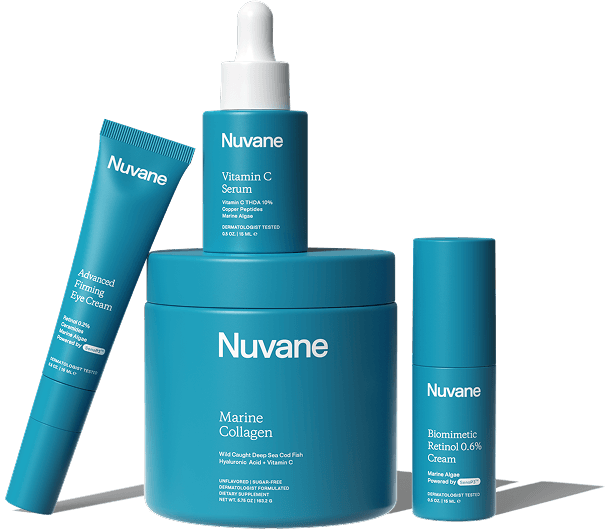

Which Retinoid system is better? Nuvane or Medik8?

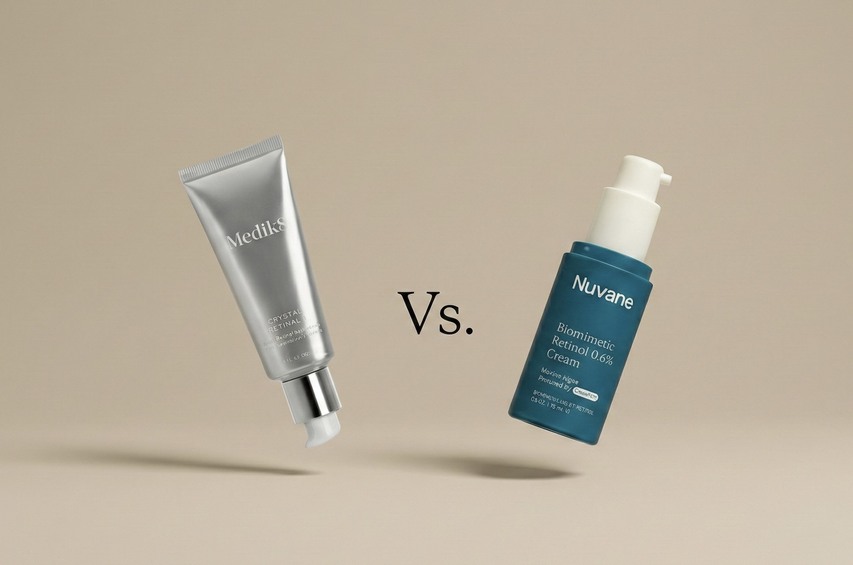
Which Retinoid Should You Use: Nuvane or Medik8?
Both Nuvane and Medik8 are high-quality, science-based retinoid systems designed to achieve the same goal: delivering visible improvements in fine lines, texture, and uneven tone, while offering options across different retinoid strengths. That strength “choice” matters, because the best results don’t come from using the strongest product once or twice—they come from choosing the right level for your skin, staying consistent, and upgrading only when your barrier is ready. That’s why it’s worth comparing these two systems side by side: they take different routes (retinol-based customization vs a retinal ladder), and understanding the differences helps you pick the one you’ll actually use long enough to see real change.
Why do you need a customized retinol system?
A “customized retinol system” wins when it matches the strength to your tolerance (face vs. eyes vs. spots) so you can stay consistent long enough to see collagen and tone changes.
Does “retinal is one step closer” automatically mean better results?
Retinal is one step closer to retinoic acid, but “closer” doesn’t automatically mean “better outcomes”—delivered dose, stability, and irritation control often decide real-world results.
What factors decide real-world retinoid outcomes?
- Delivered dose over time
- Stability and release profile
- Skin barrier status and your ability to use it consistently
What makes Nuvane’s retinol system different from a retinal ladder?
Nuvane’s retinol choices (0.3% and 0.6% for face + a lower-dose eye formula + a targeted spot corrector) are built around SenoP3 plus barrier- and tone-supporting actives like niacinamide and acetyl glucosamine—and they’re designed to plug into Nuvane’s AI-image-based personalization system, which matches the type of treatment cream and the retinol percentage to the individual based on factors like age, visible aging severity, skin sensitivity, dryness, and overall skin condition, so users can start at the most appropriate strength and progress strategically rather than guessing.
What is the quick answer to the best customized retinol system?
If your goal is maximum anti-aging results with minimal irritation, the best “customized retinol system” is the one that lets you:
- Choose an effective retinol strength,
- treat delicate zones differently (eyes vs face vs dark spots), and
- support retinoid tolerance with barrier- and tone-friendly co-ingredients.
Nuvane’s approach is a retinol-first, multi-product customization system (0.3% and 0.6% face options, plus an eye formula and a targeted dark spot corrector) layered with SenoP3 peptides + niacinamide + acetyl glucosamine + hydrators + marine algae for better adherence and comfort. Another alternative in the market is a retinaldehyde ladder serum offered in clearly tiered strengths (0.01% to 0.24% retinaldehyde), which is excellent for controlled step-ups—but it’s typically a single product ladder, not a full-zone, customized system.
What does “customized retinol system” actually mean?
A truly customized retinoid system usually includes:
- Multiple strengths (beginner-to-advanced)
- Zone-specific products (eyes vs full face vs spots)
- Supporting actives that reduce dropout (hydration, barrier, tone support)
- A ramp-up plan (frequency increases before strength increases)
Why does customization matter more than “strongest % wins”?
Irritation is the number one reason people stop using retinoids. A customized plan protects consistency.
What are retinoids, retinol, and retinal in simple terms?
What is the conversion pathway from retinol to retinoic acid?
Retinoic acid is the biologically active form. In skin, the accepted pathway is:
retinol → retinaldehyde (retinal) → retinoic acid
Why is retinal often described as faster “per %”?
Because it’s one conversion step closer, so the skin has less work to do to reach the active form.
What is the practical “retinol-equivalent” rule-of-thumb for retinal?
There is no regulated conversion. A common consumer rule-of-thumb is:
retinol % ≈ retinal % × ~10–11 (very approximate; use as a shopping guide only).
How do Nuvane and the retinal ladder system compare in strengths and structure?
What are the available retinal ladder strengths?
- 0.01% retinaldehyde
- 0.03% retinaldehyde
- 0.06% retinaldehyde
- 0.10% retinaldehyde
What are Nuvane’s retinol strengths and zone options?
- Face: Retinol 0.3% cream and Retinol 0.6% cream
- Eyes: Eye product with 0.2% retinol plus ceramides, marine algae, and SenoP3 for the under-eye area
- Dark spots: Dark spot corrector featuring 0.3% retinol plus α-arbutin and licorice, with marine algae, positioned for pigmentation and radiance support
What is the comparison table for Nuvane’s customized retinol system versus the retinal ladder system?
| Feature | Nuvane Customized Retinol System | Retinal Ladder Serum System |
|---|---|---|
| Vitamin A Type | Retinol (multiple strengths + zone-specific products) | Retinaldehyde ladder (multiple strengths in one serum line) |
| Face Strengths | 0.2%, 0.3% and 0.6% retinol | 0.01%, 0.03%, 0.06%, 0.10%, 0.20%, 0.24% retinaldehyde |
| Eye-Area Strategy | Dedicated eye product with 0.2% retinol + ceramides + marine algae + SenoP3 | Eye products may exist in the same ecosystem, but the ladder itself is designed primarily for facial use |
| Dark Spot Strategy | Dedicated dark spot corrector featuring α-arbutin + 0.3% retinol + licorice + marine algae + SenoP3 | Ladder focuses on retinal strength progression; pigment help depends on the specific formula and your routine |
| Signature "Support Actives" | SenoP3 peptide complex (Palmitoyl Tripeptide-38 + Acetyl Hexapeptide-8 + Copper Tripeptide-1) | Not built around SenoP3; typically emphasizes retinal plus supportive hydrators (varies by step) |
| Barrier + Tone Helpers | Niacinamide + acetyl glucosamine + trehalose + sodium hyaluronate + marine algae | Support ingredients vary by product; ladder messaging emphasizes low irritation and stepwise use |
| Best For | People who want retinol strength choice + zone-specific customization + peptide support | People who want retinal strength progression in a single "ladder" system |
Why can higher-percentage, high-quality retinol deliver strong efficacy with minimal irritation?
Why is “one step closer” not the same as “always more effective”?
Yes—retinal is one conversion step closer to retinoic acid.
But the results you see are driven by:
- Delivered dose over time: A retinoid you can use consistently often outperforms a “stronger” option you keep pausing.
- Stability and release profile: Retinol can be formulated to protect activity and soften irritation spikes.
- Skin barrier status: Retinoids work best when the barrier is supported, not chronically inflamed.
Why does Nuvane’s “retinol + support actives” approach matter?
Because it’s designed to reduce irritation-driven inconsistency by pairing retinol with:
- SenoP3 peptides
- Niacinamide + acetyl glucosamine
- Trehalose + sodium hyaluronate + marine algae
What are the benefits of retinol over retinal in a customized system?
Why is retinol often the better “long-game” choice?
- Strong evidence base for improving the visible look of aged skin with topical retinol
- More flexible titration (frequency first, then strength)
- Better fit for multi-active, barrier-friendly formulas
Why can retinol feel gentler day to day?
Because it requires two conversion steps, it can feel more gradual—especially with hydrating and calming co-ingredients.
What are the extra benefits of combining retinol with SenoP3, niacinamide, acetyl glucosamine, and brighteners?
How can niacinamide and acetyl glucosamine support tone?
They’re commonly used together to support a more even-looking complexion, especially when retinoids are already speeding turnover.
How does α-arbutin support a dark-spot strategy?
It’s a targeted brightening ingredient that pairs well with retinol when you’re trying to fade the look of stubborn discoloration.
What does SenoP3 add beyond retinol?
SenoP3 is a triple-peptide complex of Palmitoyl Tripeptide-38, Acetyl Hexapeptide-8, and Copper Tripeptide-1. It helps broaden the “anti-aging targets” beyond turnover alone.
What is a simple, month-by-month customization plan using Nuvane’s retinol options?
What should month 1 look like for beginners?
- Face: Retinol 0.3% cream 2–3 nights/week, then moisturize
- Eyes: Eye product 2 nights/week, tiny amount, avoid lash line
- Dark spots: dark spot corrector only on spots a few nights/week
- Non-negotiable: sunscreen every morning
What should month 2–3 look like?
- Increase frequency first (every other night → near-nightly) before jumping strengths
- If comfortable and consistent, consider moving face treatment toward 0.6% for advanced users
What should month 4+ look like for advanced users?
- 0.6% face retinol as the main night treatment (as tolerated)
- Keep eye and spot products on their own cadence
What are the 8 FAQs people ask when choosing between retinol systems and retinal ladders?
How long until I see results?
Many people notice texture/brightness changes by 8–12 weeks, with deeper wrinkle improvements often taking 3–6+ months with consistent use.
Should I increase strength or frequency first?
Usually frequency first, then strength.
Can I use retinol around my eyes?
Yes, but only with a product optimized for the eye area and conservative frequency.
What should I do if I peel or sting?
Pause a few nights, moisturize, restart at lower frequency.
Can I combine retinoids with exfoliating acids?
Not in the same routine at first. Alternate nights once you’re stable.
Is retinal always stronger than retinol?
Not always in outcomes. “Closer conversion” doesn’t guarantee “better results” if tolerance and consistency aren’t there.
Is a dark spot corrector better than “just stronger retinoid”?
Often yes—because pigment responds best to targeted brighteners plus turnover support, rather than irritation-heavy escalation.
What’s the easiest way to avoid retinoid irritation?
Use the right strength, ramp slowly, moisturize well, and commit to sunscreen.
What do the Nuvane documents and ingredient list highlight as the unique advantages?
What makes Nuvane more than “retinol-only”?
Nuvane frames the system as a customized retinol platform enhanced with:
- SenoP3 peptide complex
- Niacinamide + acetyl glucosamine
- Trehalose + sodium hyaluronate + marine algae
- Zone-specific products for the eyes and dark spots
Why does that matter?
Because it’s designed to deliver retinol results while minimizing the tolerance bottleneck—so you can stay consistent.
Related search terms: Customized retinol system for face and eyes, retinol 0.3 vs 0.6, who should use, retinal ladder 0.01 0.03 0.06 0.10 0.20 0.24 comparison, retinol vs retinal conversion to retinoic acid, niacinamide N-acetyl glucosamine hyperpigmentation, alpha arbutin dark spot corrector routine, peptide complex copper tripeptide palmitoyl tripeptide acetyl hexapeptide, how to ramp retinol without irritation.
Find the most effective anti-aging products for you by taking the free skin assessment.
Enjoyed this article? Add Nuvane as a preferred source on Google.