
Your best skin yet: the science of glowing through your 50s

Quick Answer
In your 50s, hormonal shifts, collagen loss, and reduced skin renewal make hydration, barrier repair, and sun protection essential. A smart routine—built around gentle exfoliation, peptides, antioxidants, and retinoids—helps restore firmness, smooth texture, and maintain a youthful glow.
Key Takeaways
- Collagen and elastin production naturally decline by up to 30% after menopause, leading to visible sagging and fine lines.
- A daily skincare routine focused on hydration, antioxidants, and retinoids can significantly improve firmness and smoothness.
- Peptides and vitamin C are powerhouse actives for boosting collagen and brightening tone.
- Consistent sun protection is the most effective anti-aging step at any age.
What Happens to Your Skin in Your 50s?
As we move through our 50s, our skin begins to reflect years of environmental exposure, hormonal changes, and a slowdown in cellular repair. Estrogen levels decline, and with them, collagen production, lipid synthesis, and hydration all decrease.
This hormonal shift—often tied to menopause—means your skin’s architecture becomes thinner and less resilient. You might notice:
- More pronounced wrinkles and expression lines
- Dryness and loss of elasticity
- Increased sensitivity or redness
- Dark spots and uneven tone
Collagen levels decline by approximately 1–1.5% each year after 40, but this rate can double after menopause [1]. Sebum (oil) production also drops, reducing the skin’s natural barrier protection. Together, these changes make your complexion appear duller, thinner, and more fragile.
How Does Menopause Affect Your Skin’s Structure?
Estrogen supports collagen, elastin, and glycosaminoglycan production—the trio responsible for firmness, bounce, and hydration. When estrogen levels dip, fibroblasts (the skin’s “construction cells”) become less active, reducing collagen density and skin thickness by as much as 30% in the first five years of menopause [2].
At the same time, slower cell turnover can make the skin look uneven or rough. Supporting your skin through this transition involves replenishing what’s been lost: moisture, structure, and protection.
What Should Your Cleansing Routine Look Like in Your 50s?
Goal: Preserve your skin’s natural oils and barrier.
As skin becomes drier and more sensitive, harsh cleansers can accelerate irritation and dehydration. Instead, opt for gentle, non-foaming formulas like:
- Cream cleansers: These hydrate while cleansing.
- Micellar waters: Great for removing makeup without stripping the skin.
Expert Tip: Cleansing once daily—especially at night—is enough for most people in their 50s. Morning cleansing can be replaced with a splash of lukewarm water to maintain barrier lipids.
Do You Still Need to Exfoliate in Your 50s?
Absolutely—but gently. Exfoliation removes dead skin cells, enhances radiance, and improves the absorption of active ingredients.
Skip harsh scrubs and switch to chemical exfoliants with alpha hydroxy acids (AHAs) such as:
- Lactic acid: Hydrating and mild—ideal for mature skin.
- Glycolic acid: Stimulates collagen renewal and smooths texture.
- Mandelic acid: Excellent for sensitive or rosacea-prone skin.
Limit exfoliation to two or three times per week to avoid irritation. Studies show that regular low-concentration AHA use can improve dermal thickness and elasticity within eight weeks [3].
Why Are Hydrating Toners and Essences So Important Now?
Think of this step as priming your skin to drink in all the good stuff that follows. Hydrating toners and essences replenish moisture and restore the balance lost after cleansing.
Look for ingredients like:
- Hyaluronic acid: Attracts and binds up to 1,000 times its weight in water [4].
- Glycerin: Strengthens the skin barrier and prevents transepidermal water loss.
- Beta-glucan: Soothes redness and irritation while hydrating deeply.
Which Serums Are Essential in Your 50s?
Serums are the most potent step of your regimen—lightweight yet concentrated with actives that target specific concerns.
1. Anti-Aging & Firmness
Choose serums with peptides, growth factors, or retinoids.
- Peptides like Palmitoyl Tripeptide-38 and Copper Tripeptide-1 have been shown to stimulate collagen and improve elasticity by up to 20% in clinical studies [5].
2. Brightening & Pigmentation
- Vitamin C (L-ascorbic acid or THD Ascorbate) boosts radiance and reduces age spots.
- Niacinamide helps regulate pigment and fortify the barrier [6].
3. Redness & Sensitivity
- Ingredients like Centella asiatica, beta-glucan, and ceramides reduce inflammation and strengthen resilience.
What Role Does Retinol Play in Your 50s?
Retinol remains the gold standard in anti-aging skincare—and it’s especially valuable now. Retinoids stimulate collagen production, increase cell turnover, and reduce pigmentation.
If you’re new to retinoids or have sensitive skin, start with encapsulated retinol or bakuchiol, a plant-based alternative shown to produce comparable improvements in fine lines and firmness without irritation [7].
Apply retinol at night, and always follow with sunscreen in the morning to protect your renewed skin.
How Should You Moisturize Mature Skin?
In your 50s, your moisturizer should be both hydrating and barrier-repairing. Look for:
- Ceramides: Restore the lipid barrier.
- Squalane: Mimics natural oils to lock in moisture.
- Shea butter: Provides emollient protection.
For very dry skin, layering a few drops of facial oil—like jojoba or oat oil—on top of your moisturizer can enhance nourishment and radiance.
Why Is Sunscreen Still the #1 Anti-Aging Step?
Even at 50, UV exposure remains the largest contributor to premature aging—responsible for 80–90% of visible skin changes [8]. Broad-spectrum SPF 30+ protects against both UVA (aging) and UVB (burning) rays.
Modern sunscreens now combine mineral and chemical filters with antioxidants and DNA-repair enzymes like photolyase, which can help correct existing damage [9].
Apply daily—even on cloudy days or indoors—and reapply every two hours if you’re exposed to daylight.
What About Professional Treatments in Your 50s?
Dermatological procedures can complement your home regimen. Depending on your goals and budget, you might explore:
- Microneedling or laser resurfacing for collagen stimulation
- Injectables like hyaluronic acid fillers to restore lost volume
- Light-based therapies (LED or IPL) to reduce pigmentation and redness
These treatments can amplify results from your skincare routine, but maintaining consistent at-home care is essential for long-term benefits.
What Lifestyle Habits Help Skin Glow in Your 50s?
Your skin reflects your overall health and lifestyle.
- Nutrition: Eat foods rich in antioxidants (berries, leafy greens) and omega-3s.
- Sleep: Deep rest enhances cell repair and collagen synthesis.
- Stress management: Chronic stress increases cortisol, accelerating collagen loss [10].
- Hydration: Aim for steady water intake and limit alcohol or caffeine, which can dehydrate skin.
Small daily habits often make the biggest difference.
How Does Science Support Peptides and Advanced Actives?
Peptides act as messengers that signal skin cells to repair and regenerate. Modern formulations often combine multiple peptides to target different pathways simultaneously.
For example, combinations of Palmitoyl Tripeptide-38 and Copper Tripeptide-1 have demonstrated measurable improvements in collagen synthesis, elasticity, and wrinkle reduction in clinical settings [5]. These results show that smart formulation—not just high concentration—drives efficacy.
How Long Until You See Results?
Consistency matters more than intensity.
- Hydration and glow: within 1–2 weeks
- Texture and firmness: around 6–8 weeks
- Wrinkle and tone improvement: typically 12+ weeks
Remember, your 50s skin has slower turnover, so patience and steady care yield better long-term transformations.
How Does Nuvane Fit Into This Science?
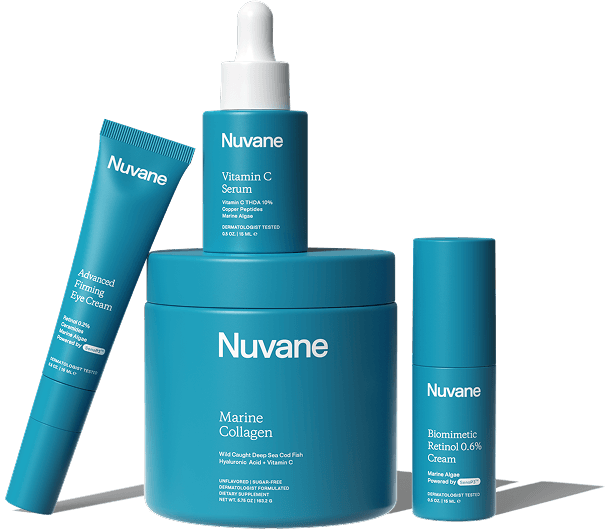
For readers who want to explore formulations built on these scientific principles, Nuvane’s skincare system integrates biomimetic peptides, marine algae, stabilized vitamins, and encapsulated retinoids to address all visible signs of skin aging.
Its SenoP3™ complex—a synergy of Copper Tripeptide-1, Palmitoyl Tripeptide-38, and Acetyl Hexapeptide-8—has demonstrated improvements in wrinkle depth, elasticity, and hydration by targeting collagen production and neuromuscular relaxation mechanisms.
Refer to the Nuvane project documentation for full ingredient lists and supporting data, which highlight the brand’s evidence-based approach to longevity skincare.
Frequently Asked Questions
1. Should I still exfoliate if my skin feels dry?
Yes—but gently. Choose lactic or mandelic acid 1–2 times a week to renew cells without over-drying.
2. What’s the best moisturizer for sensitive mature skin?
Look for ceramide-rich creams free from fragrance and alcohol.
3. Can I use retinol and vitamin C together?
Yes, but apply vitamin C in the morning and retinol at night to minimize irritation.
4. How do I reduce neck and jawline sagging?
Peptides, retinoids, and firming massage help, but combining skincare with facial exercise or radiofrequency therapy enhances results.
5. Is bakuchiol as effective as retinol?
Studies show similar collagen-boosting benefits with fewer side effects, making it ideal for sensitive skin.
6. How can I fade brown spots safely?
Combine vitamin C, niacinamide, and alpha arbutin. Always wear SPF daily.
7. Should I avoid oils if I have combination skin?
Not necessarily—light oils like squalane balance sebum and improve hydration.
8. How can I tell if my skincare routine is working?
Your skin should feel smoother, plumper, and more radiant within 8–12 weeks without ongoing redness or irritation.
Related Search Terms
Mature skin care • Menopausal skincare routine • Collagen peptides • Retinol vs. bakuchiol • Peptide serums • Vitamin C for aging skin • Skin barrier repair • Postmenopausal skincare tips
References
[1] Shuster, S. et al. (1975). The influence of age and sex on skin thickness, elasticity, and collagen content. Br J Dermatol, 93(6), 639–643.
[2] Affinito, P. et al. (1999). Changes in skin collagen metabolism in postmenopausal women. Maturitas, 33(3), 239–247.
[3] Ditre, C.M. et al. (1996). Improvement of photodamaged skin with alpha-hydroxy acids. J Am Acad Dermatol, 34(2), 187–195.
[4] Papakonstantinou, E. et al. (2012). Hyaluronic acid: A key molecule in skin aging. Dermatoendocrinol, 4(3), 253–258.
[5] Schagen, S.K. (2017). Topical peptide treatments with effective anti-aging results. J Drugs Dermatol, 16(6), 51–55.
[6] Draelos, Z.D. (2019). The multifunctional role of niacinamide in dermatology. Cutis, 104(5), 324–330.
[7] Dhaliwal, S. et al. (2019). Evaluation of bakuchiol as a retinol alternative. Br J Dermatol, 180(2), 289–296.
[8] Gilchrest, B.A. (2013). Photoaging. J Invest Dermatol, 133(E1), E2–E6.
[9] Yarosh, D. (2001). DNA repair enzymes and their therapeutic use in skin care. J Photochem Photobiol B, 65(2–3), 93–98.
[10] Chen, Y. et al. (2014). Psychological stress and skin aging: A review. Dermatoendocrinol, 6(3), e24380.
Find the most effective anti-aging products for you by taking the free skin assessment.
Enjoyed this article? Add Nuvane as a preferred source on Google.