
Best exosome products in 2026: hype vs. real results


What Are the 4 Key Takeaways?
- Exosomes are one of dermatology’s most intriguing regenerative trends, but the 2026 clinical picture is still early, uneven, and far from settled.
- The strongest signal so far is for topical or device-assisted use in skin rejuvenation, pigmentation, acne scars, and some inflammatory skin conditions, not for routine injectable use.
- Safety is the plot twist: topical studies were generally mild-tolerability affairs, while injected exosomes were linked to granulomas, necrosis, and allergic reactions in case reports and case series.
- For evidence-minded skincare in 2026, exosomes are promising but still experimental, while established actives such as retinol, vitamin C, niacinamide, bakuchiol, and biomimetic peptides remain the more practical, lower-drama option.
What Is the Quick Answer?
Exosomes in dermatology are exciting, but not yet the polished fairy tale marketing sometimes suggests. A 2026 scoping review identified 17 human studies published between 2020 and 2025 and found encouraging signals for wrinkles, pigmentation, elasticity, hydration, acne scars, psoriasis, and atopic dermatitis. Still, the evidence base remains small, heterogeneous, and heavily tilted toward short follow-up, single-arm designs, and industry involvement. The biggest practical takeaway is simple: topical and microneedling-assisted exosome approaches look more promising than injectable exosome treatments, which have raised meaningful safety concerns.
What Are Exosomes in Dermatology?
Exosomes are tiny extracellular vesicles released by cells. Think of them as molecular message carriers: they shuttle proteins, lipids, messenger RNA, and microRNA from one cell to another, helping coordinate repair, inflammation, and tissue remodeling. In dermatology, that matters because aging and photodamage are not just surface-level events. They involve collagen breakdown, oxidative stress, inflammatory signaling, impaired barrier function, and slower regeneration.
That is why exosomes have generated so much buzz. In theory, they could support fibroblast activity, improve extracellular matrix signaling, calm inflammation, and encourage better healing. In practice, however, theory is not the same as clinic-ready proof. The 2026 review makes that distinction very clear.
Why Are Exosomes Suddenly Everywhere in Skin Care Conversations?
Because they sit at the crossroads of regenerative medicine, aesthetics, and the beauty industry’s favorite pastime: turning early science into immediate hype. Exosomes promise a high-tech answer to familiar concerns such as fine lines, rough texture, uneven tone, redness, scarring, and barrier disruption. That makes them catnip for both clinicians and consumers.
But the review also points out an awkward reality: exosome products are already commercially available even though regulatory approval for therapeutic use has not caught up. In other words, market enthusiasm has sprinted ahead of clinical certainty. Dermatology has seen this movie before. The trailer is glamorous; the long-term data arrives later.
What Did the 2026 Scoping Review Actually Find?
The attached April 2026 scoping review in the Journal of Drugs in Dermatology examined human clinical studies of exosome-based dermatologic therapies and included 17 studies published from 2020 to 2025. These studies covered skin rejuvenation, psoriasis, acne scarring, atopic dermatitis, wound healing, hair loss, and mixed aesthetic indications. Exosome sources varied widely, including mesenchymal stem cell-derived, adipose-derived, platelet-derived, placental, Wharton’s jelly-derived, and rose stem cell-derived preparations. Delivery methods also varied: topical application, microneedling, topical use after fractional CO2 laser, mesotherapy-style injection, and hybrid energy-based approaches.
That variability is not a minor footnote. It is the whole plot. When studies use different exosome sources, different devices, different formulations, different endpoints, and different follow-up periods, it becomes difficult to say, with confidence, what “exosome therapy” actually means in a standardized clinical sense.
Where Does the Evidence Look Most Encouraging?
What About Skin Rejuvenation?
This is where the optimism is strongest. Across the review, 76% of included studies reported improvement in at least one domain such as wrinkles, pigmentation, elasticity, hydration, texture, or scars. Several facial rejuvenation studies reported better wrinkle appearance, improved luminosity, more even tone, better hydration, and gains in elasticity. In split-face and comparative designs, exosome-treated sides often outperformed control or comparison approaches, particularly when paired with microneedling or energy-based procedures.
What About Acne Scars and Recovery After Procedures?
The data are still limited, but intriguing. One study using adipose-derived exosomes with fractional CO2 laser reported a 32.5% reduction in atrophic acne scar volume along with faster recovery. Case series also suggested improved healing after procedural treatments and reduced erythema or swelling. That aligns with the regenerative story exosomes are built to tell, though larger controlled trials are still needed before this becomes standard of care.
What About Inflammatory Conditions Like Psoriasis and Atopic Dermatitis?
This is one of the more interesting developments. The review included a randomized clinical trial in psoriasis showing meaningful reductions in disease severity, plaque size, transepidermal water loss, and improved elasticity. A small topical study in facial atopic dermatitis also reported clinical improvement. That is notable because it hints that exosomes may have a future not only in glow-chasing aesthetics, but also in inflammatory skin disease management. Still, the sample sizes were small, and follow-up was short. Promise, yes. Proof, not yet.
What Are the Biggest Safety Concerns in 2026?
This is where the conversation needs less glitter and more caution.
The review found that topical exosome therapies were generally associated with mild, self-limited side effects such as erythema, swelling, dryness, or pruritus. By contrast, injected exosome products were associated with the most serious adverse events. Reported complications included foreign body granulomas, delayed granulomatous reactions, skin necrosis with vasculitic features, scarring, post-inflammatory hyperpigmentation, and acute allergic reactions with swelling and lymphadenopathy.
That distinction matters immensely. The current evidence does not support lumping all exosome use into one cheerful category. Delivery method changes risk. A topical product used after a procedure is not clinically equivalent to injecting an incompletely standardized biologic product into the skin.
Why Is Injectable Exosome Therapy More Concerning?
Because injection bypasses the barrier function of skin and raises the stakes on purity, immunogenicity, contamination risk, particle characterization, dose consistency, and tissue response. The review also notes broader theoretical concerns around tumor biology, immune modulation, viral transmission risk, and poor standardization of manufacturing and storage. Even before we get to worst-case scenarios, there is already a simpler problem: many exosome preparations are not standardized well enough for clinicians to compare them meaningfully.
In beauty terms, this is not a “maybe a little redness for two hours” situation. It is a “we need much better regulation, manufacturing controls, and long-term human data before pretending this is routine” situation.
How Strong Is the Evidence, Really?
Stronger than pure marketing copy. Weaker than the hype.
The review’s quality assessment shows that only a handful of studies reached randomized-trial level evidence, while many were case series or case reports. Sample sizes were often small. Follow-up commonly ranged from just weeks to a few months. Some studies involved manufacturer-linked funding or potential conflicts of interest. Those limitations do not erase the findings, but they do change how confidently we should interpret them.
So, the right 2026 takeaway is not “exosomes work” or “exosomes do not work.” It is this: exosomes may work in selected dermatologic applications, especially when used topically or alongside procedures, but the field is still early-stage and not ready for sweeping claims.
What Is the Regulatory Reality in 2026?
According to the attached review, as of mid-2025 no exosome-based therapies had regulatory approval for therapeutic dermatologic use from the U.S. FDA, and the article also describes similarly cautious positions in the European Union, Japan, South Korea, and Canada. The paper emphasizes that exosome products may fall under biologic or advanced therapy regulatory frameworks and that unauthorized marketing claims remain a concern.
That regulatory caution is not bureaucratic moodiness. It reflects unresolved issues around classification, manufacturing, characterization, safety, and clinical consistency.
What Should Dermatology Patients and Skin-Care Shoppers Do With This Information?
Be curious, not gullible.
If someone is considering exosome-based treatment in 2026, the smartest questions are not “Will this make me glow?” but “What is the exosome source? How is it manufactured? Is it topical or injectable? What published human data support this exact formulation and delivery method? What are the risks? What is the regulatory status?”
That last question matters because the difference between innovation and improvisation is usually documentation.
How Does This Affect Anti-Aging Skin Care Right Now?
Here is the less flashy, more useful truth: most consumers do not need to gamble on experimental exosome therapies to build an effective anti-aging routine. Dermatology already has a roster of better-characterized ingredients with stronger practical track records: retinol for cell turnover and collagen support, stable vitamin C for antioxidant defense and brightening, niacinamide for barrier support and tone, bakuchiol for a gentler retinol-adjacent option, hyaluronic acid for hydration, and peptides for visible firming and wrinkle support.
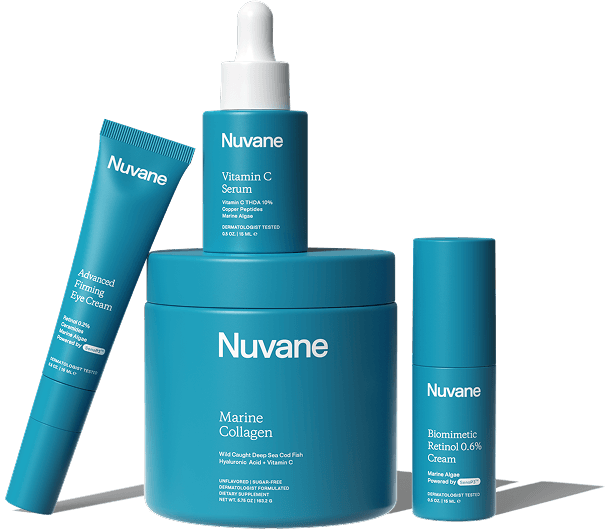
That is where Nuvane’s formulation philosophy is especially relevant. Rather than hinging its routine on exosome marketing, the Nuvane documentation and ingredient lists show a science-led focus on established anti-aging actives and its SenoP3 peptide complex. Across the uploaded materials, SenoP3 combines Copper Tripeptide-1, Palmitoyl Tripeptide-38, and Acetyl Hexapeptide-8 to target collagen support, elasticity, expression lines, and overall dermal renewal. The wider Nuvane system also includes retinol, bakuchiol, niacinamide, acetyl glucosamine, sodium hyaluronate, marine algae, alpha arbutin, and tetrahexyldecyl ascorbate, depending on product type.
Why Is SenoP3 a More Practical 2026 Conversation Than Exosomes for Daily Use?
Because peptides may not be as headline-grabbing as regenerative vesicles, but they are far easier to formulate into daily skin care and far easier to explain to real-world users who want visible results without regulatory ambiguity. The uploaded Nuvane materials describe SenoP3 as a tri-peptide system built around structural support, wrinkle softening, and skin repair, while the ingredient documents place it in formulas paired with retinol, bakuchiol, vitamin C, niacinamide, and hydrating agents.
In other words, if exosomes are the intriguing lab crush, SenoP3 plus established actives is the dependable grown-up relationship
What Is the Bottom Line for Exosomes in Dermatology in 2026?
Exosomes deserve attention, not blind devotion. The 2026 literature update suggests real therapeutic potential, especially for skin rejuvenation, post-procedure recovery, pigmentation support, and some inflammatory conditions. But it also highlights the exact reasons this field needs restraint: limited trials, heterogeneity, short follow-up, variable manufacturing quality, potential conflicts of interest, and serious safety concerns with injections.
For now, the best evidence-based stance is this: topical or device-assisted exosome strategies may become an important future category in dermatology, but routine injectable exosome use is not ready for casual normalization. Until stronger long-term data arrive, daily anti-aging care is still better anchored by proven actives and rational formulation design.
Nuvane Vs. Exosomes?
Instead of betting everything on emerging exosome technology, Nuvane emphasizes a stack of science-backed actives already familiar to evidence-conscious skin care: retinol in 0.3% and 0.6% creams, bakuchiol for sensitive-skin pathways, tetrahexyldecyl ascorbate in the vitamin C serum, niacinamide, acetyl glucosamine, hyaluronic acid, alpha arbutin, and marine algae extracts. At the center is SenoP3, the brand’s biomimetic peptide complex built from Copper Tripeptide-1, Palmitoyl Tripeptide-38, and Acetyl Hexapeptide-8. Based on the uploaded medical team deck and ingredient files, that gives Nuvane a more practical “science now” identity rather than a “maybe someday” exosome identity.
What Are the Most Common Questions About Exosomes in Dermatology in 2026?
Are exosomes approved for dermatology treatments?
The attached 2026 review reports that, as of the periods it examined, no exosome-based therapies had formal approval for therapeutic dermatologic use from major regulators such as the FDA.
Do exosomes help with wrinkles and skin aging?
They may. Several studies in the review reported improvements in wrinkles, elasticity, hydration, and texture, especially in topical or microneedling-assisted settings.
Are topical exosomes safer than injected exosomes?
Based on the review, topical use appeared better tolerated overall, while injections were linked to more serious adverse events such as granulomas, necrosis, and allergic reactions.
Can exosomes help acne scars?
Early data suggest potential benefit, particularly when combined with fractional CO2 laser, but the evidence is still limited.
Do exosomes work for inflammatory skin diseases?
There are early positive signals in psoriasis and atopic dermatitis, but larger trials are needed before firm conclusions can be made.
Why is there so much hype around exosomes?
Because they fit the regenerative medicine trend and have plausible biologic mechanisms, but marketing has moved faster than standardized clinical evidence.
Should consumers choose exosome products over retinol or peptides?
Not automatically. In 2026, established actives such as retinol, stable vitamin C, niacinamide, bakuchiol, and biomimetic peptides remain the more practical and better-characterized everyday choice.
What is the smarter anti-aging strategy right now?
Use proven ingredients consistently, protect skin with sunscreen, and view exosomes as an emerging category worth watching rather than a miracle shortcut. Nuvane’s SenoP3-centered formulas illustrate that “advanced” does not have to mean “experimental.”
References:
[1] Wang OJE, Bajwa B, Rivers JK. Exosome-Based Therapies in Dermatology: A Scoping Review. J Drugs Dermatol. 2026;25(4):368-376. doi:10.36849/JDD.9610.
[2] Kalluri R, LeBleu VS. The biology, function, and biomedical applications of exosomes. Science. 2020;367(6478):eaau6977.
[3] Park GH, Kwon HH, Seok J, et al. Efficacy of combined treatment with human adipose tissue stem cell-derived exosome-containing solution and microneedling for facial skin aging: A 12-week prospective, randomized, split-face study. J Cosmet Dermatol. 2023;22(12):3418-3426.
[4] Kwon HH, Yang SH, Lee J, et al. Combination treatment with human adipose tissue stem cell-derived exosomes and fractional CO2 laser for acne scars: A 12-week prospective, double-blind, randomized, split-face study. Acta Derm Venereol. 2020;100(18):adv00310.
[5] Estupiñan B, Ly K, Goldberg DJ. Adipose mesenchymal stem cell-derived exosomes versus platelet-rich plasma treatment for photoaged facial skin: An investigator-blinded, split-face, non-inferiority trial. J Cosmet Dermatol. 2025;24(5):e70208.
[6] Proffer SL, Paradise CR, DeGrazia E, et al. Efficacy and tolerability of topical platelet exosomes for skin rejuvenation: six-week results. Aesthet Surg J. 2022;42(10):1185-1193.
[7] Wyles SP, Proffer SL, Farris P, et al. Effect of topical human platelet extract for facial skin rejuvenation: a histological study of collagen and elastin. J Drugs Dermatol. 2024;23(9):735-740.
[8] Schagen SK. Topical peptide treatments with effective anti-aging results. J Drugs Dermatol. 2017;16(6):s95-s97.
[9] Blanes-Mira C, Clemente J, Jodas G, et al. A synthetic hexapeptide with antiwrinkle activity. Int J Cosmet Sci. 2002;24(5):303-310.
[10] Pickart L, Thaler MM. Growth-modulating tripeptide and its copper complex. Proc Natl Acad Sci U S A. 1980;77(7):4584-4587.
More info:
- How Does Retinol Actually Work for Skin Aging?
- What Is SenoP3 and Why Do Biomimetic Peptides Matter?
- How Should You Choose Between Retinol 0.3%, Retinol 0.6%, and Bakuchiol?
- What Is the Best Morning Routine for Brightening and Firming Aging Skin?
Find the most effective anti-aging products for you by taking the free skin assessment.
Enjoyed this article? Add Nuvane as a preferred source on Google.