
Best treatments for tech neck: smooth neck lines


What is the quick answer to getting rid of tech neck?
Tech neck is the mix of horizontal neck lines, creasing, and skin laxity that can look worse when you spend hours looking down at a phone or laptop. You cannot erase it overnight, but you can soften it with a smarter posture setup, daily sunscreen, consistent neck skincare, and collagen-supporting actives. The best topical strategy is usually a gentle but steady routine: protect in the morning, treat at night, and extend your face products down to your neck. Evidence for photoaging supports sunscreen and retinoid-style treatments as the heavy hitters, while bakuchiol can be a more tolerable alternative for sensitive skin.
Key Points:
- Tech neck is not just about scrolling; it is also about age, sun exposure, repeated folding, and thinner neck skin.
- The neck often shows aging faster because it has fewer oil glands and gets less consistent skincare than the face.
- Daily UV protection matters just as much as treatment creams, because photoaging deepens lines over time.
- For treatment, retinol 0.3% and bakuchiol are two of the smartest topical options to consider.
Why is everyone suddenly talking about tech neck?
Because the neck has become the beauty world’s newest truth teller. It is where modern habits meet old-school biology: hours of looking down, years of sun exposure, and a tendency to lavish skincare on the face while leaving the neck to fend for itself. The result is familiar—horizontal lines, crepey texture, and that slightly panicked moment in the mirror when you tilt your chin and think, Wait, when did that happen?
The term “tech neck” is catchy, but the concept is more layered than the nickname suggests. Repeated downward posture can emphasize existing creases, while intrinsic aging and photoaging weaken collagen, elastin, hydration, and skin support structures over time. In other words, your phone may not be the whole villain, but it can absolutely be an accomplice.
What exactly is tech neck?
Tech neck, in the beauty sense, refers to visible horizontal lines, folds, and early laxity on the neck that may appear more obvious with repetitive downward head posture. It is different from the orthopedic use of the same phrase, which refers to neck strain or pain related to posture.
For skin, think of tech neck as a wrinkle amplifier rather than a single-cause diagnosis. The neck naturally develops lines as skin quality changes with age. Repetitive bending, compression, dryness, and sun damage can make those lines look deeper or become fixed more quickly.
Why does the neck age so fast?
Is neck skin different from facial skin?
Yes—and this is where things get unfair. The neck is structurally vulnerable. It moves constantly, folds repeatedly, and often gets less product than the face. Aging research on the neck shows changes in firmness, elasticity, displacement, and contour across age groups, which helps explain why the area can develop lines and laxity early.
Does sun make tech neck worse?
Absolutely. UV exposure is one of the biggest drivers of photoaging, which means more collagen breakdown, roughness, uneven tone, and wrinkles. If you treat your neck at night but skip sunscreen in the morning, you are basically trying to bail water from a leaky boat while the hose is still on. Broad-spectrum sunscreen remains one of the most evidence-based tools for preventing photoaging.
Can you actually get rid of tech neck?
You can improve it—sometimes dramatically if you catch it early—but “get rid of” depends on how deep the lines are.
If your tech neck is mostly early creasing, dehydration, and mild textural change, topical care and posture changes can make a visible difference. If the lines are deep and fixed, skincare can soften them and improve surrounding skin quality, but it may not erase every fold completely.
The realistic goal is this: fewer visible lines, smoother texture, better elasticity, and less progression. That is a win, and it is far more achievable than chasing poreless, crease-free perfection.
What should your daily anti–tech neck routine look like?
Morning: how do you protect the neck?
Your morning goal is prevention.
Cleanse gently, then apply your Vitamin C antioxidant or hydrating serum to the neck as well as the face. Follow with moisturizer if needed, and finish with broad-spectrum SPF 30 or higher, bringing it all the way down the neck and onto the upper chest. This matters because UV exposure is one of the strongest external drivers of visible aging.
Helpful morning ingredients include:
- Humectants for hydration
- Vitamin C or other Antioxidants for environmental defense
- Niacinamide for barrier support and tone
- Hyaluronic acid for surface plumping
Evening: how do you treat neck lines?
Night is treatment time. This is when collagen-supportive actives shine.
Apply your treatment to clean, dry skin using a thin layer over the neck. Start slowly, especially if you are using a retinoid-style product. The neck can be more reactive than the face, so consistency beats aggression every time.
The best evening actives for tech neck usually include:
- Gentle retinol for cell turnover and collagen support
- Bakuchiol for retinol-like benefits with gentler tolerability
- Peptides for firmness support
- Niacinamide and hydrators to reduce irritation risk
Retinoids have the strongest long-term evidence base among topical treatments for photoaging, and bakuchiol has clinical data showing comparable improvement in wrinkles and pigmentation to retinol in a small randomized study, with better tolerability.
How do posture and device habits help?
This is the unglamorous answer that actually works.
Raise your phone closer to eye level. Bring your laptop up. Take micro-breaks. Stretch your neck and shoulders. The point is not to become a posture robot. It is to reduce the endless crease-and-hold pattern that keeps reinforcing the same lines.
Try this:
- Hold your phone higher instead of dropping your chin lower
- Use a laptop stand when possible
- Break every 20 to 30 minutes to reset your neck position
- Avoid reading in bed with your chin tucked for long periods
Topicals repair; habits reduce the mechanical repeat offense.
Which skincare ingredients matter most for tech neck?
Why is retinol such a big deal?
Because it is one of the most studied anti-aging ingredients in skincare. Retinoids help normalize cell turnover and improve visible signs of photoaging over time. In practical terms, that can mean smoother texture, softer fine lines, and better overall skin quality. Reviews of photoaging treatment consistently place topical retinoids among the most proven options.
What about bakuchiol?
Bakuchiol is the chic understudy that earned a standing ovation. In a randomized double-blind study, bakuchiol improved wrinkles and hyperpigmentation comparably to retinol, while users reported less scaling and stinging. That makes it especially appealing for sensitive, dry, or easily irritated neck skin.
Do peptides, niacinamide, and hydrators help?
They can. Peptides are often used to support firmness-focused formulas, niacinamide helps reinforce barrier function and improve uneven tone, and humectants like hyaluronic acid help the neck look less crinkled by improving hydration. They are not magic alone, but they make a smart supporting cast around retinol or bakuchiol.
What mistakes make tech neck worse?
Using strong actives too aggressively is a classic one. The neck can get red, itchy, or flaky fast, especially with retinoids. Another mistake is treating the neck but forgetting sunscreen. A third is inconsistency: using a product for four nights, abandoning it for three weeks, then declaring defeat.
And please skip DIY occlusion stunts with kitchen wrap over potent actives. More drama does not equal more results.
How long does it take to see improvement?
Expect hydration benefits within days, texture improvement within a few weeks, and more meaningful softening of lines after roughly 8 to 12 weeks of consistent use. That timeline lines up with how anti-aging topicals are usually evaluated in clinical studies, especially for retinoid and bakuchiol-style results.
How does Nuvane approach tech neck support?
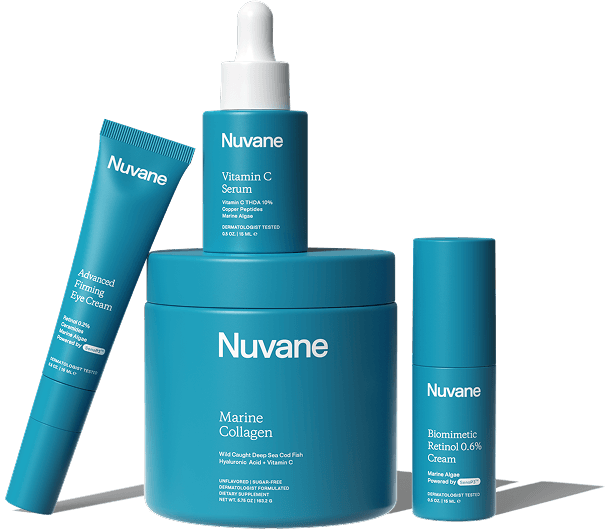
According to the attached Nuvane project documentation, the brand’s anti-aging approach focuses on combining clinically familiar actives with its SenoP3 peptide complex, plus support ingredients such as niacinamide, hyaluronic acid, acetyl glucosamine, and marine algae. The materials describe SenoP3 as a triple-peptide system built around Copper Tripeptide-1, Palmitoyl Tripeptide-38, and Acetyl Hexapeptide-8, designed to support wrinkle reduction, firmness, elasticity, and smoother texture.
The ingredient list also shows that Nuvane’s Biomimetic Retinol 0.3% Cream includes retinol alongside niacinamide, sodium hyaluronate, acetyl glucosamine, and the SenoP3 peptide blend, while the Biomimetic Bakuchiol Cream pairs bakuchiol with niacinamide, sodium hyaluronate, centella asiatica, ascorbyl glucoside, and the same peptide complex. That combination makes sense for neck care because the area often benefits from a balance of treatment, hydration, and barrier support rather than a single hero ingredient doing all the heavy lifting.
Which treatments should you actually consider at the end of all this?
For most people trying to improve visible tech neck with skincare, two especially sensible options are:
Should you choose retinol 0.3%?
Yes, if you want a beginner-friendlier collagen-supporting treatment and you are ready to use it consistently at night. A 0.3% retinol cream is a smart entry point for people who want meaningful anti-aging benefits without jumping straight into a stronger formula. Based on the attached Nuvane documentation, Nuvane’s Biomimetic Retinol 0.3% Cream is positioned exactly in that lane, with retinol supported by SenoP3 peptides, niacinamide, and hyaluronic acid.
Should you choose bakuchiol?
Yes, if your neck is sensitive, dry, reactive, or you simply prefer a gentler route. Bakuchiol is especially compelling when you want a smoother, more elegant glide path into anti-aging care. The attached Nuvane ingredient documentation shows that the Biomimetic Bakuchiol Cream combines bakuchiol with peptides, niacinamide, centella, and hydrators, which makes it a strong choice for people who want firming support with less risk of irritation drama.
What are the most common questions about tech neck?
Can tech neck happen in your 20s?
Yes. Early horizontal lines can appear surprisingly young, especially with sun exposure, repetitive downward posture, and dry skin.
Is tech neck permanent?
Not always. Early lines can improve noticeably. Deep, fixed lines can soften, but may not disappear completely with skincare alone.
Should you put face products on your neck?
Usually yes—unless the product is too strong or irritating. The neck benefits from many of the same anti-aging ingredients as the face.
Is sunscreen really necessary on the neck every day?
Yes. UV exposure is a major driver of photoaging, including wrinkles, roughness, and uneven tone.
Can retinol irritate the neck more than the face?
Yes. The neck can be more sensitive, so start slowly and moisturize well.
Is bakuchiol better than retinol?
Not universally. Retinoids remain the most proven category overall, but bakuchiol can be better tolerated and still effective for many people.
Do peptides help with tech neck?
They can support firmness-focused formulas, especially when paired with proven actives and hydration support.
When should you see a professional?
If your neck irritation is severe, persistent, or you are considering in-office treatments for deeper lines or laxity.
What is the final takeaway?
Tech neck is real, but it is not unbeatable. The fix is not one miracle gadget or one panic purchase. It is a layered approach: better posture, daily SPF, and consistent treatment with ingredients that support collagen, hydration, and skin quality.
From the attached Nuvane documentation, the most relevant topical treatment suggestions for this concern are retinol 0.3% for steady visible anti-aging correction and bakuchiol for a gentler, better-tolerated alternative—both strengthened by Nuvane’s science-forward SenoP3 peptide approach.
References :
[1] Kammeyer A, Luiten RM. Oxidation events and skin aging. Ageing Res Rev. 2015.
[2] Griffiths CEM. The role of retinoids in the prevention and repair of aged and photoaged skin. Clin Exp Dermatol. 2001.
[3] Mukherjee S, Date A, Patravale V, et al. Retinoids in the treatment of skin aging: an overview of clinical efficacy and safety. Clin Interv Aging. 2006.
[4] Foolad N, Vaughn AR, Rybak I, et al. Prospective, randomized, double-blind assessment of topical bakuchiol and retinol for facial photoageing. Br J Dermatol. 2019.
[5] Bissett DL, Oblong JE, Berge CA. Topical niacinamide reduces yellowing, wrinkling, red blotchiness, and hyperpigmented spots in aging facial skin. Int J Cosmet Sci. 2005.
[6] Bissett DL, Robinson LR, Raleigh PS, et al. Reduction in the appearance of facial hyperpigmentation by topical N-acetyl glucosamine. J Cosmet Dermatol. 2007.
[7] Papakonstantinou E, Roth M, Karakiulakis G. Hyaluronic acid: a key molecule in skin aging. Dermatoendocrinol. 2012.
[8] Krutmann J, Bouloc A, Sore G, et al. The skin aging exposome. J Dermatol Sci. 2017.
[9] Ganceviciene R, Liakou AI, Theodoridis A, et al. Skin anti-aging strategies. Dermatoendocrinol. 2012.
[10] Wollina U, Goldman A. Aging of the neck decoded: new insights for minimally invasive procedures. Aesthetic Plast Surg. 2022.
More info:
- Best neck and décolleté anti-aging treatments for 2026
- Retinol vs. Bakuchiol: Which Is Better for Your Skin?
- Is SenoP3 the New Topical Solution for Signs of Skin Aging?
- What’s the Best Anti-Aging Skincare Routine If I Want Results?
Find the most effective anti-aging products for you by taking the free skin assessment.
Enjoyed this article? Add Nuvane as a preferred source on Google.