
The 6 Reasons Skin Ages - One Routine Targets Them All


Quick answer: what actually drives skin aging?
- Skin aging is not one process. It is six overlapping biological mechanisms — senescent cell accumulation, collagen and elastin breakdown, mitochondrial and oxidative decline, glycation, barrier and microbiome erosion, and pigment dysregulation [1].
- Most bathroom shelves are organized by symptom (wrinkle cream, dark spot serum, firming lotion). Skin biology is organized by mechanism — which is why adding more products rarely adds more results.
- A small number of well-chosen actives cover almost all six pathways. Retinoids, peptides, stabilized vitamin C, niacinamide and barrier lipids each hit multiple mechanisms at once.
- Nuvane's approach is built around this overlap: the SenoP3™ triple-peptide complex (Palmitoyl Tripeptide-38, Copper Tripeptide-1/GHK-Cu, Acetyl Hexapeptide-8) paired with a retinoid or bakuchiol and a stable vitamin C covers the mechanism map in three steps, not ten.
- Simplicity is not a compromise. Fewer, better-matched actives mean less barrier irritation, higher adherence, and — in practice — better twelve-week outcomes.
Why does symptom-based skincare keep disappointing people?
This section explains the gap between how products are marketed and how skin actually ages.
Walk through any beauty retailer and you will see aisles sorted by complaint: lines, sagging, dullness, spots, redness. It is an intuitive way to shop and a poor way to treat. A single upstream event — say, a population of dermal fibroblasts that has stopped dividing and started secreting inflammatory signals — will surface simultaneously as thinner skin, slower repair, duller tone and deeper folds. Four "concerns," one cause.
The reverse is also true. Two people with identical crow's feet may have arrived there by different routes: one through cumulative UV-driven collagen fragmentation, the other through repetitive muscle movement over a dehydrated, thinned dermis. The wrinkle looks the same. The correct intervention does not.
This is why routines expand without improving. Every new complaint invites a new product, the products overlap in mechanism while conflicting in pH and irritancy, and the barrier — which was quietly holding everything together — gives out first. The more useful question is not what do I see in the mirror but which biological process is producing what I see.
What are the six mechanisms that drive skin aging?
A working map of the biology, and what each mechanism looks like on the surface.
Contemporary reviews of skin aging converge on a set of interacting drivers rather than a single cause [1][2]. Here is the practical version.
1. Cellular senescence and the SASP
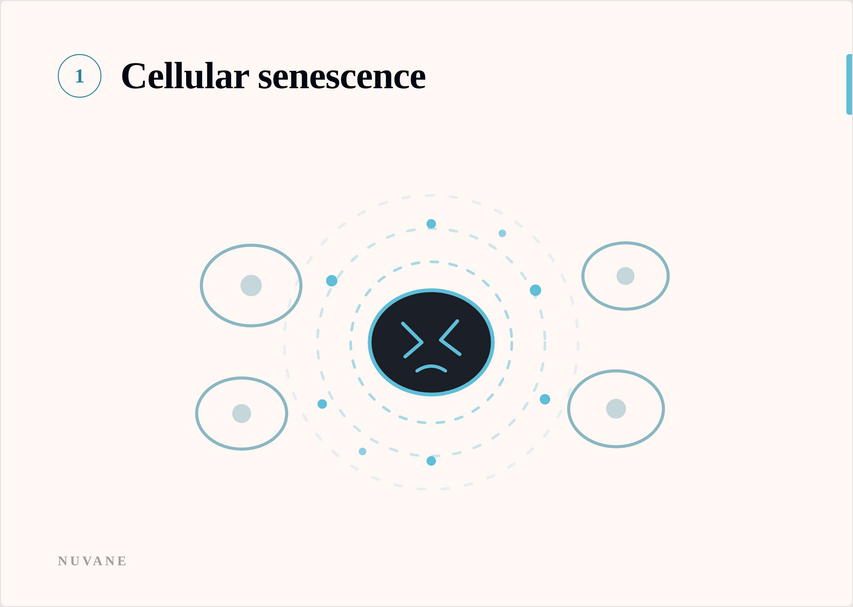
Some cells stop dividing but refuse to die. These senescent cells — often called "zombie cells" — accumulate in aging skin and begin secreting a cocktail of cytokines, proteases and growth factors known as the senescence-associated secretory phenotype (SASP) [3]. The SASP is contagious in effect: it pushes healthy neighbouring fibroblasts toward the same arrested state and elevates local levels of IL-6, IL-8 and TNF-α [1].
What you see: skin that repairs slowly, loses bounce, and looks generally "tired" in a way no single wrinkle explains.
2. Matrix breakdown: collagen and elastin loss
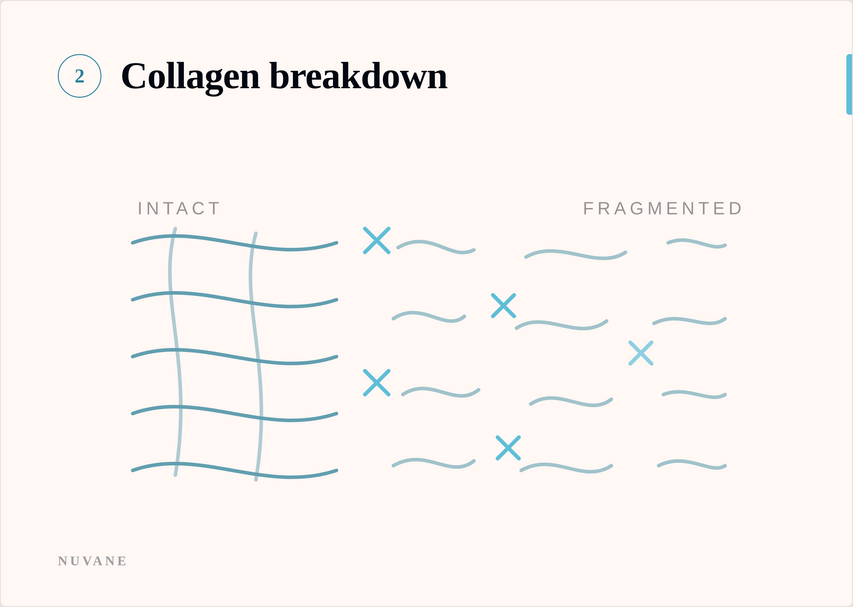
Dermal collagen falls at roughly 1% per year from the mid-twenties, with a steeper drop in the first five post-menopausal years. The loss is not simple dilution — it is fragmentation. Ultraviolet light and pollution generate reactive oxygen species, which upregulate matrix metalloproteinases (MMP-1, MMP-3, MMP-9) that cleave type I and type III collagen [1]. Fragmented collagen then provides poor mechanical anchorage for fibroblasts, which respond by making even less new collagen. Elastic fibers fragment in parallel, and the dermo-epidermal junction flattens.
What you see: fine lines becoming folds, jawline softening, crepey texture on the neck and décolleté.
3. Mitochondrial and oxidative decline
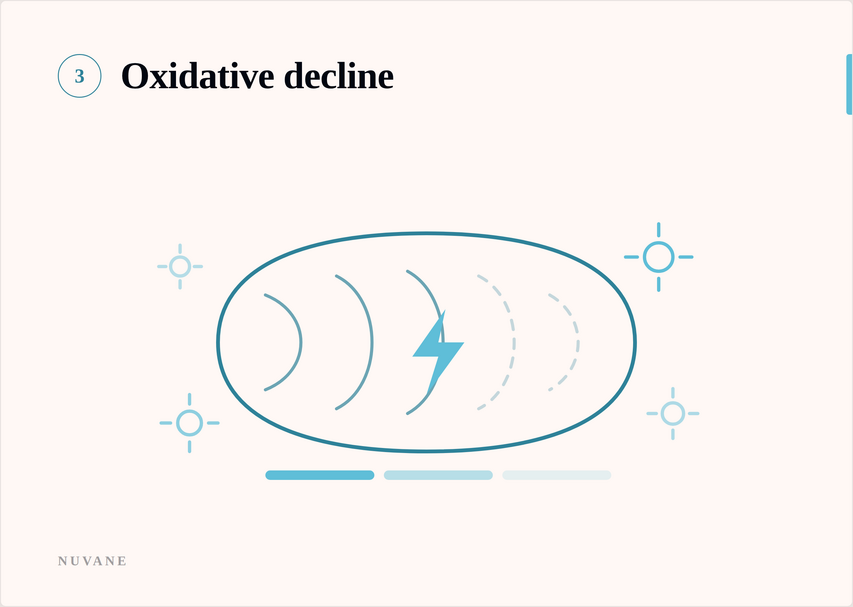
Skin cells are metabolically demanding, and their mitochondria accumulate damage across decades of UV exposure and normal respiration [4]. As mitochondrial output drops, keratinocyte turnover slows and fibroblasts have less ATP available for the expensive business of collagen synthesis. Oxidative stress is both a cause and a consequence, which is what makes this loop self-reinforcing [5].
What you see: dullness, sallow undertone, slower recovery after a late night or a flight.
4. Glycation and tissue stiffening
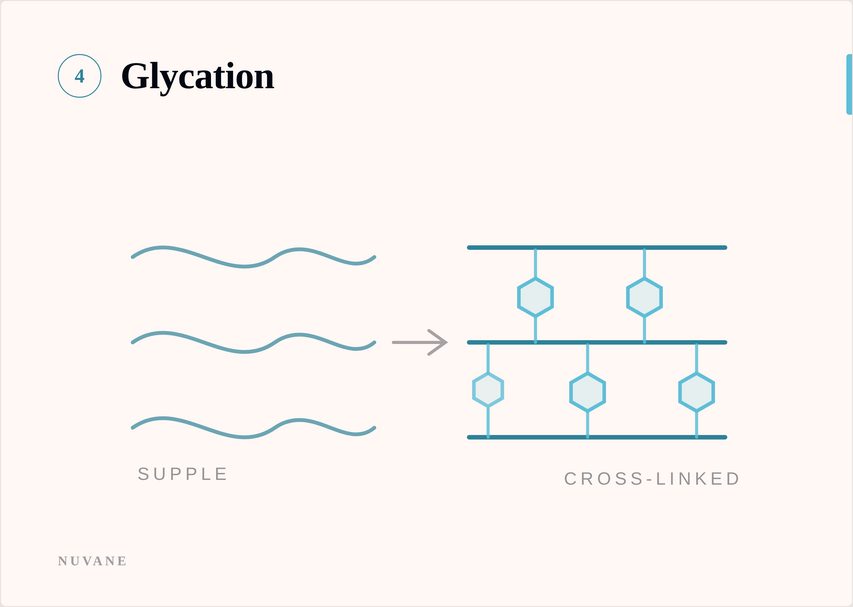
Circulating sugars bind irreversibly to long-lived proteins, forming advanced glycation end products (AGEs) that cross-link collagen and elastin fibers [6]. Cross-linked collagen is stiffer, more brittle and markedly harder for the body's own enzymes to recycle. Because dermal collagen has a half-life measured in years, glycation damage is cumulative and slow to reverse.
What you see: a loss of "spring" — skin that creases and holds the crease, with a yellowish cast.
5. Barrier failure and microbiome drift
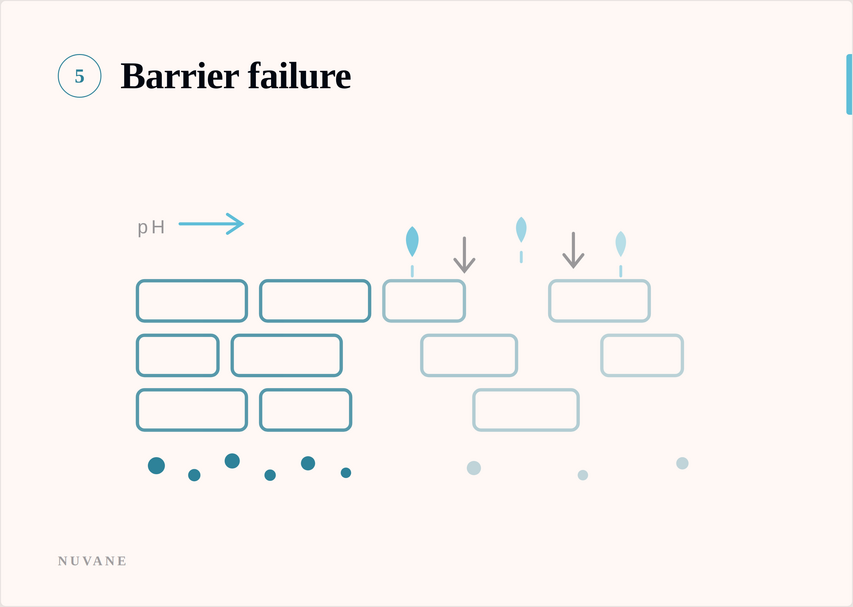
The stratum corneum thins with age, ceramide and natural moisturizing factor levels drop, and skin surface pH rises. A higher pH shifts the resident microbial community and impairs the enzymes that build barrier lipids in the first place [7]. The result is a permeable barrier that lets irritants in and water out — and a low-grade inflammatory tone that feeds directly back into mechanism #1.
What you see: stinging with products you used to tolerate, patchy dryness, reactivity, redness.
6. Pigment dysregulation
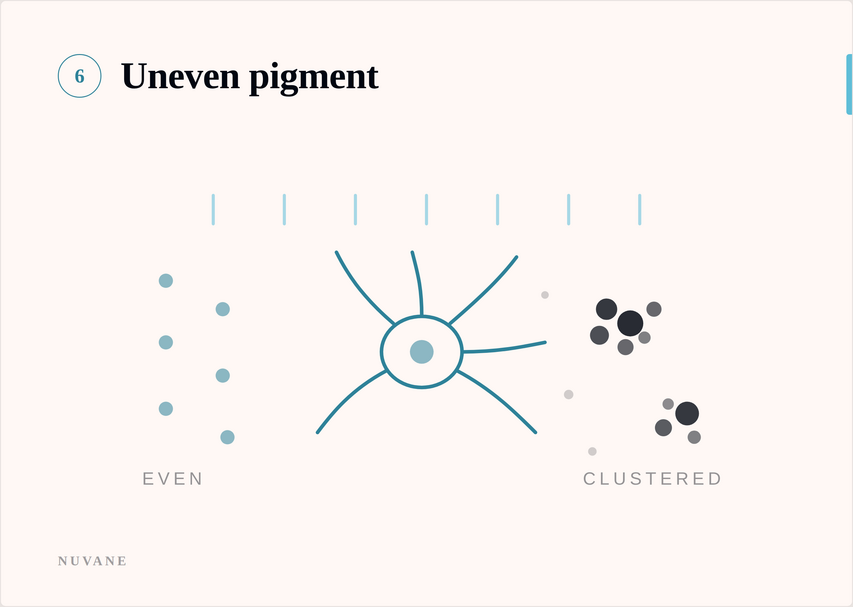
Melanocytes do not simply make more pigment with age; they make it unevenly. Chronic low-grade inflammation and UV exposure disrupt the signalling between keratinocytes and melanocytes, and senescent fibroblasts contribute by altering local growth factor levels [1]. Pigment ends up clustered rather than distributed.
What you see: sun spots, post-inflammatory marks that linger for months, uneven tone across cheeks, hands and chest.
Are these mechanisms actually separate?
Short answer: no — and that is the good news.
The six pathways are heavily cross-wired. Oxidative stress drives senescence. Senescent cells secrete MMPs, accelerating matrix breakdown. Matrix breakdown deprives fibroblasts of mechanical signalling, which further reduces collagen output. A compromised barrier raises baseline inflammation, which worsens both senescence and pigment dysregulation. Glycation stiffens the same collagen that MMPs are fragmenting.
This interconnection is why a targeted intervention can produce disproportionate results. Reduce chronic inflammation and you have simultaneously slowed senescence, protected the matrix and calmed pigment signalling. It also explains a frustration many people know well: treating one visible sign in isolation tends to move the needle very little, because the upstream process feeding it is untouched.
Can a three-step routine really cover six mechanisms?
Yes — because the best-studied actives are each multi-mechanism, not single-purpose.
The mistake is to assume one product per mechanism. In reality, the ingredients with the strongest evidence base each work on several pathways at once. Map them honestly and the overlap is striking.
Retinoids: matrix, turnover and pigment in one molecule
Topical retinol converts in skin to retinoic acid, binds nuclear retinoic acid receptors, and does three things at once: it suppresses MMP expression, stimulates procollagen I and III synthesis, and normalizes keratinocyte differentiation and melanosome transfer [8][9]. A landmark controlled study of 0.4% retinol on naturally aged skin found significant improvement in fine wrinkling alongside measurable increases in glycosaminoglycan and procollagen I expression [9]. That is mechanisms 2, 3 and 6 addressed by a single active.
For sensitive or reactive skin, bakuchiol offers a plausible alternative: a randomized double-blind trial found it comparable to retinol for wrinkle and pigmentation improvement over twelve weeks, with significantly less scaling and stinging [10].
Peptides: senescence signalling and matrix rebuilding
Peptides are short amino acid sequences that act as messengers rather than exfoliants — which is precisely why they combine well with retinoids instead of competing with them.
- Copper Tripeptide-1 (GHK-Cu) is among the most extensively documented. It stimulates collagen and elastin synthesis, modulates the expression of a broad set of genes involved in tissue remodelling, and carries meaningful antioxidant activity [11]. Its relevance to mechanism #1 is direct: it appears to shift fibroblast gene expression back toward a more youthful profile.
- Palmitoyl Tripeptide-38 signals for collagen I, III and IV, fibronectin, laminin-5 and hyaluronic acid — effectively instructing the dermis to rebuild multiple matrix components rather than one.
- Acetyl Hexapeptide-8 works on a different axis entirely, modestly attenuating the neurotransmitter signalling that drives repetitive expression lines [12].
Vitamin C, niacinamide and lipids: the antioxidant and barrier layer
Stabilized vitamin C neutralizes reactive oxygen species and serves as an essential cofactor for the enzymes that hydroxylate proline and lysine during collagen assembly — without it, collagen synthesis is biochemically capped. Lipid-soluble derivatives such as tetrahexyldecyl (THD) ascorbate penetrate the stratum corneum more readily than L-ascorbic acid and avoid the low-pH sting [13].
Niacinamide covers an unusual amount of ground for one molecule: it increases ceramide synthesis and barrier lipid production, reduces transepidermal water loss, dampens inflammatory signalling, and reduces melanosome transfer to keratinocytes — with controlled clinical data behind each [14]. Mechanisms 5 and 6, plus a contribution to 1.
Line these up and the arithmetic changes. Three well-formulated products, correctly layered, reach all six pathways. A tenth product does not add a seventh mechanism — it adds irritation risk, cost, and one more step to skip on a tired Tuesday.
How does Nuvane build this into a simple routine?
How the mechanism map translates into what actually sits on the shelf.
Nuvane's formulations were designed around mechanism coverage rather than concern categories, which is why the routine is deliberately short.
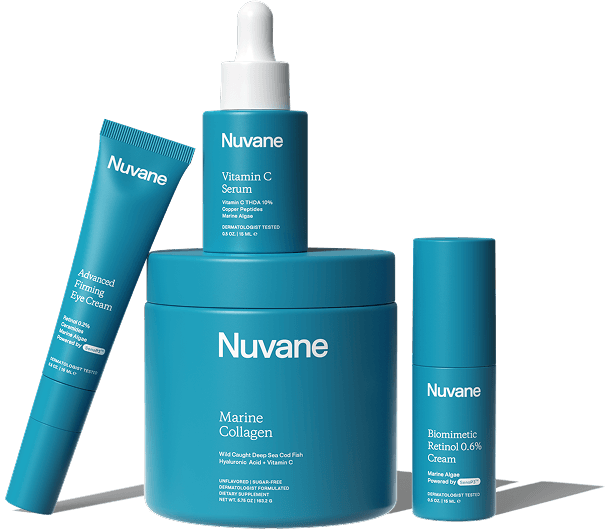
At the center is the SenoP3™ triple-peptide complex, present across the range. It combines Palmitoyl Tripeptide-38 (multi-component matrix signalling — collagen, hyaluronic acid, laminin), Copper Tripeptide-1 / GHK-Cu (collagen and elastin synthesis plus antioxidant activity, with documented effects on the fibroblast senescence profile), and Acetyl Hexapeptide-8 (expression-line relaxation) [11][12]. Three peptides, three distinct mechanisms, one complex.
The evening step — matrix and turnover. The Biomimetic Retinol Cream pairs stabilized retinol (0.3% or 0.6%) with SenoP3™, niacinamide, trehalose, marine algae and hyaluronic acid. The pairing is intentional: retinol drives the matrix and pigment mechanisms while niacinamide and trehalose defend the barrier that retinol tends to tax. For reactive or retinoid-intolerant skin, the Biomimetic Bakuchiol Cream substitutes bakuchiol alongside peptides, a vitamin C derivative and Centella asiatica.
The morning step — antioxidant defence and brightness. The Advanced Vitamin C Serum uses THD ascorbate — the stable, lipid-soluble form — with copper peptides, ceramides and marine extracts, targeting the oxidative and mitochondrial mechanism while supporting collagen synthesis and evening tone.
Targeted additions, only where indicated. The Regenerative Dark Spot Corrector (alpha arbutin + retinol + SenoP3™ + niacinamide) for entrenched pigment. The Firming Eye Cream (retinol 0.2% + SenoP3™ + caffeine + ceramides) for a periorbital area whose thinner skin ages on its own timetable. The Oral Marine Collagen Supplement (hydrolyzed marine collagen + hyaluronic acid + vitamin C) as a systemic complement — oral collagen peptides have shown modest but statistically significant improvements in elasticity and hydration in controlled trials [15].
Note what is deliberately absent: no separate serum for every complaint, no aggressive daily acid, no six-step layering sequence. Each addition to a routine raises the probability of barrier disruption — and a disrupted barrier reactivates the inflammatory loop feeding several mechanisms at once. Sunscreen, of course, remains non-negotiable; it is the single highest-yield intervention against mechanisms 2, 3 and 6 and no topical routine substitutes for it.
What should you realistically expect, and when?
A timeline based on how each mechanism actually responds.
- Weeks 1–2 — Barrier and hydration changes come first. Niacinamide, ceramides, trehalose and hyaluronic acid act on the stratum corneum, so surface smoothness and comfort improve early. This is real, but it is the fastest-responding mechanism, not the deepest one.
- Weeks 4–6 — Tone and clarity. Antioxidant protection and normalized keratinocyte turnover begin to show as reduced dullness and softer pigment edges.
- Weeks 8–12 — Matrix change. Procollagen synthesis is slow by nature; measurable improvement in fine lines, firmness and texture typically emerges in this window [9]. This is where most people abandon a routine one month too early.
- Months 4–6 and beyond — Cumulative remodelling. Continued MMP suppression and collagen deposition compound. Consistency, not intensity, is the variable that matters here.
Two honest caveats. Glycation cross-links are the slowest mechanism to shift, and dietary and metabolic factors influence them at least as much as topicals do [6]. And no topical reverses established structural sagging, which reflects fat pad and bone remodelling rather than skin biology alone.
Key takeaways
- Treat mechanisms, not symptoms. Six interacting pathways — senescence, matrix breakdown, oxidative and mitochondrial decline, glycation, barrier/microbiome erosion, and pigment dysregulation — produce nearly every visible sign of skin aging.
- The mechanisms are cross-wired, so a well-chosen intervention pays off across several pathways at once.
- Multi-mechanism actives beat single-purpose products. Retinoids, peptides, stabilized vitamin C and niacinamide each cover two or more pathways.
- Three steps are usually enough: an evening retinoid or bakuchiol, a morning stabilized vitamin C, and daily sun protection — with SenoP3™ peptides running through the routine.
- More products means more irritation risk, and a compromised barrier reactivates the inflammatory loop that accelerates aging.
- Judge results at twelve weeks, not four. Barrier improves in days; collagen takes months.
Frequently asked questions
Which mechanism of skin aging should I address first?
The barrier — always. It is the fastest to respond and it gates everything else: a compromised barrier makes retinoids and vitamin C harder to tolerate and sustains the low-grade inflammation that accelerates senescence and pigment problems. Stabilize it, then build in actives.
Can I target cellular senescence with topical products?
Partially. Topical peptides such as GHK-Cu have documented effects on fibroblast gene expression and collagen output, and reducing chronic inflammation lowers the burden the SASP places on surrounding cells [11]. But no over-the-counter topical selectively clears senescent cells — claims of true topical "senolysis" run well ahead of the human evidence.
Is a three-step routine really as effective as a ten-step one?
For most people, yes — and often better, because adherence and barrier tolerance are the two variables that most reliably predict twelve-week outcomes. Additional steps add benefit only when they introduce a mechanism the routine does not already cover.
Do I need both retinol and peptides, or is one enough?
They act through different pathways and are complementary rather than redundant. Retinoids drive matrix synthesis and turnover through nuclear receptor signalling; peptides deliver targeted messages for collagen, elastin and expression-line relaxation. Formulating them together — as in the Biomimetic Retinol Cream — also lets the peptide and barrier components offset retinoid irritation.
What if my skin can't tolerate retinol at all?
Bakuchiol is the best-evidenced alternative, showing comparable twelve-week improvement in wrinkles and pigmentation with significantly less scaling and stinging in a randomized double-blind comparison [10]. The Biomimetic Bakuchiol Cream pairs it with peptides and Centella asiatica for reactive skin.
Does diet affect any of these mechanisms?
Glycation most directly — AGE formation tracks with glycemic load and cumulative sugar exposure [6]. Oxidative and inflammatory mechanisms are also diet-responsive. Neither replaces topical treatment, but both influence how much work the topicals have to do.
How does menopause change the picture?
Falling estrogen accelerates collagen loss, reduces hyaluronic acid content and impairs barrier function, which is why several mechanisms appear to worsen simultaneously in a short window [1]. The routine framework does not change; the urgency and the emphasis on barrier and matrix support do.
Will these products help with sagging?
They help with firmness that stems from dermal collagen and elastin quality. Established structural sagging also involves fat pad redistribution and bone remodelling, which topicals cannot address — that is a conversation for in-office procedures.
How long before I know whether a routine is working?
Give it twelve weeks with consistent use before judging. Barrier and hydration improve within two weeks, tone within six, and collagen-mediated change between weeks eight and twelve [9].
References
- Naharro-Rodriguez, J., Bacci, S., Hernandez-Bule, M.L., Perez-Gonzalez, A., & Fernandez-Guarino, M. Decoding Skin Aging: A Review of Mechanisms, Markers, and Modern Therapies. Cosmetics, 2025;12(4):144.
- Rinnerthaler, M., Bischof, J., Streubel, M.K., Trost, A., & Richter, K. Oxidative Stress in Aging Human Skin. Biomolecules, 2015;5(2):545–589.
- Wang, A.S., & Dreesen, O. Biomarkers of Cellular Senescence and Skin Aging. Frontiers in Genetics, 2018;9:247.
- Sreedhar, A., Aguilera-Aguirre, L., & Singh, K.K. Mitochondria in Skin Health, Aging, and Disease. Cell Death & Disease, 2020;11(6):444.
- Krutmann, J., Bouloc, A., Sore, G., Bernard, B.A., & Passeron, T. The Skin Aging Exposome. Journal of Dermatological Science, 2017;85(3):152–161.
- Gkogkolou, P., & Böhm, M. Advanced Glycation End Products: Key Players in Skin Aging? Dermato-Endocrinology, 2012;4(3):259–270.
- Li, Z., Bai, X., Peng, T., et al. Interaction Between the Microbiota and the Skin Barrier in Aging Skin: A Comprehensive Review. Frontiers in Physiology, 2024;15:1322205.
- Mukherjee, S., Date, A., Patravale, V., Korting, H.C., Roeder, A., & Weindl, G. Retinoids in the Treatment of Skin Aging. Clinical Interventions in Aging, 2006;1(4):327–348.
- Kafi, R., Kwak, H.S.R., Schumacher, W.E., et al. Improvement of Naturally Aged Skin with Vitamin A (Retinol). Archives of Dermatology, 2007;143(5):606–612.
- Dhaliwal, S., Rybak, I., Ellis, S.R., et al. Prospective, Randomized, Double-Blind Assessment of Topical Bakuchiol and Retinol for Facial Photoaging. British Journal of Dermatology, 2019;180(2):289–296.
- Pickart, L., & Margolina, A. Regenerative and Protective Actions of the GHK-Cu Peptide in the Light of the New Gene Data. International Journal of Molecular Sciences, 2018;19(7):1987.
- Wang, Y., Wang, M., Xiao, S., Pan, P., Li, P., & Huo, J. The Anti-Wrinkle Efficacy of Argireline, a Synthetic Hexapeptide, in Chinese Subjects. American Journal of Clinical Dermatology, 2013;14(2):147–153.
- Stamford, N.P.J. Stability, Transdermal Penetration, and Cutaneous Effects of Ascorbic Acid and Its Derivatives. Journal of Cosmetic Dermatology, 2012;11(4):310–317.
- Bissett, D.L., Oblong, J.E., & Berge, C.A. Niacinamide: A B Vitamin That Improves Aging Facial Skin Appearance. Dermatologic Surgery, 2005;31(7 Pt 2):860–865.
- Choi, F.D., Sung, C.T., Juhasz, M.L.W., & Mesinkovsk, N.A. Oral Collagen Supplementation: A Systematic Review of Dermatological Applications. Journal of Drugs in Dermatology, 2019;18(1):9–16.
Related search terms
mechanisms of skin aging explained, hallmarks of skin aging, simple anti-aging skincare routine that works, cellular senescence skin treatment, matrix metalloproteinase collagen breakdown skincare, glycation and skin aging, skin barrier and microbiome aging, SenoP3 triple peptide complex, copper peptide GHK-Cu collagen, palmitoyl tripeptide-38 benefits, biomimetic retinol cream 0.3%, bakuchiol vs retinol sensitive skin, THD ascorbate vitamin C serum, three step anti-aging routine over 40, how long until retinol shows results, minimalist skin longevity routine
Find the most effective anti-aging products for you by taking the free skin assessment.
Recommended Read
How senescent cells drive skin aging?
The complete guide to skin longevity ingredients
What's the "less is more" idea in skin longevity?
How can anti-glycation skincare transform aging skin?
Find the most effective anti-aging products for you by taking the free skin assessment.
Enjoyed this article? Add Nuvane as a preferred source on Google.