
Best 10 ingredients to get rid of your dull, tired skin


Key Takeaways
- Vitamin C (THD Ascorbate) is the most effective brightening ingredient for dull skin — it inhibits melanin synthesis, neutralizes the oxidative damage that mutes radiance, and visibly improves skin tone within weeks of consistent morning use.
- Retinol eliminates dullness at its source by accelerating the shedding of the dead, pigment-loaded surface cells that give skin its flat, gray appearance — nothing restores surface radiance more completely or more durably.
- Niacinamide addresses uneven tone by blocking melanin transfer, while simultaneously improving barrier function and hydration — two of the most underappreciated drivers of dull skin.
- Dullness is almost never caused by just one thing. Dead cell buildup, dehydration, impaired microcirculation, accumulated oxidative damage, and declining cell turnover all contribute — which is why single-ingredient approaches rarely produce the kind of glow people are actually looking for.
- Marine algae and copper peptides provide the antioxidant depth that topical brighteners alone cannot — targeting the oxidative stress that dull, tired skin accumulates from UV, pollution, and metabolic aging.
Why does skin lose its radiance and start looking dull and tired?
Radiant skin is not an accident — it is the result of a specific set of biological processes working at full capacity. When those processes slow down, dullness sets in.
Skin looks radiant when light reflects evenly off a smooth, well-hydrated surface. When the surface is rough, dehydrated, unevenly pigmented, or covered in a layer of dead cells that haven't shed properly, light scatters in all directions rather than reflecting cleanly — and the result is the flat, muted, gray-toned complexion that most people describe as "dull" or "tired-looking."
There are five distinct mechanisms that drive this loss of radiance. Impaired cell turnover means dead, pigment-loaded keratinocytes accumulate on the surface rather than shedding on schedule. Oxidative stress from UV, pollution, and metabolic aging damages skin cells and degrades the quality of the skin surface. Decreased microcirculation reduces the blood flow that gives skin its natural warmth and color. Uneven melanin distribution creates patchy tone that scatters light unevenly. And barrier dehydration causes the surface to appear flat and rough rather than plump and light-reflective.
The ten ingredients below target all five mechanisms — from the surface-level brightness of vitamin C to the deeper structural restoration of collagen-stimulating peptides.
What are the 10 best ingredients for getting rid of dull, tired skin?
Here is a dermatologist's ranked breakdown of the most effective radiance-restoring ingredients, starting with the most immediately impactful.
#1 — Vitamin C (THD Ascorbate)
Vitamin C is the most reliably effective brightening ingredient in skincare — and in its most stable, bioavailable form, it produces visible improvements in skin radiance within weeks.
Dull skin has two overlapping causes that vitamin C addresses simultaneously. The first is accumulated melanin — the uneven pigmentation that creates flat, patchy tone. Vitamin C inhibits tyrosinase and breaks the oxidative cycle that converts DOPA into melanin, progressively reducing existing hyperpigmentation and preventing new deposits from forming [1]. The second is oxidative damage: free radicals generated by UV exposure and urban pollution degrade the quality of skin cells and the structural proteins that support the skin surface. Vitamin C, as a potent antioxidant, neutralizes these free radicals in real time — protecting the skin's ability to maintain its reflective quality throughout the day.
THD Ascorbate (Tetrahexyldecyl Ascorbate) is the form that matters here. Standard ascorbic acid oxidizes rapidly in air and light, turning yellow-orange and losing efficacy before it reaches the skin. THD Ascorbate is lipid-soluble, highly stable in formula, and penetrates the stratum corneum more efficiently — delivering vitamin C's brightening and antioxidant benefits reliably rather than theoretically [1].
Clinical studies show that consistent twice-daily application of stable vitamin C produces significant improvements in skin brightness, tone evenness, and the reduction of sallowness within 8–12 weeks. The effect is visible and cumulative: skin that has been consistently supported by vitamin C for three months looks meaningfully different from skin that has not.
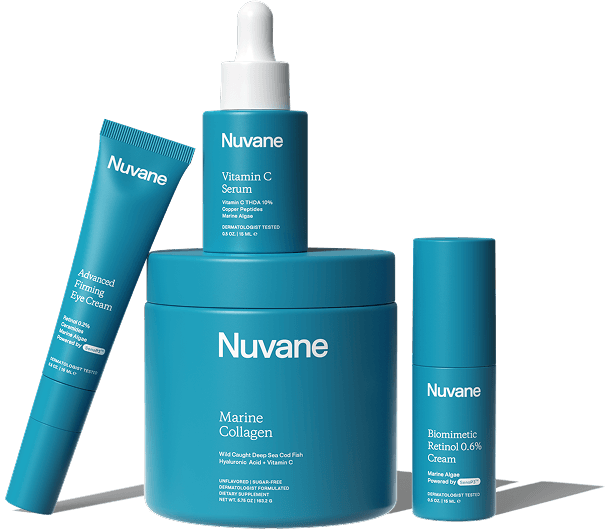
In Nuvane's lineup: The Advanced Vitamin C Serum uses THD Ascorbate alongside copper peptides, ceramides, and marine extracts — a morning formula that combines immediate antioxidant defense with progressive brightening and structural support.
#2 — Retinol
Retinol eliminates dullness at its biological source — the buildup of dead, pigment-loaded surface cells that give aging skin its flat, gray, tired appearance.
The epidermis renews itself through a continuous process of cell production at the base and cell shedding at the surface. In young skin, this cycle takes approximately 28 days. By the mid-40s, it has slowed to 45–60 days. By the 60s, it can take 90 days or longer. The result is an accumulating layer of dead keratinocytes on the skin surface that scatters light unevenly, mutes natural color, and gives skin a persistently dull, rough texture — regardless of how well it is moisturized [2].
Retinol is the most effective topical ingredient for normalizing this cycle. It accelerates epidermal cell turnover directly, ensuring dead cells shed on schedule and are replaced by fresher, smoother, more light-reflective cells from below. At the same time, retinol inhibits the transfer of melanin-containing melanosomes into keratinocytes — so the fresh cells that reach the surface carry less accumulated pigmentation [2].
The surface transformation this produces is often dramatic. Skin that has been using retinol consistently for 8–12 weeks typically looks noticeably smoother, brighter, and more even in tone — not because anything was added to the skin, but because what was obscuring its natural radiance has been systematically removed.
In Nuvane's lineup: Both the Biomimetic Retinol Cream 0.3% and 0.6% pair stabilized retinol with SenoP3™, niacinamide, and hyaluronic acid for cell renewal that is thorough without being destabilizing.
#3 — Niacinamide (Vitamin B3)
Niacinamide produces visible brightening through a unique mechanism — blocking melanin transfer — while simultaneously improving the barrier function and hydration that give skin its natural glow.
Melanin production is only half the pigmentation story. Even if melanin synthesis is slowed by vitamin C or alpha arbutin, the existing melanin in melanocytes still needs to be transported to surrounding keratinocytes to show up on the skin surface. Niacinamide interrupts this transfer step — specifically suppressing the interaction between melanocytes and keratinocytes that allows melanosomes to move between cells [3]. The result is less pigment reaching the surface, which means more even tone and less gray, flat appearance.
But niacinamide's contribution to radiance goes beyond pigmentation. At 4–5% concentration, it improves ceramide production, reduces transepidermal water loss (TEWL), and strengthens the skin barrier [3]. A well-hydrated, barrier-intact skin surface reflects light more evenly than a dry, rough one — which means niacinamide's structural effects contribute directly to the visual quality of radiance, not just its tone.
Niacinamide also reduces the surface texture irregularities caused by sebaceous gland activity and enlarged pore appearance — both of which contribute to the visual dullness that makes skin look tired rather than fresh.
Niacinamide appears consistently throughout Nuvane's treatment lineup, including in both Biomimetic Retinol Creams and the Regenerative Dark Spot Corrector.
#4 — Copper Tripeptide-1 (GHK-Cu)
Copper Tripeptide-1 restores radiance from the inside out — rebuilding the dermal structure and antioxidant capacity that give skin its natural warmth, density, and healthy tone.
Dull skin is often thin skin — skin that has lost the dermal collagen and elastin network that give it volume, density, and the subtle reflective quality that healthy dermis provides. GHK-Cu stimulates fibroblasts to produce more collagen and elastin, directly contributing to the skin's structural thickness and the way light interacts with it [4]. Skin with a denser, more intact dermis looks brighter and healthier — not because its surface has been exfoliated or brightened, but because its structural foundation has been rebuilt.
GHK-Cu is also a potent antioxidant that binds and neutralizes free copper ions in the skin — ions that would otherwise catalyze oxidative reactions that degrade structural proteins and darken skin tone. This antioxidant activity makes it complementary to vitamin C: where vitamin C targets the surface-level free radical damage from UV, GHK-Cu addresses the deeper structural oxidative stress that accumulates in the dermis over years [4].
GHK-Cu is the first component of Nuvane's SenoP3™ complex and appears across the core treatment lineup, including in the Advanced Vitamin C Serum alongside THD Ascorbate.
#5 — Marine Algae (Fucus Vesiculosus)
Marine algae delivers the antioxidant depth and tyrosinase-inhibiting activity that topical brighteners alone cannot reach — making it an essential supporting ingredient for skin that has lost its radiance to years of UV and environmental exposure.
Fucus vesiculosus is dense in fucoidan, polyphenols, and carotenoids — bioactive compounds with well-documented antioxidant, anti-inflammatory, and brightening properties [5]. In the context of dull skin, its most relevant contribution is threefold.
First, it provides substantial free radical scavenging activity against the UV-generated and pollution-generated oxidative stress that progressively damages skin cells and mutes their natural reflective quality. Second, several of its bioactive components have been identified as natural tyrosinase inhibitors — complementing alpha arbutin and vitamin C's melanin-reducing effects [5]. Third, its polysaccharide content supports surface hydration and smoothness, improving the quality of light reflection at the skin surface.
Marine algae is not a single-note ingredient. Its combination of antioxidant, brightening, and skin-conditioning properties makes it a valuable member of a multi-ingredient radiance-restoring formula — contributing protective depth rather than competing with the primary actives.
Marine algae appears in both Biomimetic Retinol Creams and the Regenerative Dark Spot Corrector throughout Nuvane's range.
#6 — Alpha Arbutin
Alpha arbutin delivers targeted tyrosinase inhibition that directly addresses the uneven melanin distribution responsible for the patchy, flat tone that makes skin look tired rather than radiant.
Light reflects beautifully off skin with even, consistent tone. It scatters and dulls on skin with patches of higher and lower pigmentation — age spots, post-inflammatory marks, melasma, and generalized uneven tone. Alpha arbutin reduces all of these by competitively inhibiting tyrosinase, the key enzyme in melanin synthesis, at concentrations of 1–2% [6].
For dull skin with a significant uneven tone component — which describes most skin past the age of 35 — alpha arbutin is one of the fastest-acting brightening ingredients available without a prescription. Clinical studies show measurable reductions in melanin content and improved tone evenness within 4–8 weeks of consistent use [6].
What makes alpha arbutin particularly suitable for dull skin is its tolerability. Unlike some brightening agents that produce irritation, alpha arbutin works without significant sensitization risk — meaning it does not provoke the post-inflammatory hyperpigmentation that could worsen the very dullness it is trying to address.
In Nuvane's lineup: The Regenerative Dark Spot Corrector combines alpha arbutin with retinol, SenoP3™, and niacinamide — a formula that addresses uneven tone comprehensively rather than through a single pathway.
#7 — Bakuchiol
Bakuchiol provides the cell-renewal and melanin-dispersal benefits of retinol for skin too sensitive to tolerate vitamin A — giving skin that has lost its freshness a reliable path back to radiance without the inflammation that can make dullness worse.
One of the underappreciated causes of dull skin is the inflammatory response triggered by overaggressive skincare. When retinol, acids, or strong exfoliants provoke irritation, the resulting inflammation activates melanocytes and degrades barrier function — both of which make skin look duller and more reactive rather than brighter. Bakuchiol solves this problem by delivering functionally retinol-like results through a gentler, non-irritating mechanism.
Bakuchiol upregulates many of the same genes involved in cell renewal and melanin regulation as retinol — including genes that govern epidermal turnover and the transfer of melanosomes between cells — without binding retinoid receptors directly [7]. In a randomized trial, twice-daily bakuchiol was found comparable to 0.5% retinol for reducing photodamage and improving skin tone uniformity over 12 weeks, with significantly fewer adverse effects [8].
For skin that flushes, flakes, or reacts to retinol with more dullness rather than less, bakuchiol is not a compromise — it is often the better strategy. Consistent, sustainable use of a well-tolerated active almost always produces better long-term radiance than an aggressive approach that the skin refuses to cooperate with.
In Nuvane's lineup: The Biomimetic Bakuchiol Cream combines bakuchiol with SenoP3™, niacinamide, centella asiatica, and ascorbyl glucoside — a complete gentle brightening and renewal system.
#8 — Hyaluronic Acid (Sodium Hyaluronate)
Hyaluronic acid addresses one of the most immediate and underappreciated causes of tired-looking skin: dehydration, which flattens the surface, mutes color, and makes every other sign of aging more pronounced.
Well-hydrated skin is literally more reflective than dehydrated skin. When skin cells are adequately plumped with water, the surface is smooth and regular — light reflects evenly, color appears richer, and the overall appearance is healthy and vital. When those same cells are dehydrated, the surface becomes rough and irregular — light scatters randomly, fine lines and texture become more pronounced, and skin takes on the flat, dull appearance associated with exhaustion and aging [9].
Sodium hyaluronate draws water into the epidermis from the dermis below, holding it in place and maintaining cellular hydration throughout the day. The immediate visual effect — a plumper, more even-toned, more light-reflective surface — is visible within minutes and builds cumulatively with consistent daily use.
Hyaluronic acid does not replace the need for active brightening ingredients. But it creates the baseline hydration that makes every other radiance-restoring ingredient work more effectively — and produces its own immediate visual improvement that other actives cannot match for speed.
Sodium hyaluronate appears throughout Nuvane's lineup, including in both retinol creams, the bakuchiol cream, and the firming eye cream.
#9 — Centella Asiatica
Centella asiatica targets the chronic low-grade inflammation that is one of the most overlooked drivers of dull, sallow skin — calming the inflammatory signals that cause melanocytes to overproduce pigment and that degrade the healthy skin tone that radiance depends on.
Inflammaging — the chronic, low-grade inflammation associated with biological aging — has a direct impact on skin appearance. It increases the production of inflammatory cytokines that trigger melanocyte over-activation, break down collagen and elastin, compromise barrier function, and impair the skin's capacity for healthy cell renewal. The result, over time, is a complexion that looks persistently stressed, uneven, and tired — not because of any acute problem, but because of the accumulated effect of years of low-level inflammatory signaling [10].
Centella asiatica's triterpenoids — asiaticoside, madecassoside, and asiatic acid — interrupt this inflammatory cascade at multiple points. They suppress the production of pro-inflammatory mediators, support the synthesis of collagen and hyaluronic acid, and accelerate the skin repair processes that restore a healthy, even-toned surface [10].
For skin that looks perpetually tired rather than acutely damaged — the kind of dullness that doesn't respond well to exfoliation or brightening alone — addressing the inflammatory background that sustains it is often the missing piece.
Centella asiatica appears in Nuvane's Biomimetic Bakuchiol Cream as a key supporting ingredient.
#10 — Marine Collagen (Hydrolyzed)
Oral marine collagen supplementation supports the dermal density and hydration that give skin its natural vitality — addressing the inside-out component of radiance that topical products alone cannot fully reach.
Radiance is partly a surface phenomenon and partly a structural one. Skin that has lost dermal collagen and hyaluronic acid loses the volume and internal plumpness that give it a naturally luminous quality — regardless of what is applied to the surface. Topical ingredients improve the surface; collagen supplementation rebuilds the structural foundation.
Hydrolyzed marine collagen peptides are absorbed through the gut and shown in clinical studies to reach the dermis, where they stimulate fibroblasts to increase endogenous collagen production [11]. Randomized controlled trials have demonstrated measurable improvements in skin hydration, elasticity, and dermal collagen density with 2.5–5g of specific collagen peptides daily over 8–12 weeks [11]. The subjective improvement in skin's overall appearance — the quality people describe as "glowing" rather than just "moisturized" — reflects these structural changes.
Marine-sourced collagen has higher bioavailability than bovine or porcine alternatives due to smaller average peptide size. When paired with vitamin C (required for collagen cross-linking), the biosynthetic effect is meaningfully enhanced.
In Nuvane's lineup: The Oral Marine Collagen Supplement combines hydrolyzed marine collagen with hyaluronic acid and vitamin C, specifically designed to support the collagen synthesis pathway that topical brightening and renewal cannot replace.
Which Nuvane products are best for dull, tired skin?
Restoring radiance requires working on multiple layers simultaneously — surface renewal, tone correction, structural depth, and internal hydration.
A complete anti-dullness routine with Nuvane addresses all four:
- Morning: Advanced Vitamin C Serum (antioxidant + brightening) → SPF
- Night: Biomimetic Retinol Cream 0.3% or 0.6% (cell renewal + melanin dispersion) or Biomimetic Bakuchiol Cream (for sensitive skin)
- Targeted: Regenerative Dark Spot Corrector (for patchy uneven tone with a significant pigmentation component)
- Inside out: Oral Marine Collagen Supplement (structural hydration and dermal density support)
Which Nuvane products restore radiance and fight dull skin?
- Advanced Vitamin C Serum — The essential morning brightening formula. THD Ascorbate + copper peptides blocks melanin synthesis, neutralizes free radicals, and delivers immediately more luminous-looking skin with consistent use.
- Biomimetic Retinol Cream 0.3% — The first step for cell renewal. Retinol accelerates the shedding of dull, dead surface cells and replaces them with fresher, more radiant skin from below.
- Biomimetic Retinol Cream 0.6% — Maximum-strength renewal for established dullness and uneven texture. Best for skin already tolerant of retinol.
- Biomimetic Bakuchiol Cream — The sensitive-skin path to radiance. Bakuchiol + niacinamide + centella asiatica + ascorbyl glucoside restores brightness without the irritation that worsens dull, reactive skin.
- Regenerative Dark Spot Corrector — For dullness with a strong uneven tone component. Alpha arbutin + retinol + SenoP3™ + niacinamide targets the patchy pigmentation that flattens radiance.
- Marine Collagen — Inside-out radiance support. Builds the dermal density and hydration that surface products cannot replace, for the kind of glow that comes from structural vitality, not just topical brightness.
Key Takeaways: The Radiance-Restoring Ingredient Hierarchy
- Vitamin C in the morning, retinol at night. This is the core brightening pairing — antioxidant defense and melanin inhibition during the day, accelerated cell renewal and turnover at night.
- Niacinamide amplifies both. By blocking the melanin transfer step that the other two ingredients miss, niacinamide adds a third mechanism that makes the whole routine more effective.
- Hydration is not optional. Dehydrated skin looks dull regardless of what else you do. Hyaluronic acid and a healthy barrier are prerequisites for radiance, not extras.
- Fight inflammation as well as pigmentation. Centella asiatica and copper peptides address the inflammatory signals that cause chronic dullness — targets that brightening-only approaches leave completely unaddressed.
- Support from inside. Marine collagen builds the structural depth that creates genuine luminosity — not just a brighter surface, but a healthier, more vital skin from within.
Frequently Asked Questions
What is the fastest way to get rid of dull skin?
Vitamin C serum in the morning produces visible brightening within days of consistent use. Retinol accelerates surface cell renewal, producing significant texture and radiance improvement within 4–8 weeks. For immediate visible improvement, the combination of a stable vitamin C serum in the morning and a gentle retinol at night — supported by daily SPF — is the fastest reliable path to brighter, more radiant skin.
Why does my skin look dull even when it's moisturized?
Dullness caused by dead cell buildup, uneven melanin distribution, or impaired microcirculation will not resolve with moisturizer alone. If hydration does not improve your skin's radiance, the issue is likely accumulated dead cells (add retinol), uneven tone (add vitamin C and niacinamide), or structural thinning (add peptides and consider collagen support). Moisturizer hydrates the surface — it does not address any of these underlying mechanisms.
Does retinol really make skin brighter?
Yes — this is one of its most visible effects and often one of the first users notice. By accelerating cell turnover, retinol causes the layer of dead, dull cells on the skin surface to shed faster, revealing the fresher, smoother cells beneath. Most people notice improved texture and brightness within 4–6 weeks. The effect on deep pigmentation and tone evenness continues to build over months.
Can vitamin C and retinol be used together?
Yes, but in different parts of the day. Apply vitamin C in the morning for antioxidant protection and daytime brightening. Apply retinol at night for cell renewal without UV exposure interfering. This morning/evening pairing covers the full 24-hour radiance cycle and avoids any potential interaction between the two actives.
Is dull skin the same as dehydrated skin?
Often, but not always. Dehydrated skin — skin that lacks water — always looks dull. But dull skin is not always dehydrated; it can also result from dead cell buildup, uneven pigmentation, impaired circulation, or structural thinning. Addressing dehydration is always the first step, because it is the most reversible cause of dullness. If skin remains dull after adequate hydration, the cause lies in one of the other mechanisms.
What causes skin to look tired even after a good night's sleep?
Chronic dullness that does not resolve with rest typically has one or more of these causes: accumulated oxidative damage from UV and pollution, slow cell turnover leading to dead cell buildup, uneven tone from melanin deposits, structural thinning that has reduced the skin's natural density, or barrier compromise that makes skin chronically dehydrated. These are biological rather than lifestyle issues — they require targeted skincare ingredients, not more sleep.
How does niacinamide improve skin radiance?
Niacinamide blocks the transfer of melanin-containing melanosomes from melanocytes to keratinocytes — reducing how much pigment reaches the skin surface and improving tone evenness. It also improves barrier function and ceramide production, which leads to better surface hydration and a smoother, more light-reflective skin texture. Both pathways contribute to visible radiance improvement.
Does marine collagen actually make skin glow?
Hydrolyzed marine collagen supplementation has clinical evidence showing improvements in skin hydration, elasticity, and dermal collagen density. The "glow" people associate with it reflects these structural improvements — skin with greater internal volume and hydration reflects light more evenly and appears more luminous. Results typically become visible after 8–12 weeks of consistent daily supplementation.
At what age does skin start losing its natural radiance?
Cell turnover begins to slow in the mid-to-late 20s, and the cumulative oxidative damage from UV exposure starts becoming visible in the early 30s. For most people, the first signs of dullness — a slightly uneven tone, reduced freshness, less visible "glow" — appear between 28 and 35. Beginning vitamin C and sunscreen use in the mid-20s, and adding retinol in the early 30s, makes a measurable difference in how long natural radiance is maintained.
Is bakuchiol or retinol better for dull skin?
Both address dullness through cell renewal and melanin regulation, but they suit different skin types. Retinol is faster and more potent. Bakuchiol is gentler and better tolerated by sensitive or reactive skin. The better one is the one your skin can use consistently — since dullness responds to sustained daily treatment rather than an aggressive short-term approach.
References
[1] Sauermann K, et al. "Topically applied vitamin C increases the density of dermal papillae in aged human skin." BMC Dermatol. 2004;4:13.
[2] Fisher GJ, et al. "Molecular basis of sun-induced premature skin ageing and retinoid antagonism." Nature. 1996;379(6563):335–339.
[3] Bissett DL, et al. "Niacinamide: A B vitamin that improves aging facial skin appearance." Dermatol Surg. 2005;31(7 Pt 2):860–865.
[4] Pickart L, Margolina A. "Regenerative and Protective Actions of the GHK-Cu Peptide in Human Body Organs." Symmetry. 2018;10(7):290.
[5] Bocanegra A, et al. "Specific Bioactive Compounds in Seaweed as Potential Agents for the Prevention of Skin Melanogenesis." Mar Drugs. 2021;19(8):422.
[6] Chakraborty AK, et al. "Mechanistic study on the inhibitory effect of arbutin on melanogenesis." J Dermatol Sci. 1998;18(3):184–188.
[7] Chaudhuri RK, Bojanowski K. "Bakuchiol: a retinol-like functional compound revealed by gene expression profiling." Int J Cosmet Sci. 2014;36(3):221–230.
[8] Dhaliwal S, et al. "Prospective, randomized, double-blind assessment of topical bakuchiol and retinol for facial photoageing." Br J Dermatol. 2019;180(2):289–296.
[9] Papakonstantinou E, Roth M, Karakiulakis G. "Hyaluronic acid: A key molecule in skin aging." Dermatoendocrinol. 2012;4(3):253–258.
[10] Bylka W, et al. "Centella asiatica in dermatology: an overview." Phytother Res. 2014;28(8):1117–1124.
[11] Proksch E, et al. "Oral supplementation of specific collagen peptides has beneficial effects on human skin physiology." Skin Pharmacol Physiol. 2014;27(1):47–55.
Related Search Terms
best ingredients for dull skin, how to get rid of dull skin, vitamin C serum for radiance, retinol for dull skin, niacinamide skin brightening, marine algae brightening serum, alpha arbutin for uneven skin tone, bakuchiol for dull sensitive skin, copper peptides skin glow, hyaluronic acid radiance, centella asiatica inflammation skin, marine collagen for glowing skin, how to restore skin radiance, tired looking skin treatment, Nuvane vitamin C serum
Find the most effective anti-aging products for you by taking the free skin assessment.
Recommended Read
- Nuvane vitamin C: brightening power, backed by science
- Is THD Ascorbate the best gentle, high-impact Vitamin C?
- Best hyperpigmentation treatments for people in their 30s and beyond
- IThe complete guide to skin longevity ingredients
Find the most effective anti-aging products for you by taking the free skin assessment.
Enjoyed this article? Add Nuvane as a preferred source on Google.