
Best and worst foods for women with hair loss: what the science says

The connection between diet and hair loss is not a trend — it is well-established biology. The hair follicle is one of the fastest-replicating tissues in the human body, producing a new hair shaft at a rate of approximately 0.35 mm per day. This rapid cellular activity demands a continuous, adequate supply of protein, vitamins, minerals, and fatty acids. When dietary intake falls short — either due to deficiency, restrictive eating, or a diet high in inflammatory foods — the follicle is among the first tissues to show the effects.
For women specifically, the intersection of diet and hair loss is particularly important. Iron-deficiency anemia — the most common nutritional deficiency worldwide — disproportionately affects women of reproductive age and is one of the most frequently missed, and most easily corrected, causes of hair loss. Hormonal factors that drive female pattern hair loss are also amplified by certain dietary patterns and attenuated by others.
Key Takeaways
- Hair is approximately 95% keratin (protein) — insufficient dietary protein directly triggers follicle shedding.
- Water accounts for 25% of each hair strand's weight — hydration and internal moisture matter for hair structure.
- Iron, vitamin D, zinc, biotin, and B12 are the micronutrients most commonly deficient in women with hair loss.
- A diet high in refined carbohydrates and sugar increases insulin and androgen levels — accelerating follicle miniaturization in women prone to androgenetic alopecia.
- Spermidine-rich foods like soybeans and legumes have emerging evidence for promoting hair follicle cycling.
- Omega-3 fatty acids from small fatty fish reduce the scalp inflammation that impairs follicle function.
Understanding Hair Structure: Why Nutrition Matters So Much
Before diving into specific foods, it helps to understand what hair actually is and what the follicle demands biochemically:
- The hair shaft is composed of approximately 95% keratin — a fibrous structural protein made of amino acids, particularly cysteine, which forms the disulfide bonds that give hair its strength.
- The hair follicle contains among the most rapidly dividing cells in the human body — the matrix cells at the follicle base replicate every 12–24 hours during the anagen (growth) phase. This rate of division rivals that of bone marrow and intestinal epithelium, and is equally sensitive to nutritional disruption.
- Growth rate: Approximately 0.35 mm/day, or about 1 cm per month. A typical person sheds 50–100 hairs per day under normal conditions.
- Water content: Approximately 25% of each hair strand by weight. Adequate hydration and the follicle's ability to maintain moisture are partly dependent on internal nutrition — particularly omega fatty acids and vitamin E.
Key Micronutrients for Women with Hair Loss
| Nutrient | Clinical Role in Hair Loss | Deficiency Risk in Women |
|---|---|---|
| Iron (Ferritin) | Essential cofactor for ribonucleotide reductase — the enzyme enabling DNA synthesis in dividing follicle cells | High — especially in menstruating and pregnant women |
| Vitamin D | VDR signaling required for anagen induction and follicle cycling; deficiency linked to telogen effluvium and alopecia areata | High — affects an estimated 40% of adults in Northern latitudes |
| Zinc | Cofactor for 300+ enzymes including those in keratin synthesis; mildly inhibits 5-alpha-reductase (DHT production) | Moderate — worsened by high-phytate diets and vegetarian/vegan eating patterns |
| Biotin (B7) | Cofactor for carboxylase enzymes in fatty acid synthesis and gluconeogenesis — both support rapidly dividing follicle cells | Low in isolation; often depleted by raw egg white consumption (avidin) or antibiotic use |
| B12 and Folate | Required for red blood cell production and DNA synthesis in follicle matrix; deficiency mimics iron-deficiency hair loss | Higher in vegans and vegetarians; also common with metformin use |
| Copper | Required for melanin production and lysyl oxidase — the enzyme cross-linking collagen in the follicle dermis | Low — copper deficiency is uncommon but relevant in women on long-term zinc supplementation (zinc competes with copper absorption) |
How Protein Deficiency Causes Hair Loss
When dietary protein intake falls below approximately 0.8 g/kg body weight — and especially during crash dieting, illness, or bariatric surgery recovery — the body implements a triage system. Protein is redirected toward critical physiological functions: immune defense, enzyme production, cardiac and skeletal muscle maintenance. Hair growth, being non-essential for survival, is deprioritized.
The clinical result is telogen effluvium: a mass shift of follicles from the anagen (growth) phase into the telogen (resting/shedding) phase. The shedding typically becomes noticeable two to four months after the period of inadequate protein intake — a lag that often causes women to miss the dietary connection. Once adequate protein is restored, anagen reinitiation follows within one to three months, with visible regrowth over the subsequent three to six months.
Clinical note: Even moderate caloric restriction — below approximately 1,200 kcal/day — can trigger telogen effluvium in women who are otherwise nutritionally adequate, because the follicle requires sufficient energy substrate (glucose and fatty acids) to fuel its high cell division rate. This is a common cause of hair loss in women who have recently lost weight rapidly.
The Best Foods for Women with Hair Loss
1. Eggs
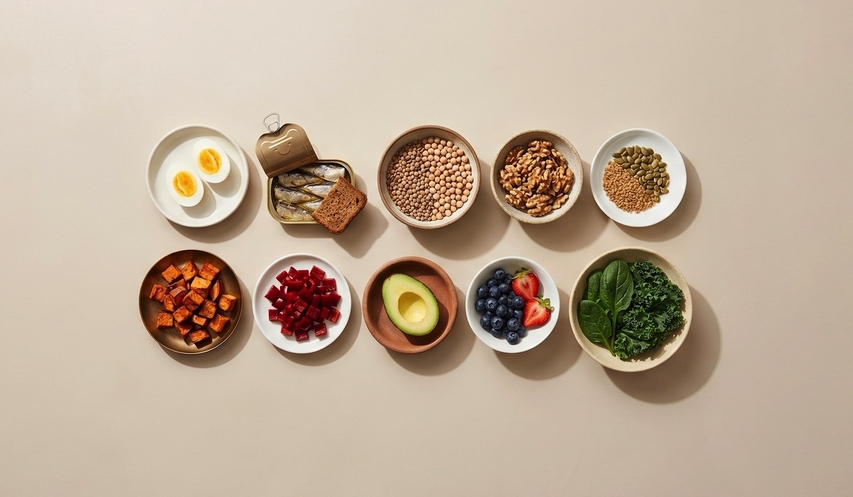
The most nutritionally complete single food for hair health. Eggs provide complete protein with all essential amino acids, biotin in the yolk (critical for keratin synthesis), vitamin D, zinc, selenium, and vitamin B12. A single large egg delivers approximately 6 g of highly bioavailable protein. Importantly, the protein efficiency ratio (PER) of egg protein is among the highest of any food — meaning the body uses it with exceptional effectiveness for tissue building. Cook eggs to deactivate avidin, a protein in raw egg whites that binds biotin and prevents its absorption.
2. Small Fatty Fish: Salmon, Sardines, and Anchovies
Small fatty fish provide a powerful combination: EPA and DHA (the most bioavailable omega-3 fatty acids), vitamin D, vitamin B12, and high-quality protein. EPA and DHA reduce prostaglandin E2 and leukotriene B4 — pro-inflammatory mediators that can impair follicle cycling. They also support sebaceous gland function, providing lipids that maintain scalp hydration. Sardines and anchovies are particularly recommended over larger tuna or swordfish because they contain negligible mercury while delivering comparable nutritional density. A clinical trial published in the Journal of Cosmetic Dermatology demonstrated a significant reduction in hair shedding and increase in anagen hair density after six months of omega-3 and omega-6 supplementation in women with diffuse hair loss.
3. Legumes, Soybeans, and Spermidine-Rich Foods
Legumes (lentils, chickpeas, black beans) are exceptional sources of plant protein, iron, zinc, folate, and biotin — making them one of the most comprehensive hair-supportive foods for vegetarians and vegans. Soybeans specifically deserve attention for their spermidine content. Spermidine is a polyamine compound with emerging evidence for extending the anagen (growth) phase of the hair follicle cycle. A 2017 randomized controlled trial found that a spermidine-based nutritional supplement significantly prolonged the anagen phase and reduced telogen phase entry in a subset of participants. Fermented soy products (miso, tempeh) have higher spermidine bioavailability than unfermented forms.
4. Nuts and Seeds (Walnuts, Almonds, Flaxseed, Pumpkin Seeds)
Walnuts provide ALA omega-3 fatty acids, zinc, biotin, and vitamin E. Pumpkin seeds are one of the richest plant sources of zinc and contain phytosterols that may inhibit 5-alpha-reductase — reducing DHT production at the follicle level. A 2014 randomized trial found that pumpkin seed oil supplementation increased hair count by 40% in men with androgenetic alopecia over 24 weeks — the mechanism is likely 5-alpha-reductase inhibition, relevant to DHT-sensitive women as well. Almonds provide vitamin E, and flaxseed provides ALA along with lignans that have mild anti-androgenic properties.
5. Greek Yogurt
High-protein Greek yogurt provides complete protein, vitamin B5 (pantothenic acid — essential for adrenal function and stress response, both relevant to cortisol-driven hair loss), vitamin B12, zinc, and the probiotic bacteria that support gut health. Gut health is increasingly recognized as relevant to hair health: a compromised gut microbiome reduces the absorption efficiency of iron, zinc, and B vitamins — all critical for follicle function. The protein density of Greek yogurt (approximately 17 g per 170 g serving) makes it one of the most efficient dietary sources of hair-supportive protein.
6. Sweet Potatoes
One medium sweet potato contains more than 100% of the daily recommended value for vitamin A (as beta-carotene). Vitamin A regulates cell turnover in the follicle, supports sebum production, and is required for the differentiation of follicle stem cells into active hair-producing matrix cells. Beta-carotene is converted to retinol on demand by the body, avoiding the risk of vitamin A toxicity from excess retinol supplementation. Sweet potatoes also provide vitamin C, potassium, and manganese, and have a low-to-moderate glycemic impact when consumed with protein or fat.
7. Bell Peppers (Especially Red)
Red bell peppers contain more vitamin C per gram than any citrus fruit — approximately three times the vitamin C content of an orange. Vitamin C serves two distinct functions for hair: it is essential for collagen synthesis (the structural protein forming the connective tissue sheath around the follicle), and it dramatically enhances the absorption of non-heme (plant-source) iron by converting ferric iron to the more bioavailable ferrous form. For any woman who relies on plant-based iron sources, pairing them with vitamin C-rich foods at the same meal is a clinically significant intervention.
8. Avocados
Avocados are rich in vitamin E, healthy monounsaturated fatty acids, and folate. Vitamin E is a lipid-soluble antioxidant that protects the scalp's sebum layer and follicle lipid membranes from oxidative damage. A randomized trial found that tocotrienol supplementation (a form of vitamin E) increased hair count by 34% after 8 months versus a 0.1% increase in the placebo group. Avocados also provide glutathione precursors and B5 (pantothenic acid), and their fat content enhances the absorption of fat-soluble vitamins (A, D, E, K) from co-consumed foods.
9. Berries and Leafy Greens
Berries (blueberries, strawberries, blackberries) are among the richest dietary sources of antioxidants — particularly anthocyanins and vitamin C — that neutralize reactive oxygen species generated during the follicle's intense metabolic activity. Leafy greens (spinach, kale, Swiss chard) provide iron, folate, vitamin K, magnesium, and beta-carotene. Dark leafy greens are uniquely valuable because they concentrate multiple hair-supportive micronutrients in a single, low-calorie package. Two cups of cooked spinach provide approximately 6 mg of iron — about 33% of the daily requirement for women of reproductive age.
The Worst Foods for Women with Hair Loss
1. High-Mercury Fish (Swordfish, Shark, King Mackerel, Bigeye Tuna)
Mercury is directly toxic to follicle cells — it impairs keratin synthesis, disrupts zinc absorption, and at higher exposures causes diffuse hair loss. Large predatory fish bioaccumulate mercury through the food chain. Limit consumption to less than one serving per week and replace with smaller fish (sardines, salmon, anchovies) that deliver equivalent omega-3 benefits without the mercury burden.
2. Excess Red Meat
A diet consistently high in saturated fat from red meat has been associated with elevated DHT production. Saturated fat increases the activity of 5-alpha-reductase, the enzyme responsible for converting testosterone to dihydrotestosterone (DHT) — the androgen that drives follicle miniaturization in androgenetic alopecia. For women with any degree of hormonal hair sensitivity, limiting red meat to two to three servings per week and choosing lean cuts is clinically prudent.
3. Refined Carbohydrates and Added Sugars
High glycemic index foods — white bread, pasta, pastries, sugary beverages — cause rapid insulin spikes. Elevated insulin stimulates androgen production via the hypothalamic-pituitary-adrenal axis and directly reduces sex hormone-binding globulin (SHBG), leaving more free androgens available to act on follicles. This is particularly consequential for women with PCOS — a condition already characterized by androgen excess — where dietary glycemic control is a first-line clinical recommendation. High-sugar diets also promote systemic inflammation, impairing follicle cycling through elevated prostaglandin and cytokine levels.
4. Highly Processed Foods with Artificial Additives
Ultra-processed foods — packaged snacks, fast food, processed meats — are high in trans fats, artificial preservatives, and synthetic food dyes, all of which generate reactive oxygen species that damage follicle cell membranes and mitochondria. They are also typically low in the micronutrients follicles require, creating a compounding effect of high oxidative burden combined with low nutritional support. The overall inflammatory dietary pattern associated with ultra-processed food consumption is increasingly linked to accelerated follicle aging in the dermatology literature.
5. Alcohol
Alcohol is directly antagonistic to hair health through multiple pathways: it depletes zinc (the body excretes zinc at accelerated rates during alcohol metabolism), depletes B vitamins — particularly folic acid and B12 — disrupts iron absorption, elevates estrogen metabolism in ways that can dysregulate the hair cycle, and promotes systemic inflammation that impairs follicle cycling. Even moderate alcohol consumption (one to two drinks per day) has measurable effects on zinc status in women. For women experiencing active hair loss, alcohol should be minimized or eliminated during the treatment period.
Practical Nutrition Tips for Women with Hair Loss
- Target 1.0–1.6 g of complete protein per kg body weight daily — higher end during active shedding phases.
- Always pair plant-based iron sources with vitamin C at the same meal to maximize non-heme iron absorption.
- Choose small fatty fish (salmon, sardines) two to three times per week for omega-3s and vitamin D.
- Test ferritin, vitamin D 25-OH, zinc, and B12 levels before supplementing — correct the specific deficiency present.
- Avoid crash diets. Caloric restriction below 1,200 kcal/day reliably triggers telogen effluvium within two to four months.
- Replace refined carbohydrates with legumes, whole grains, and starchy vegetables to moderate glycemic load and androgen impact.
- Drink adequate water — 2–2.5 liters per day — to support the 25% water content of each hair strand.
Nutritional support designed for women with hair loss:
MDhair Regrowth Supplements — therapeutic-dose micronutrients plus DHT-blocking botanicals and adaptogens
MDhair Marine Collagen — Type I marine collagen peptides with hyaluronic acid and vitamin C
MDhair Customized Kit — AI-powered personalized treatment plan based on your specific hair loss profile
Why the MDhair Customized Kit?
Diet is foundational — but for most women, it is the beginning of hair loss treatment, not the complete solution. The foods and nutrients described in this guide provide the biological raw materials the follicle needs. But if DHT sensitivity, scalp inflammation, hormonal imbalance, or chronic stress are also at play, diet alone cannot address those drivers.
The MDhair Customized Kit integrates dietary and nutritional support with targeted topical therapies and clinically validated supplements — all matched precisely to your hair loss type. The AI-powered quiz identifies whether your hair loss has a dietary, hormonal, stress-related, or pattern-based origin, then recommends the specific combination of products most likely to restore your hair.
You are not just getting a supplement or a serum. You are getting a complete, dermatologist-designed protocol built around what is actually causing your specific hair loss — starting with nourishing your follicles from the inside out.
Take the Hair Loss Quiz — Get Your Personalized Plan
Frequently Asked Questions
What foods should women with hair loss eat?
The best foods include eggs, small fatty fish (salmon, sardines), legumes and soybeans, nuts and seeds, Greek yogurt, sweet potatoes, bell peppers, avocados, berries, and leafy greens. Each provides specific nutrients that support follicle metabolism, reduce inflammation, and promote hair growth.
What foods cause hair loss in women?
The foods most linked to hair loss in women are high-mercury fish (swordfish, shark, king mackerel), excess red meat (elevates DHT), refined carbohydrates and added sugars (drive inflammation and androgen excess), highly processed foods, and alcohol (depletes zinc and B vitamins).
Does protein deficiency cause hair loss in women?
Yes. Hair is approximately 95% keratin (protein). When dietary protein is insufficient, the body shifts follicles into the telogen (resting/shedding) phase to redirect amino acids to more critical functions. Diffuse shedding typically appears two to four months after the period of inadequate protein intake.
Is iron deficiency a major cause of hair loss in women?
Yes — it is one of the most common and most correctable causes. Low ferritin (stored iron) impairs follicle cell division. Ferritin levels below 30 ng/mL are associated with increased shedding even without clinical anemia. A ferritin blood test — not just a standard blood count — is needed for accurate diagnosis.
Can sugar cause hair loss in women?
High sugar and refined carbohydrate consumption drives insulin spikes that increase androgen production (particularly DHT), reduce SHBG, and promote scalp inflammation — all of which accelerate follicle miniaturization in women with androgenetic alopecia or PCOS.
What is the best overall diet pattern for female hair loss?
A Mediterranean-style diet is the most evidence-consistent pattern for supporting follicle health — rich in fatty fish, olive oil, leafy greens, legumes, nuts, seeds, and low-glycemic vegetables. It naturally provides anti-inflammatory omega-3s, iron, zinc, selenium, B vitamins, and antioxidants in a balanced combination.
Shop Now
More Info
Find the most effective anti-aging products for you by taking the free skin assessment.
Enjoyed this article? Add Nuvane as a preferred source on Google.