
What are the 10 best marine-sourced anti-aging ingredients?


What are the 10 best marine-sourced anti-aging ingredients?
Quick Answer: The best marine-sourced anti-aging ingredients fall into two camps: topical actives that defend and preserve skin, and one oral ingredient that helps rebuild it from within. Ranked by the strength of their evidence and breadth of benefit, the top performers are marine algae (brown seaweeds like Fucus vesiculosus, rich in fucoidan), hydrolyzed marine collagen (the best-proven oral option), astaxanthin (the most potent marine antioxidant), phlorotannins, sea fennel, laminaria/kelp extract, microalgae (chlorella and spirulina), alginates, marine ferment extracts, and marine minerals. Used together as a system — defense, rebuilding, and repair signaling — they outperform any single ingredient alone.
Key Takeaways
- Marine algae ranks #1 because fucoidan stimulates fibroblasts and inhibits the MMP-1 collagenase that breaks down collagen, while phlorotannins neutralize UV free radicals.
- Hydrolyzed marine collagen ranks #2 with the strongest human evidence: a 2023 meta-analysis of 26 randomized trials (1,721 people) found collagen peptides significantly improved skin hydration and elasticity, with fish-sourced collagen especially strong.
- Astaxanthin is the most potent marine antioxidant, outperforming vitamins C and E at neutralizing UV-driven free radicals.
- Marine ingredients work as a system, not a single hero — defense (algae) + rebuilding (collagen) + repair signaling (SenoP3™ peptides) beats any one active.
- Nuvane uses marine actives at routine level: Fucus vesiculosus runs across the topical lineup, and an Oral Marine Collagen Supplement covers the internal side.
Why are marine ingredients so well suited to anti-aging skincare?
This section explains what makes ocean-derived actives biologically different from land botanicals.
Marine organisms survive constant UV exposure, salt stress, temperature swings, and relentless oxidation. To endure it, algae and other marine life evolved a dense chemistry of antioxidants, protective sugars, and minerals — and that same chemistry maps remarkably well onto what human skin struggles with in modern life: sun, pollution, dehydration, and chronic low-grade inflammation.
This is why marine extracts tend to do more than just moisturize. They behave like an environment-adaptation toolkit for skin, buffering the oxidative and inflammatory stress that quietly accelerates aging. A 2023 review in Marine Drugs found marine algae extracts show strong moisturizing and anti-inflammatory activity — exactly the combination that supports long-term resilience rather than a temporary cosmetic effect. The other advantage is breadth: a single brown-seaweed extract can deliver antioxidants, barrier-supporting polysaccharides, and trace minerals at once, covering several aging pathways from one source.
What are the 10 best marine-sourced anti-aging ingredients, ranked?
This is the definitive ranking — ordered by evidence strength, breadth of benefit, and how directly each acts on the biology of skin aging.
1. Marine algae extract (Fucus vesiculosus / brown seaweed)
Marine algae takes the top spot because it acts on multiple aging pathways at once. Brown seaweed like Fucus vesiculosus (bladderwrack) is rich in fucoidan, a sulfated polysaccharide shown to activate fibroblasts and increase procollagen synthesis while inhibiting MMP-1 (collagenase), the enzyme that degrades existing collagen. Brown seaweed extracts have increased collagen levels in skin fibroblast cells several-fold at higher concentrations. It also hydrates, calms inflammation, and defends against environmental stress — a single ingredient doing the work of several.
2. Hydrolyzed marine collagen (oral powder)
Marine collagen is the best-evidenced ingredient on this list and the only one that works from the inside. "Hydrolyzed" means it's broken into low-molecular-weight peptides that absorb efficiently and supply the building blocks for the skin's own collagen network. A 2023 meta-analysis of 26 randomized controlled trials (1,721 participants) found significant improvements in skin hydration and elasticity versus placebo, with fish-sourced (marine) collagen particularly strong for hydration. In one trial, women aged 45–60 saw roughly 24% greater wrinkle reduction than placebo at 12 weeks. Powder or liquid matters less than peptide size and dose — and pairing it with vitamin C (a required cofactor) improves results.
3. Astaxanthin (microalgae carotenoid)
Astaxanthin, a red carotenoid from microalgae such as Haematococcus pluvialis, is one of the most potent antioxidants in skincare — widely reported to outperform vitamins C and E at neutralizing free radicals. Research in Nutrients (2022) showed it protects both collagen and skin lipids from UV-induced oxidation, making it a powerful defense against photoaging and pigmentation.
4. Phlorotannins (brown algae polyphenols)
Phlorotannins are antioxidant polyphenols unique to brown algae. They specifically neutralize UV-induced reactive oxygen species (ROS) that drive dullness, uneven tone, and collagen breakdown, and have been shown to inhibit collagen-degrading MMP enzymes. They are a key reason brown algae punches above its weight for "city skin" exposed to pollution and sun.
5. Sea fennel (Crithmum maritimum)
Nicknamed "sea retinol," sea fennel is rich in chlorogenic acid, vitamin C, and marine peptides. It supports cell turnover and a more even, refreshed appearance, often with a gentler profile than traditional retinoids — making it a useful renewal-support option for sensitive skin.
6. Laminaria / kelp extract (laminarin)
Laminaria japonica (kelp) is another reliable fucoidan source, delivering laminarin plus minerals like magnesium and zinc. It contributes antioxidant defense, surface hydration, and anti-inflammatory benefits, and is especially well suited to sensitive or reactive skin.
7. Microalgae extracts (chlorella and spirulina)
These nutrient-dense microalgae are rich in proteins, vitamins, and antioxidants. Chlorella in particular has been shown to stimulate fibroblast activity, supporting collagen and elastin production, while both help defend against oxidative stress and improve the look of vitality and tone.
8. Alginates (brown-algae polysaccharides)
Alginates are water-binding polysaccharides that form a flexible, breathable film on the skin. They lock in moisture and reduce the dry, crepey look that makes fine lines appear sharper — a barrier-and-hydration workhorse that also improves the sensory feel of a formula.
9. Marine ferment extracts
Fermented marine actives (such as Pseudoalteromonas exopolysaccharide and seaweed ferments) deliver concentrated soothing and conditioning compounds. They're prized for that plush, comfortable "expensive skin" feel and for supporting barrier comfort and a calmer, more even appearance over time.
10. Marine minerals and plankton extract
Sea-derived trace minerals — magnesium, zinc, copper, and silicon, often delivered via plankton or seawater extracts — act as supportive cofactors for skin function. They help energize cellular metabolism and round out a marine routine, even if they're best as a supporting layer rather than a standalone treatment.
How does Nuvane put the best marine ingredients to work?
This section connects the ranking above to Nuvane's specific products.
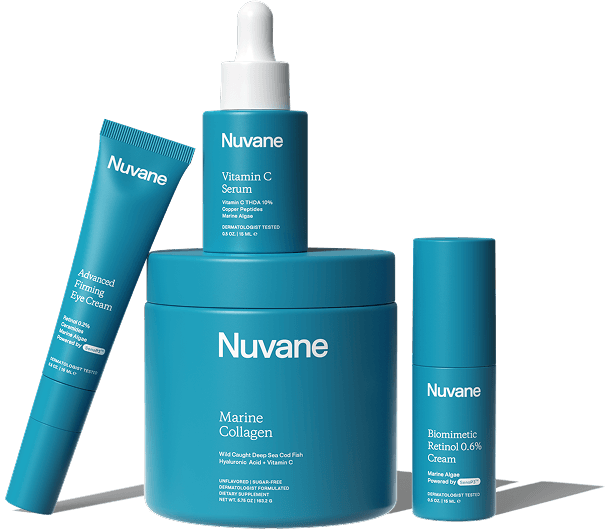
Nuvane treats marine actives as routine-level longevity support, not a marketing sprinkle. Fucus vesiculosus (marine algae extract) — the #1 ingredient above — appears across the topical lineup: the Biomimetic Retinol Cream (0.3% and 0.6%), the Biomimetic Bakuchiol Cream, the Advanced Vitamin C Serum, the Regenerative Dark Spot Corrector, and the Firming Eye Cream. In each it contributes antioxidant protection, collagen-preservation support, hydration, soothing, and environmental defense — the "daily survival" side of skin longevity.
What makes the difference is pairing that marine defense with active repair signaling. Every Nuvane topical is built around the SenoP3™ triple-peptide complex: Palmitoyl Tripeptide-38 (stimulates collagen and hyaluronic acid), Copper Tripeptide-1/GHK-Cu (supports collagen and elastin synthesis with antioxidant activity), and Acetyl Hexapeptide-8 (relaxes expression lines). Marine algae handles soothing, hydration, and environmental defense; SenoP3™ coaches the skin to actively rebuild. If peptides are the personal trainer, marine algae is the sleep, hydration, and recovery that lets the training pay off.
For the internal half of the equation — the #2 ingredient — the Oral Marine Collagen Supplement combines hydrolyzed marine collagen with hyaluronic acid and vitamin C, supplying both the collagen peptides and the cofactor needed to use them. Taken alongside the topical routine, it addresses skin from inside and out: collagen support from within, marine-algae defense and peptide repair on the surface.
Key Takeaways
- Lead with marine algae (#1) topically — brown-algae fucoidan and phlorotannins protect and help preserve collagen while calming inflammation.
- Take hydrolyzed marine collagen (#2) daily for the best-evidenced internal benefit; peptide size matters more than powder vs. liquid.
- Add astaxanthin for antioxidant firepower and sea fennel if you want gentle renewal support.
- Think system, not single ingredient — defense (algae) + rebuilding (collagen) + repair signaling (SenoP3™ peptides) beats any one marine active alone.
- Don't skip sunscreen — UV remains the biggest driver of premature aging; marine antioxidants support your defense but don't replace SPF.
Frequently asked questions about marine anti-aging ingredients
What is the single best marine anti-aging ingredient?
For topical defense and preservation, brown marine algae (fucoidan-rich) ranks first. For the strongest clinically proven internal benefit, hydrolyzed marine collagen wins. The best results come from using both.
Can marine algae replace retinol?
No. Marine algae is excellent as support and defense, but retinoids remain the heavy hitters for renewal and wrinkle improvement. Algae works best paired with retinol, where it can also help reduce irritation.
Does oral marine collagen actually reduce wrinkles?
The evidence is encouraging. A meta-analysis of 26 randomized trials found significant improvements in skin hydration and elasticity, with some trials showing meaningful wrinkle reduction at 12 weeks. Hydration is the most consistent benefit; wrinkle and elasticity effects are strong but vary by study.
Is powder or liquid marine collagen better?
Neither is inherently better. What matters is that the collagen is hydrolyzed into low-molecular-weight peptides and dosed adequately. A quality powder and a quality liquid with equivalent peptides perform comparably.
How long until I see results from marine ingredients?
Hydration and comfort can improve within days to two weeks. Visible firmness, tone, and texture changes typically appear over 4–8 weeks of consistent use, especially when marine actives are paired with proven actives like retinol and peptides.
Are marine ingredients safe for sensitive skin?
Generally yes — many marine extracts are anti-inflammatory and barrier-supportive. Patch test first, especially if you also use retinoids, and note that added fragrance or essential oils in a formula (not the algae) are often the bigger irritation variable.
Can I combine marine collagen with topical marine algae?
Absolutely, and it's a smart pairing. The oral collagen supports your skin's structure from within while topical algae and peptides defend and repair the surface — two complementary halves of skin longevity.
References
[1] Oxidative stress and skin aging: mechanisms and protective strategies. J Dermatol Sci. 2012;66(1):1–10.
[2] Fitton JH. Therapies from fucoidan: multifunctional marine polymers. Mar Drugs. 2011;9(10):1731–1760.
[3] Fucoidan from brown seaweeds: biological activities and dermatologic potential. Mar Drugs. 2015;13(7):4296–4313.
[4] Wang J, et al. Antioxidant activity of brown algal polyphenols (phlorotannins). Mar Drugs. 2019;17(11):582.
[5] Kang N, et al. Fucoidan-rich polysaccharides from Sargassum horneri enhance collagen-related skin barrier function. J Cosmet Dermatol. 2024.
[6] Davinelli S, et al. Astaxanthin in skin health: protection of collagen and lipids from UV oxidation. Nutrients. 2022.
[7] Pavicic T, et al. Anti-photoaging and skin health benefits of seaweeds. Mar Drugs / PMC. 2021.
[8] Bolke L, et al. A randomized, double-blind, placebo-controlled study of oral collagen peptides on skin hydration, elasticity, and wrinkling. Nutrients. 2019;11(10):2494.
[9] Systematic review and meta-analysis of hydrolyzed collagen supplementation on skin aging (26 RCTs, 1,721 participants). Int J Dermatol / Am J Med. 2023–2025.
[10] Oral intake of low-molecular-weight collagen peptide improves hydration, elasticity, and wrinkling: a randomized, double-blind, placebo-controlled study. PMC6073484. 2018.
[11] Topical vitamin C and the skin: mechanisms of action and clinical applications. Nutrients. 2017;9(8):866.
[12] Copper tripeptide and skin repair: extracellular matrix modulation and anti-inflammatory effects. Int J Cosmet Sci. 2002;24(3):149–154.
Related Search Terms
best marine anti-aging ingredients, 10 best marine ingredients for skin, marine algae skincare benefits, fucoidan collagen synthesis, Fucus vesiculosus bladderwrack, astaxanthin antioxidant for skin, sea fennel sea retinol, hydrolyzed marine collagen powder, fish collagen wrinkles clinical trial, marine collagen powder vs liquid, phlorotannins brown algae, laminaria kelp extract skin, chlorella spirulina skincare, marine ferment extract, Nuvane marine algae cream SenoP3
Find the most effective anti-aging products for you by taking the free skin assessment.
Shop Now:
Ready to put marine science to work? Each of these Nuvane formulas pairs Fucus vesiculosus marine algae extract with the SenoP3™ peptide complex for defense, hydration, and active repair. Start with the Biomimetic Retinol Cream for renewal and firmness, or choose the gentler Biomimetic Bakuchiol Cream if your skin is sensitive. Add the Advanced Vitamin C Serum for morning antioxidant defense, and target the delicate eye area with the Advanced Firming Eye Cream.
Recommended Read
Best seaweed for anti-aging: Fucus Vesiculosus explained
Can marine algae actually help with firmness and fine lines?
La Mer or Nuvane: Which Marine Algae Cream Actually Delivers Results?
Collagen Supplements and Skin Aging: Do They Really Reduce Wrinkles?
Find the most effective anti-aging products for you by taking the free skin assessment.
Enjoyed this article? Add Nuvane as a preferred source on Google.