
The best 10 ingredients to get rid of your dark spots


Key Takeaways
- Alpha arbutin is the most effective and well-tolerated over-the-counter tyrosinase inhibitor — it directly blocks the enzyme that produces melanin, making it the gold standard for fading dark spots without significant irritation.
- Retinol accelerates cell turnover and disperses accumulated melanin, making it one of the most powerful ingredients for both fading existing spots and preventing new ones.
- Vitamin C (THD Ascorbate) blocks melanin synthesis at the source while neutralizing the UV-triggered oxidative damage that causes dark spots to form in the first place.
- Niacinamide works differently from the others — it does not reduce melanin production but instead blocks its transfer to surface skin cells, producing visible brightening with outstanding tolerability.
- Consistency matters more than concentration. Most dark spots respond to sustained daily use of the right combination of ingredients over 8–12 weeks — not to aggressive single-ingredient approaches.
Why are dark spots so difficult to get rid of?
Dark spots — also called hyperpigmentation, age spots, sun spots, or post-inflammatory marks — are one of the most common and most persistent signs of skin aging.
Melanin, the pigment that gives skin its color, is produced by melanocytes deep in the epidermis. When these cells are triggered by UV exposure, inflammation, hormonal changes, or injury, they overproduce melanin — creating concentrated deposits that appear as spots, patches, or uneven tone on the skin surface.
The challenge is that melanin is not just sitting on top of the skin waiting to be scrubbed away. It is produced deep in the epidermis, packed into structures called melanosomes, and transferred into surrounding keratinocytes where it accumulates and slowly migrates toward the surface. The process is driven by multiple enzymes, multiple cellular pathways, and multiple environmental triggers — which is exactly why a single-ingredient approach rarely produces complete results.
The most effective dark spot strategies work on several of these pathways simultaneously: blocking melanin production, accelerating the turnover of pigmented cells, inhibiting the transfer of melanin between cells, and neutralizing the oxidative triggers that set the whole process in motion. The ten ingredients below do exactly that.
What are the 10 best ingredients for getting rid of dark spots?
Here is a dermatologist's ranked breakdown of the most clinically effective dark spot-fighting ingredients available in skincare today.
#1 — Alpha Arbutin
Alpha arbutin is the most effective over-the-counter tyrosinase inhibitor available — and it is the first ingredient to reach for when dark spots are your primary concern.
Tyrosinase is the key enzyme in the melanin production pathway. Without it, melanocytes cannot convert the amino acid tyrosine into the melanin pigment that causes dark spots. Alpha arbutin is a stable, synthetic glycoside of hydroquinone that binds to and competitively inhibits tyrosinase — slowing melanin synthesis at its source [1].
Unlike hydroquinone (the prescription gold standard it is structurally related to), alpha arbutin achieves reliable brightening without the risk of irritation, ochronosis, or the regulatory restrictions that limit hydroquinone use in many markets. Clinical studies have shown that alpha arbutin at 1–2% significantly reduces melanin content in the epidermis and produces visible fading of dark spots with consistent use over 4–8 weeks [1].
Alpha arbutin also plays well with other brightening actives. It can be safely layered with retinol, vitamin C, and niacinamide — which is important, because the strongest dark spot results come from combining multiple mechanisms, not relying on one.
In Nuvane's lineup: The Regenerative Dark Spot Corrector places alpha arbutin at the core of its formula, combined with retinol, SenoP3™, and niacinamide — a multi-pathway approach to hyperpigmentation built around alpha arbutin's tyrosinase-inhibiting foundation.
#2 — Retinol
Retinol does not just reduce wrinkles — it is one of the most effective tools for fading dark spots, precisely because it works at the cellular level where melanin accumulates.
Retinol accelerates epidermal cell turnover, which means pigmented keratinocytes — the cells that carry melanin deposits — shed faster and are replaced by fresh, unpigmented cells from below. This turnover acceleration effectively speeds up the natural fading process that would otherwise take many months [2].
Retinol also interferes with melanin production more directly. It inhibits the transfer of melanosomes from melanocytes into keratinocytes, reducing the amount of pigment that reaches the skin's surface. Some evidence suggests it may also suppress tyrosinase activity, giving it a partial overlap with alpha arbutin's mechanism [2].
For post-inflammatory hyperpigmentation — the dark marks left by acne, eczema, or any skin injury — retinol is particularly valuable. By normalizing the skin's renewal cycle, it prevents the prolonged melanin accumulation that turns a temporary mark into a stubborn spot.
The key is tolerability. At 0.3%, retinol delivers brightening benefits while remaining manageable for most skin types. At 0.6%, results are faster and more pronounced — but the skin needs time to adjust. Formulation matters enormously here; retinol supported by niacinamide, hyaluronic acid, and barrier-friendly ingredients produces better results with far less irritation than retinol used alone.
In Nuvane's lineup: The Regenerative Dark Spot Corrector combines retinol with alpha arbutin for a dual-mechanism approach to hyperpigmentation. The Biomimetic Retinol Creams 0.3% and 0.6% also deliver meaningful brightening benefits as part of their broader anti-aging action.
#3 — Vitamin C (THD Ascorbate)
Vitamin C is the most important daytime brightening ingredient — it blocks melanin synthesis upstream while simultaneously neutralizing the UV damage that triggers dark spots in the first place.
Standard ascorbic acid is unstable, oxidizes quickly in air and light, and requires a low pH to work — which can cause significant irritation. THD Ascorbate (Tetrahexyldecyl Ascorbate) is a lipid-soluble, oil-stable form of vitamin C that penetrates the skin more efficiently, remains stable in formula, and is effective across a wider pH range with minimal sensitization risk [3].
In the melanin pathway, vitamin C works by reducing the oxidized form of DOPA (a key intermediate in melanin synthesis) back to its reduced form, effectively breaking the production chain. Separately, it is a potent antioxidant that neutralizes reactive oxygen species generated by UV exposure — the same free radicals that trigger melanocytes to overproduce pigment. This makes it the only dark spot ingredient that prevents new spots from forming at the same time as it helps fade existing ones [3].
Clinical studies show that stable topical vitamin C can significantly reduce melasma, solar lentigines, and post-inflammatory hyperpigmentation within 8–12 weeks of twice-daily use. When combined with sunscreen — which is non-negotiable for anyone addressing dark spots — its protective effect against UV-induced pigmentation is substantially amplified.
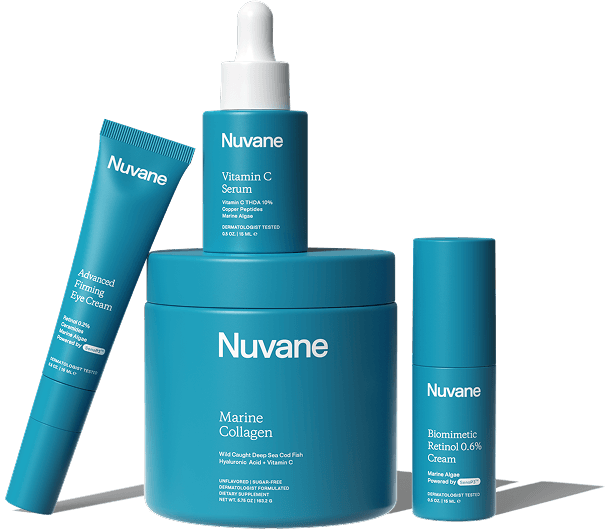
In Nuvane's lineup: The Advanced Vitamin C Serum uses THD Ascorbate alongside copper peptides, ceramides, and marine extracts. The Biomimetic Bakuchiol Cream also contains ascorbyl glucoside, a water-soluble vitamin C derivative.
#4 — Niacinamide (Vitamin B3)
Niacinamide works on dark spots through a mechanism none of the other ingredients share — and that makes it uniquely valuable in a multi-ingredient brightening routine.
While alpha arbutin and vitamin C block melanin production, and retinol accelerates the shedding of pigmented cells, niacinamide inhibits the transfer of melanosomes from melanocytes to keratinocytes [4]. Melanosomes are the vesicles that carry melanin. By interfering with this transfer step — specifically by suppressing the interaction between melanocytes and surrounding skin cells — niacinamide reduces how much pigment actually reaches the skin surface, regardless of how much melanin is produced.
Clinical trials using 4–5% niacinamide have demonstrated significant reductions in the appearance of hyperpigmented spots, improved overall skin tone uniformity, and decreased sallowness compared to vehicle controls [4]. Because it addresses a completely different step in the pigmentation pathway, it amplifies the effect of every other brightening ingredient it is paired with.
Niacinamide also strengthens the skin barrier, reduces inflammation, and supports ceramide production — all of which matter for dark spot management, since a compromised barrier is more prone to the post-inflammatory hyperpigmentation that follows any skin irritation.
Niacinamide appears in Nuvane's Biomimetic Retinol Creams and Regenerative Dark Spot Corrector, making it a consistent supporting player throughout the treatment lineup.
#5 — Copper Tripeptide-1 (GHK-Cu)
Copper Tripeptide-1 addresses dark spots through a less obvious but scientifically well-supported mechanism: repairing the skin damage that drives chronic hyperpigmentation.
GHK-Cu is a naturally occurring tripeptide with powerful antioxidant and skin-repair properties. Its relevance to dark spots lies primarily in two areas. First, it modulates the inflammatory response — and inflammation is one of the most common triggers for post-inflammatory hyperpigmentation (PIH). By reducing oxidative stress and supporting faster skin repair, GHK-Cu helps prevent the inflammatory cascade that tells melanocytes to overproduce pigment in the first place [5].
Second, GHK-Cu stimulates collagen and elastin synthesis while supporting a more normal skin renewal cycle. Skin that turns over more efficiently disperses accumulated pigment faster. This makes it a useful complement to retinol's direct turnover-accelerating effect, particularly in aging skin where the renewal cycle has slowed.
GHK-Cu is one of the three peptides in Nuvane's SenoP3™ complex and appears across the core treatment lineup — including the Regenerative Dark Spot Corrector, both Retinol Creams, the Advanced Firming Eye Cream, and the Advanced Vitamin C Serum.
#6 — Marine Algae (Fucus Vesiculosus)
Marine algae — particularly Fucus vesiculosus — is one of the most underappreciated brightening ingredients in modern dermatology, with a dual mechanism that both inhibits tyrosinase and protects against UV-triggered pigmentation.
Fucus vesiculosus is a brown seaweed rich in fucoidan, polyphenols, and antioxidant compounds. Studies have identified several of its bioactive components as natural tyrosinase inhibitors — capable of slowing melanin production through the same pathway as alpha arbutin, but through a complementary molecular interaction [6]. This makes it a meaningful additive brightening agent when combined with primary tyrosinase inhibitors.
Marine algae also provides substantial antioxidant coverage, neutralizing the free radicals that UV exposure generates at the skin surface. Since oxidative damage is the primary environmental trigger for dark spot formation, an ingredient that simultaneously addresses both the enzyme and the trigger delivers compounded benefit.
Beyond brightening, Fucus vesiculosus supports skin hydration, helps maintain a healthy barrier function, and provides trace minerals that support skin cell metabolism. In the context of dark spot treatment — where the skin often needs to simultaneously repair, renew, and protect — this broader supportive role is genuinely useful.
Marine algae appears across Nuvane's product lineup, including both Biomimetic Retinol Creams and the Regenerative Dark Spot Corrector.
#7 — Bakuchiol
Bakuchiol earns its place in a dark spot routine as the retinol-equivalent pathway for skin that cannot tolerate vitamin A — delivering cell turnover benefits and melanin dispersion without the inflammation that often makes hyperpigmentation worse.
One of the least discussed risks of aggressive dark spot treatment is the treatment itself triggering post-inflammatory hyperpigmentation. Retinol, acids, and strong actives can cause irritation and barrier disruption — which in turn signals melanocytes to produce more pigment, especially in deeper skin tones or sensitive skin. This is why tolerability is not just a comfort concern when treating dark spots: it directly affects whether treatment works.
Bakuchiol upregulates many of the same retinol-responsive genes involved in cell renewal and melanin regulation, without activating retinoid receptors. This gives it a functionally retinol-like brightening profile with a significantly lower irritation risk [7]. A randomized trial found bakuchiol comparable to 0.5% retinol for reducing hyperpigmentation and photoaging over 12 weeks, with markedly fewer adverse effects [8].
For anyone who finds retinol too irritating — or whose skin reacts to strong actives with more pigmentation rather than less — bakuchiol is often the more effective long-term strategy. A gentler ingredient used consistently almost always outperforms an aggressive one that gets abandoned.
In Nuvane's lineup: The Biomimetic Bakuchiol Cream combines bakuchiol with SenoP3™, niacinamide, ascorbyl glucoside, centella asiatica, and marine algae — a formula that addresses pigmentation through multiple gentle, sustainable pathways.
#8 — Centella Asiatica
Centella asiatica targets the inflammatory trigger that converts a temporary skin event into a lasting dark spot — making it an essential ingredient for post-inflammatory hyperpigmentation.
Post-inflammatory hyperpigmentation (PIH) is the dark mark left after a pimple heals, after a patch of eczema clears, or after any skin injury or irritation. It is particularly common and pronounced in medium-to-deep skin tones, and it can persist for months or years without targeted treatment.
PIH forms because inflammation signals keratinocytes to release mediators — including arachidonic acid metabolites — that stimulate adjacent melanocytes to ramp up melanin production. Centella asiatica (also called gotu kola) contains asiaticoside, madecassoside, and other triterpenoids that interrupt this inflammatory cascade. By calming the skin's inflammatory response, centella asiatica helps prevent the melanocyte over-activation that creates PIH in the first place [9].
It also supports the synthesis of collagen and hyaluronic acid in the dermis, accelerates wound healing, and reinforces the skin barrier — all of which reduce the skin's susceptibility to the repeated micro-inflammation that drives chronic, recurring dark spots.
Centella asiatica is a key supporting ingredient in Nuvane's Biomimetic Bakuchiol Cream, where its anti-inflammatory properties complement bakuchiol's gentle brightening and renewal action.
#9 — Hyaluronic Acid (Sodium Hyaluronate)
Hyaluronic acid is not a brightening ingredient in the traditional sense — but without adequate hydration, every other dark spot ingredient in your routine performs worse.
A healthy, well-hydrated skin barrier is the foundation of effective brightening treatment. When the skin is dry and compromised, active ingredients like retinol and alpha arbutin penetrate unevenly, causing patchy results and potential irritation. A compromised barrier is also more likely to trigger the inflammatory response that leads to post-inflammatory hyperpigmentation — the opposite of what a dark spot routine is trying to achieve.
Low-molecular-weight sodium hyaluronate penetrates beyond the surface to attract and hold moisture in the deeper layers of the epidermis. This internal hydration plumps skin cells, supports more uniform ingredient distribution, reduces irritation from strong actives, and helps maintain the intact barrier that prevents UV damage from accelerating pigmentation [10].
Think of hyaluronic acid as the ingredient that makes all the other dark spot ingredients safer and more effective. It does not fade spots directly — but it creates the conditions under which fading can happen properly.
Sodium hyaluronate appears throughout Nuvane's lineup, including in both retinol creams, the bakuchiol cream, and the firming eye cream.
#10 — Palmitoyl Tripeptide-38
Palmitoyl Tripeptide-38 supports dark spot treatment by rebuilding the structural integrity of skin that has been repeatedly damaged by the UV exposure that causes hyperpigmentation.
Chronic UV exposure does not just trigger dark spots — it degrades the extracellular matrix, thins the dermis, and disrupts the structural scaffolding that gives skin its density and resilience. Skin that has sustained significant UV damage is more susceptible to future pigmentation events, heals more slowly, and shows spots more prominently because the surrounding skin has lost its density and healthy background tone.
Palmitoyl Tripeptide-38 addresses this structural damage by stimulating the synthesis of collagen I, collagen III, collagen IV, fibronectin, hyaluronic acid, and laminin-5 — six key components of the skin's extracellular matrix [11]. By rebuilding this structural foundation, it restores the skin environment in which melanocytes behave more normally and in which pigment dispersal is more efficient.
In the context of dark spot treatment, this structural support means that the skin recovers more completely from the UV and inflammatory events that trigger pigmentation — reducing both the severity of new spots and the time it takes for existing ones to fade.
Palmitoyl Tripeptide-38 is the second component of Nuvane's SenoP3™ complex and appears across the core treatment lineup.
Which Nuvane products are best for dark spots?
The most effective dark spot treatment addresses melanin production, melanin transfer, cell turnover, inflammation, and UV protection — simultaneously.
No single product covers every pathway. The strongest results come from pairing a targeted dark spot treatment with a broader routine that reinforces the brightening action throughout the day and night.
Here is how Nuvane's lineup maps to the ten ingredients above:
- Alpha arbutin + retinol + SenoP3™ + niacinamide + marine algae: Regenerative Dark Spot Corrector
- THD Ascorbate + copper peptides + ceramides: Advanced Vitamin C Serum
- Retinol + SenoP3™ + niacinamide + hyaluronic acid + marine algae: Biomimetic Retinol Cream 0.3% and 0.6%
- Bakuchiol + SenoP3™ + niacinamide + ascorbyl glucoside + centella asiatica: Biomimetic Bakuchiol Cream
A practical dark spot routine pairs the Regenerative Dark Spot Corrector at night (retinol + alpha arbutin), the Advanced Vitamin C Serum in the morning (antioxidant + melanin synthesis inhibition), and a broad-spectrum SPF every single day. Without daily sunscreen, even the best dark spot ingredients are fighting UV re-pigmentation every morning — which is a losing battle.
Which Nuvane products target dark spots?
These are the Nuvane products that directly address hyperpigmentation with clinically active ingredients:
- Regenerative Dark Spot Corrector — The most targeted dark spot formula in the range. Combines alpha arbutin + retinol + SenoP3™ + niacinamide for a multi-pathway approach to stubborn hyperpigmentation.
- Advanced Vitamin C Serum — The essential morning partner for any dark spot routine. THD Ascorbate blocks melanin synthesis while providing antioxidant protection against the UV damage that triggers new spots.
- Biomimetic Retinol Cream 0.3% — Gentle clinical-grade retinol for first-time users or sensitive skin. Supports brightening through accelerated cell turnover and melanin dispersion, with niacinamide reinforcing the effect.
- Biomimetic Retinol Cream 0.6% — Maximum-strength retinol for faster, more pronounced brightening results. Best for skin already tolerant of retinol and wanting a stronger push on stubborn spots.
- Biomimetic Bakuchiol Cream — The dark spot solution for sensitive skin. Bakuchiol + centella asiatica + niacinamide + ascorbyl glucoside delivers retinol-like brightening without the irritation that can worsen post-inflammatory hyperpigmentation.
Key Takeaways: The Dark Spot-Fighting Ingredient Hierarchy
- Sunscreen is the foundation. No dark spot ingredient works properly if UV exposure is re-triggering pigmentation every day. SPF 30 or higher, worn daily, is non-negotiable.
- Alpha arbutin first. As the most targeted tyrosinase inhibitor available without a prescription, it is the anchor of any effective dark spot routine.
- Add retinol at night. Cell turnover acceleration and melanosome transfer inhibition are the two mechanisms retinol brings that alpha arbutin does not — making the combination significantly more effective than either alone.
- Use vitamin C in the morning. It interrupts melanin synthesis from a different angle while simultaneously protecting against the UV triggers that cause dark spots to form and return.
- Don't overlook niacinamide. Its unique mechanism — blocking melanosome transfer rather than melanin production — adds a fourth pathway no other ingredient covers.
- For sensitive skin, use bakuchiol instead of retinol. Avoiding the irritation that worsens PIH is more important than maximizing ingredient potency.
Frequently Asked Questions
What is the most effective ingredient for getting rid of dark spots?
Alpha arbutin is the strongest over-the-counter tyrosinase inhibitor, making it the most targeted single ingredient for fading dark spots. But the most effective approach is always a combination: alpha arbutin + retinol + vitamin C addresses three distinct pathways simultaneously, producing faster and more complete results than any single ingredient alone.
How long does it take to fade dark spots with skincare?
Most dark spots respond visibly within 8–12 weeks of consistent treatment with the right combination of ingredients. Deeper, older spots — particularly solar lentigines (sun spots) that have been present for years — may require 3–6 months. Daily SPF is essential throughout; without it, UV exposure re-pigments the skin as fast as treatment fades it.
Does retinol actually help with dark spots?
Yes, significantly. Retinol accelerates epidermal cell turnover, which disperses accumulated melanin faster. It also inhibits the transfer of melanosomes from melanocytes to keratinocytes. In clinical studies, retinol has been shown to reduce hyperpigmentation, improve skin tone uniformity, and fade post-inflammatory marks with consistent use over 12 weeks.
Can sensitive skin use dark spot ingredients?
Yes — but ingredient selection matters. Bakuchiol, niacinamide, and alpha arbutin are all well-tolerated by sensitive skin. Low-concentration retinol (0.3%) in a supportive formula can also work well for sensitive skin when introduced gradually. Avoid aggressive brightening acids and high-concentration actives that can trigger the irritation-driven inflammation that causes post-inflammatory hyperpigmentation.
Why does vitamin C help with dark spots?
Vitamin C (especially in the stable THD Ascorbate form) works by reducing oxidized DOPA — a key intermediate in the melanin synthesis pathway — back to its inactive form, effectively interrupting melanin production. It is also a potent antioxidant that neutralizes the UV-generated free radicals that trigger melanocyte over-activation. This dual mechanism makes it both a treatment and a prevention strategy.
What causes dark spots to keep coming back?
The most common reason is ongoing UV exposure without adequate sun protection. Even well-faded spots can return within weeks of regular sun exposure without SPF. Other triggers include hormonal changes (particularly relevant for melasma), ongoing inflammation from acne or skin conditions, and repeated use of irritating products that trigger post-inflammatory hyperpigmentation.
Is niacinamide alone enough to fade dark spots?
Niacinamide is a meaningful brightening ingredient, but it works through a single mechanism — blocking melanosome transfer — and produces more gradual results than alpha arbutin or retinol when used alone. It is most effective as part of a multi-ingredient routine where it amplifies the action of tyrosinase inhibitors and cell-turnover accelerators.
What is post-inflammatory hyperpigmentation and how do you treat it?
Post-inflammatory hyperpigmentation (PIH) is the dark mark left after skin inflammation — most commonly after acne, eczema, a cut, or any irritation. It forms because the inflammation triggers melanocytes to overproduce pigment in the affected area. The most effective treatment combines retinol or bakuchiol (cell turnover), alpha arbutin or vitamin C (melanin inhibition), niacinamide (melanosome transfer blockade), centella asiatica (anti-inflammatory), and daily SPF (UV protection).
Can I use the Regenerative Dark Spot Corrector and the Vitamin C Serum together?
Yes — and this combination is strongly recommended. Use the Advanced Vitamin C Serum in the morning for antioxidant protection and daytime melanin inhibition. Use the Regenerative Dark Spot Corrector at night for retinol and alpha arbutin's cell renewal and tyrosinase-inhibiting effects. This morning/evening split covers the full 24-hour brightening cycle.
How does SenoP3™ relate to dark spot treatment?
SenoP3™ — Nuvane's triple-peptide complex — does not directly inhibit melanin production. Its role in dark spot treatment is structural: Copper Tripeptide-1 provides antioxidant protection and supports skin repair, which reduces inflammatory pigmentation triggers; Palmitoyl Tripeptide-38 rebuilds the extracellular matrix damaged by the UV exposure that causes dark spots; and Acetyl Hexapeptide-8 supports overall skin quality. Together, they create a healthier skin environment in which dark spot treatment works more efficiently.
References
[1] Chakraborty AK, et al. "Mechanistic study on the inhibitory effect of arbutin on melanogenesis in murine B16 cell culture." J Dermatol Sci. 1998;18(3):184–188.
[2] Kang S, et al. "Topical tretinoin (retinoic acid) improves early stretch marks." Arch Dermatol. 1996;132(5):519–526.
[3] Sauermann K, et al. "Topically applied vitamin C increases the density of dermal papillae in aged human skin." BMC Dermatol. 2004;4:13.
[4] Bissett DL, et al. "Niacinamide: A B vitamin that improves aging facial skin appearance." Dermatol Surg. 2005;31(7 Pt 2):860–865.
[5] Pickart L, Margolina A. "Regenerative and Protective Actions of the GHK-Cu Peptide in Human Body Organs." Symmetry. 2018;10(7):290.
[6] Bocanegra A, et al. "Specific Bioactive Compounds in Seaweed as Potential Agents for the Prevention of Skin Melanogenesis." Mar Drugs. 2021;19(8):422.
[7] Chaudhuri RK, Bojanowski K. "Bakuchiol: a retinol-like functional compound revealed by gene expression profiling." Int J Cosmet Sci. 2014;36(3):221–230.
[8] Dhaliwal S, et al. "Prospective, randomized, double-blind assessment of topical bakuchiol and retinol for facial photoageing." Br J Dermatol. 2019;180(2):289–296.
[9] Bylka W, et al. "Centella asiatica in dermatology: an overview." Phytother Res. 2014;28(8):1117–1124.
[10] Papakonstantinou E, Roth M, Karakiulakis G. "Hyaluronic acid: A key molecule in skin aging." Dermatoendocrinol. 2012;4(3):253–258.
[11] Lintner K, Peschard O. "Biologically active peptides: From a laboratory bench curiosity to a functional skin care product." Int J Cosmet Sci. 2000;22(3):207–218.
Related Search Terms
best ingredients for dark spots, alpha arbutin for hyperpigmentation, retinol for dark spots, vitamin C serum for dark spots, niacinamide hyperpigmentation, post-inflammatory hyperpigmentation treatment, how to fade dark spots fast, centella asiatica for PIH, THD ascorbate brightening, dark spot corrector ingredients, Nuvane dark spot corrector, bakuchiol for dark spots sensitive skin, copper peptides skin brightening, how to get rid of age spots, best dark spot serum dermatologist
Find the most effective anti-aging products for you by taking the free skin assessment.
Recommended Read
- Best treatments for dark spots: face, hands and decollete
- Best treatments for dark spots on the hands
- Best hyperpigmentation treatments for people in their 30s and beyond
- Is THD Ascorbate the best gentle, high-impact Vitamin C?
Find the most effective anti-aging products for you by taking the free skin assessment.
Enjoyed this article? Add Nuvane as a preferred source on Google.