
What 5 skincare myths does the $500B beauty industry keep quiet?


What are the 5 key takeaways about skincare marketing versus science?
Quick Answer: Most of what you pay for in a premium cosmetic product is not the active ingredient. Once you learn to read the INCI list — the standardized ingredient declaration required on every cosmetic sold in the US and EU — the gap between a product's marketing and its formula becomes obvious.
- You are largely paying for the container. In typical cosmetic unit economics, primary and secondary packaging can absorb roughly a third of a product's cost, marketing and customer acquisition another large share, and fragrance a meaningful slice — while the actual bioactive ingredients often account for under 5% of the formula by weight [1][2].
- Sheet masks are a short-lived hydration event, not a treatment. Occlusion under a mask raises stratum corneum water content quickly, but that spike decays within roughly 1–2 hours unless it is locked in with a humectant-plus-occlusive system that sustains hydration for 18–24 hours [3][4].
- "Natural" has essentially no legal definition in either the United States or the European Union. The FDA has stated it does not define or regulate the term for cosmetics, which means a "natural" claim tells you nothing verifiable about the formula [5][6].
- Price does not predict clinical performance. A JAMA Dermatology analysis of best-selling moisturizers found prices ranging from about $0.10 to $9.00 per ounce with no consistent relationship between cost and either ingredient quality or hypoallergenicity [7].
- Fragrance adds cost and risk without adding efficacy. Fragrance ingredients remain the single most common cause of cosmetic allergic contact dermatitis [8].
- Collagen in a cream cannot become collagen in your skin. Intact collagen has a molecular weight around 300,000 daltons, and the stratum corneum effectively excludes molecules above roughly 500 daltons — which is why short biomimetic oligopeptides of 3–5 amino acids, not collagen, are the topicals that actually signal collagen synthesis — and why oral hydrolyzed collagen works through absorbed di- and tripeptides that reach the dermis via the bloodstream [15][16][20].
Why does so little of what you pay for end up as active ingredients?
This section breaks down where the money in a skincare product actually goes — and why "expensive formula" and "expensive product" are not the same thing.
When you buy a $120 cream, you are buying a bundle: a glass jar with a weighted base, a magnetic cap, a printed carton, an influencer campaign, retail margin, a fragrance blend — and, somewhere in there, the molecules that change your skin. In standard cosmetic unit economics, primary and secondary packaging routinely represents around 30–35% of the delivered cost of goods, and in luxury segments it can exceed the cost of the formula itself [1][2]. Marketing and customer acquisition frequently consume a comparable share of retail price.
That leaves a thin slice for chemistry. And here is the part the industry rarely spells out: most cosmetic actives are used at fractions of a percent. Retinol is typically formulated at 0.1–1.0%. Peptides such as Palmitoyl Tripeptide-38 or Copper Tripeptide-1 (GHK-Cu) are effective in the parts-per-million to low-tenths-of-a-percent range. Niacinamide at 4–5% is one of the higher-inclusion actives in common use. Add them together and the total bioactive load of a well-built anti-aging cream is genuinely small — often under 5% of the formula, with the remaining 95% being water, emulsifiers, emollients, thickeners and preservatives [9].
The small percentage is not the problem. A low inclusion rate is not the same as a low dose — GHK-Cu is biologically active at micromolar concentrations. The problem is that a low inclusion rate is also very cheap to fake. A brand can add a headline ingredient at 0.001%, list it prominently on the front of the box, and place it near the bottom of the INCI list where almost no consumer looks. This is called "angel dusting," and it is entirely legal.
How do you tell a real active dose from angel dusting?
Under both US and EU rules, ingredients present above 1% must be listed in descending order of concentration; anything below 1% may be listed in any order after that point. That single rule is your best diagnostic tool:
- Find the preservative. Phenoxyethanol, sodium benzoate and most preservatives are used at well under 1%. Anything listed after the preservative is present at a trace level.
- Locate your headline active. If the retinol, peptide or vitamin C that the marketing is built around appears in the last third of the list — below the preservative and the fragrance — you are looking at a decorative inclusion.
- Check for a stated percentage. Brands that invest in a real dose usually say so on the pack: 0.3% retinol, 5% niacinamide, 10% THD ascorbate. Silence is informative.
- Beware the "botanical wall." A long tail of twelve exotic plant extracts at the very end of the list is generally a marketing asset, not a clinical one.
Do sheet masks actually hydrate your skin?
This section explains why the post-mask glow fades so fast, and what real 24-hour hydration requires.
A sheet mask works by occlusion. The impermeable sheet traps water against the stratum corneum and prevents evaporation, so corneometry readings — the standard instrumental measure of skin surface hydration — rise sharply during the 15–20 minutes of wear. Your skin genuinely is more hydrated when you peel it off. The plump, dewy look is real.
It also does not last. Because the essence is overwhelmingly water plus humectants, and because the occlusive barrier is removed with the sheet, transepidermal water loss (TEWL) resumes almost immediately. Instrumental studies of masking show hydration returning toward baseline within roughly one to two hours in the absence of a follow-up occlusive layer [3][10]. Overnight or excessively prolonged wear does not fix this and can make it worse: prolonged over-hydration disrupts the lipid lamellae of the barrier and can leave skin more permeable than before [10].
Durable hydration requires a three-part system, which is the reason a well-formulated moisturizer outperforms any mask:
- Humectants — glycerin, hyaluronic acid, trehalose, urea — bind water and draw it into the stratum corneum.
- Emollients — ceramides, squalane, fatty alcohols — fill the gaps between corneocytes and restore smoothness and barrier lipids.
- Occlusives — petrolatum, dimethicone, waxes, marine polysaccharides — form the film that slows TEWL so the humectant-bound water stays put.
Only the combination sustains elevated hydration across a full day; clinical work on layered moisturizer systems shows significant hydration gains maintained at 18–24 hours after a single application, which no sheet mask has ever demonstrated [4][11]. Use masks if you enjoy them — as a pre-event glow, or as a pleasant delivery vehicle for a few minutes of occlusion. Just don't let them replace the moisturizer.
Does "natural" on a skincare label mean anything at all?
This section covers the regulatory reality behind "natural," "clean," and "chemical-free" claims.
No — "natural" is not a legally defined term for cosmetics in either the US or the EU. The FDA has explicitly stated that it has not defined "natural" or "organic" for cosmetics and does not regulate their use, and no equivalent binding definition exists under the EU Cosmetics Regulation (EC No 1223/2009) [5][6]. The same is true of "clean," "non-toxic," "chemical-free," and "dermatologist-tested." A product can carry any of these words while containing the same base chemistry as the product beside it.
There are voluntary third-party standards — COSMOS, NATRUE, Ecocert — that do define natural and organic content thresholds and audit against them. Those certifications mean something. The unqualified word on the front of a box does not.
More importantly, the underlying premise is wrong. Natural origin is not a safety property. Essential oils are natural and are among the most frequent triggers of allergic contact dermatitis. Bergamot oil is natural and phototoxic. Meanwhile, hyaluronic acid, niacinamide and most peptides used in modern skincare are produced by fermentation or synthesis — processes that deliver higher purity, better batch consistency, and lower allergenic load than plant extraction. Synthesized identical molecules are frequently the safer choice, not the riskier one.
What should you read instead of the front of the box?
Turn the product over and read the INCI list — the International Nomenclature of Cosmetic Ingredients declaration, which is legally mandatory and uses standardized names worldwide. It is the only part of the packaging that has to be true. Specifically:
- Look for named, dosed actives rather than category words. Retinol, Tetrahexyldecyl Ascorbate, Alpha-Arbutin, Copper Tripeptide-1 — not "advanced complex."
- Check where "Parfum/Fragrance" sits. High placement means a substantial fragrance load in a product you apply to your face daily. Fragrance is the leading cause of cosmetic allergic contact dermatitis, with fragrance mix positivity in the range of 5–10% of patch-tested populations [8][12].
- Note the preservative. A product with no adequate preservative system in a water-containing formula is a microbiology problem, not a purity achievement.
- Ignore the asterisked footnotes that convert a 0.0001% extract into a hero ingredient.
Is expensive skincare actually more effective than affordable skincare?
This section addresses whether price predicts clinical outcome — and where higher spend genuinely buys something.
Price is a weak predictor of clinical performance. The most-cited evidence is a JAMA Dermatology analysis of the 100 top-selling facial moisturizers across major US retailers, which found a price spread from roughly $0.10 to $9.00 per ounce — a nearly 100-fold range — with no reliable relationship between price and the presence of potentially allergenic ingredients, and with most products marketed as "hypoallergenic" or "fragrance-free" nonetheless containing at least one recognized contact allergen [7]. A subsequent analysis of facial moisturizer marketing claims reached the same conclusion: claims and price track each other far more closely than either tracks formulation quality [13].
Independent comparative work points the same way. In controlled comparisons of post-procedure and scar care, inexpensive standard moisturizers performed equivalently to premium specialty creams costing many times more [14]. In the anti-aging category specifically, the ingredients with the strongest randomized evidence — retinoids, vitamin C, niacinamide, sunscreen, and peptides — are available at every price tier.
This is not an argument that all products are equal. Formulation quality is real, it just isn't priced transparently. What genuinely costs money to do well:
- Stabilizing unstable actives. Retinol oxidizes on exposure to light and air; THD ascorbate and other stabilized vitamin C derivatives cost multiples of ascorbic acid. Airless packaging and inert-gas filling are real expenses that serve the formula rather than the shelf.
- Delivery systems. Encapsulation, liposomal carriers and time-release matrices meaningfully change how much active reaches viable epidermis and how much irritation you experience getting it there.
- Clinical testing. Instrumental and dermatologist-graded trials on the finished product — not the raw ingredient — cost six figures and are the single strongest signal a brand can offer.
- Meaningful use levels. Paying for 0.6% retinol plus 5% niacinamide plus a real peptide dose costs more than paying for a trace of each.
The test is not what the product costs. It is whether the brand will tell you the concentrations and show you the data on the finished formula.
Can the collagen in a "collagen cream" actually reach your collagen?
This section explains why the most intuitive anti-aging ingredient on the shelf is also the one least able to do what its name implies.
No — and the physics of this is not seriously disputed. Collagen loss is the central mechanism of skin aging, so a jar labeled "collagen cream" is the most intuitive purchase in the category. It is also one of the clearest examples of a claim that survives on plausibility rather than on evidence.
The obstacle is size. Intact type I collagen is a triple-helical protein with a molecular weight of roughly 300,000 daltons. The stratum corneum — the outermost layer of dead, lipid-embedded corneocytes — is an extremely effective barrier, and the widely cited "500 Dalton rule" established by Bos and Meinardi holds that compounds above approximately 500 daltons do not meaningfully penetrate intact skin [15]. Collagen exceeds that threshold by a factor of about 600. Even hydrolyzed collagen, broken down for cosmetic use, typically lands in the 2,000–10,000 dalton range — still far too large to cross into the viable epidermis, let alone reach the dermal fibroblasts where collagen is actually manufactured [16].
So what does a collagen cream do? It works as a humectant and film-former. Collagen and hydrolyzed collagen bind water well and leave a smoothing film on the skin surface, which produces a real but temporary improvement in texture and light reflection. That is a perfectly legitimate cosmetic effect. It is simply not collagen replacement, and it is an effect that glycerin and hyaluronic acid deliver at a fraction of the cost.
What actually increases collagen in the skin?
The ingredients with genuine collagen-stimulating evidence work by signaling rather than by supply — they are small enough to penetrate and they instruct your own fibroblasts to build more matrix:
- Retinoids — the most robustly evidenced topical class, with randomized controlled data showing increased procollagen I expression and measurable dermal remodeling over 12+ weeks.
- Biomimetic oligopeptides — short chains of typically three to five amino acids, small enough to cross the barrier and engineered to carry a specific biological message. Palmitoyl Tripeptide-38 and Copper Tripeptide-1 (GHK-Cu) both have published data on upregulating collagen synthesis. Covered in detail below.
- Vitamin C — an essential cofactor for prolyl and lysyl hydroxylase, the enzymes that stabilize the collagen triple helix. Without adequate vitamin C, collagen synthesis is rate-limited regardless of what else you apply.
- Oral collagen peptides — a separate and considerably better-evidenced route, discussed in detail below.
Why does oral hydrolyzed collagen succeed where topical collagen fails?
Because the gut can do what the stratum corneum cannot: break collagen down small enough to absorb, and then deliver it through the bloodstream. This is the single most important distinction in the entire collagen conversation, and it is why "collagen doesn't work" is as wrong as "collagen cream rebuilds your dermis."
Hydrolyzed collagen — also called collagen peptides — has been enzymatically cleaved into fragments in the 1,000–5,000 dalton range before you ever swallow it. Digestive peptidases then break it down further into free amino acids and, critically, small di- and tripeptides that survive digestion intact. The best-characterized of these are the hydroxyproline-containing fragments prolyl-hydroxyproline (Pro-Hyp) and glycyl-prolyl-hydroxyproline (Gly-Pro-Hyp), which are absorbed across the intestinal wall without further breakdown [18].
This is not inference. These peptides have been directly measured in human blood after collagen hydrolysate ingestion, with plasma hydroxyproline-peptide levels rising in a dose-dependent manner and peaking within one to two hours [18][19]. More importantly for skin, work published in the Journal of Agricultural and Food Chemistry demonstrated that ingested collagen hydrolysate results in Gly-Pro-Hyp and Pro-Hyp being transported into the bloodstream and accumulating in skin tissue — the dermal compartment that topical collagen cannot reach [20].
Once there, these fragments appear to act in two complementary ways:
- As a signal. Pro-Hyp has been shown to act as a growth-initiating factor for dermal fibroblasts, stimulating their proliferation and migration and increasing hyaluronic acid production [21]. In other words, the absorbed peptide behaves much like a topical signaling peptide — it tells your fibroblasts to get to work — except it arrives from the inside.
- As raw material. Collagen is unusually rich in glycine, proline and hydroxyproline, three amino acids that make up nearly half of the collagen molecule and are comparatively scarce in a typical Western diet. Supplying them in abundance removes a potential substrate bottleneck in new collagen synthesis.
The clinical results follow. A 2023 systematic review and meta-analysis in Nutrients pooling 26 randomized controlled trials found that oral collagen supplementation produced statistically significant improvements in skin hydration and elasticity compared with placebo [17]. Separate randomized work has reported reductions in wrinkle depth and improvements in dermal collagen density on ultrasound assessment.
Two practical caveats keep this honest. Effects are modest, not transformative — this is a meaningful adjunct to a topical regimen, not a replacement for retinoids or sunscreen. And the timeline is slow: most trials show measurable change only at 8–12 weeks of consistent daily use, typically at 2.5–10 g per day. Taking it alongside vitamin C is worth doing, since vitamin C is a required cofactor for the enzymes that hydroxylate and cross-link newly formed collagen — supplying building blocks without the cofactor limits what your fibroblasts can assemble.
The summary is clean: collagen is a poor topical ingredient and a good oral one, and the reason is entirely about molecular size and route of delivery.
Why do small biomimetic oligopeptides work topically when collagen doesn't?
The same size principle that makes oral collagen work is exactly what makes topical peptides work — applied to a different barrier.
The identical logic runs in the other direction for topical peptides, and this is the key insight the collagen-cream category obscures. The reason Pro-Hyp and Gly-Pro-Hyp succeed orally is that they are two and three amino acids long — small enough to cross the intestinal wall intact. Biomimetic oligopeptides used in topical skincare are built on precisely the same principle, engineered at three to five amino acids and typically under 500–800 daltons, which places them at or below the Bos and Meinardi penetration threshold rather than 600-fold above it [15].
These are not fragments of collagen. They are short synthetic sequences designed to mimic a specific biological signal — most often the very peptide fragments that appear naturally when the skin's own matrix is being remodeled and that the body reads as an instruction to rebuild. Applied topically, they penetrate the stratum corneum and deliver that message directly to the dermal fibroblast, and the effects are well documented:
- Palmitoyl Tripeptide-38 — a three-amino-acid sequence, palmitoylated to improve lipid solubility and barrier passage. Published work reports upregulation of collagen I, III and IV, fibronectin, laminin-5 and hyaluronic acid, with clinical studies showing measurable wrinkle-depth reduction.
- Copper Tripeptide-1 (GHK-Cu) — a naturally occurring three-amino-acid copper-binding peptide at roughly 340 daltons, active at micromolar levels, with evidence for stimulating collagen and elastin synthesis, antioxidant activity and tissue remodeling.
- Acetyl Hexapeptide-8 (Argireline) — a six-amino-acid sequence that modulates the neurotransmitter signaling underlying repetitive expression lines.
- Palmitoyl Pentapeptide-4 (Matrixyl) — a five-amino-acid fragment of type I procollagen, which the skin interprets as a signal that collagen breakdown has occurred and replacement is required.
So the honest version of the story is not "collagen doesn't work." It is that collagen works when it is small — in both directions. Swallow it and let digestion cut it into absorbable di- and tripeptides; or apply a precision-engineered 3–5 amino acid oligopeptide that was designed from the outset to fit through the barrier and carry the signal. What does not work is putting the whole 300,000-dalton protein in a jar and hoping it finds its way in.
The practical rule: a molecule's name tells you what it is made of, not what it can do once it is on your face. If a brand is selling you the end product rather than the signal that produces it, size is the first thing to check.
How does Nuvane's approach solve these five problems?
This section connects each myth above to a specific, verifiable decision in how Nuvane products are built.
Nuvane was designed as a direct answer to exactly these five failures. Every one of them is a transparency problem, and each has a concrete structural fix.
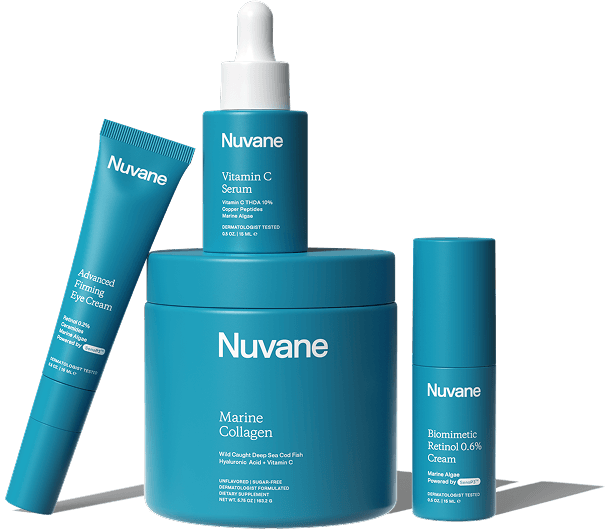
On packaging versus performance. Nuvane sells direct-to-consumer, which removes retail markup and the incentive to spend on shelf presence. Packaging is chosen for formula stability rather than display weight — airless, light-protective delivery for oxidation-sensitive actives such as retinol and THD ascorbate — and the savings are redirected into use levels. The Biomimetic Retinol Cream states its strength on the label at 0.3% or 0.6%, alongside niacinamide, trehalose, hyaluronic acid and marine algae extract at levels intended to work, not to appear on a list.
On real actives at real doses. The SenoP3™ triple-peptide complex is the core of the system, and each component has a defined mechanism rather than a marketing name:
- Palmitoyl Tripeptide-38 — signals upregulation of collagen I, III and IV, fibronectin and hyaluronic acid synthesis in the dermal matrix.
- Copper Tripeptide-1 (GHK-Cu) — supports collagen and elastin synthesis, contributes antioxidant and tissue-remodeling activity, and is active at very low concentrations by design.
- Acetyl Hexapeptide-8 (Argireline) — attenuates the neurotransmitter signaling that drives repetitive expression-line formation.
SenoP3™ appears across the Biomimetic Retinol Cream, the Biomimetic Bakuchiol Cream (the retinol-free route for sensitive and reactive skin, paired with Centella asiatica and a vitamin C derivative), the Regenerative Dark Spot Corrector (alpha-arbutin plus retinol and niacinamide), and the Firming Eye Cream (0.2% retinol with caffeine and ceramides at a strength calibrated for periocular skin).
On real hydration rather than a two-hour glow. Nuvane's moisturizing systems are built on the humectant–emollient–occlusive logic described above rather than on a hydration spike: trehalose and hyaluronic acid to bind water, ceramides and marine lipids to restore barrier structure, and marine polysaccharides from Fucus vesiculosus to form a breathable film that slows transepidermal water loss across the full day.
On honest labeling instead of "natural." Nuvane does not market on the word "natural," because the word carries no information. Ingredients are selected by evidence and purity — fermentation-derived hyaluronic acid, synthesized peptides of defined sequence, standardized marine extracts — and concentrations of the key actives are published rather than hidden below the preservative line. Formulations are built fragrance-conscious specifically because fragrance is the leading cause of cosmetic allergic contact dermatitis and contributes nothing to efficacy.
On signaling instead of selling you collagen in a jar. This is the reason Nuvane is built on biomimetic oligopeptides rather than on topical collagen. Every peptide in SenoP3™ is a 3–6 amino acid sequence well under 1,000 daltons — Palmitoyl Tripeptide-38 and Copper Tripeptide-1 at three residues, Acetyl Hexapeptide-8 at six — sized deliberately to cross the stratum corneum and deliver a message to the fibroblast, which is the only mechanism by which a topical can raise collagen output. Where collagen itself makes sense is orally, and that is where Nuvane puts it: the Oral Marine Collagen Supplement delivers hydrolyzed marine collagen with hyaluronic acid and vitamin C through the digestive route, where absorption is actually possible and where vitamin C serves as the required cofactor for collagen cross-linking. Topical for signals, oral for substrate — matched to what each route can physically do.
On price versus proof. Rather than asking you to infer efficacy from price, Nuvane's SenoP3™ AI-guided regimen was evaluated in a 12-week clinical study that assessed 13 separate signs of skin aging on the finished products, and the AI skin assessment matches your specific concerns — pigmentation, laxity, fine lines, barrier fragility — to the actives with evidence for those concerns, rather than selling everyone the most expensive item in the range. That is the whole thesis: the ingredient should be chosen by your skin's biology, not by a category page.
What should you take away from all this?
- Read the INCI list, not the front of the box. Ingredient order relative to the preservative tells you more than any claim.
- Treat a stated percentage as a positive signal. Brands that dose properly say so; brands that angel-dust stay vague.
- Use a moisturizer, not a mask, for hydration. Humectant + emollient + occlusive is what sustains 18–24 hour hydration; a sheet mask gives you under two hours.
- Discount the words "natural," "clean," and "chemical-free" entirely unless backed by a real certification such as COSMOS or NATRUE.
- Check molecular size before believing a delivery claim. Topical collagen is ~300,000 daltons and cannot penetrate; peptides under ~1,000 daltons can. Buy the signal, not the substrate.
- Buy proven actives, not price tiers. Retinoids, vitamin C, niacinamide, peptides and sunscreen carry the evidence at every price point.
- Ask for finished-product data. Ingredient studies are not product studies. A brand with clinical results on the actual formula will show them.
Frequently asked questions about skincare marketing and formulation
How much of a skincare product is actually active ingredients?
In most cosmetic anti-aging formulations, the combined bioactive load is under 5% by weight, with the remainder consisting of water, emulsifiers, emollients, thickeners and preservatives [9]. This is not inherently a problem — retinol works at 0.3% and copper peptides at far less — but it means the stated concentration of each named active matters far more than the presence of a long ingredient list.
What is "angel dusting" in skincare?
Angel dusting is the practice of including a marketable ingredient at a concentration far too low to produce any biological effect, purely so it can appear on the label and in advertising. Because ingredients under 1% may be listed in any order, an angel-dusted active is usually found near the end of the INCI list, below the preservative and fragrance.
How long does a sheet mask actually hydrate skin?
Instrumental studies show that hydration gains from a sheet mask decline toward baseline within roughly one to two hours once the occlusive sheet is removed, because the essence is mostly water and humectants with nothing to prevent evaporation [3][10]. Applying a moisturizer containing an occlusive immediately after masking is what extends the benefit.
Is "natural" skincare regulated in the US or EU?
No. The FDA has not defined "natural" or "organic" for cosmetics, and the EU Cosmetics Regulation contains no binding definition either [5][6]. Voluntary certifications such as COSMOS, NATRUE and Ecocert do set audited standards, so a certification logo carries meaning that the bare word does not.
Are expensive anti-aging creams worth the money?
Not automatically. A JAMA Dermatology review of best-selling moisturizers found a nearly 100-fold price range with no consistent relationship between price and formulation quality or allergen content [7]. Higher spend is justified when it buys stabilization technology, encapsulated delivery, meaningful active concentrations, or clinical testing on the finished product — and not when it buys a heavier jar.
Why do brands add fragrance if it has no skin benefit?
Fragrance drives purchase behavior and repeat use, and it also masks the odor of raw materials such as oxidized oils and certain plant extracts. Dermatologically, it offers no benefit and carries measurable risk: fragrance ingredients are the most common cause of cosmetic allergic contact dermatitis, with fragrance-mix positivity typically reported in the 5–10% range among patch-tested patients [8][12].
Does "fragrance-free" or "hypoallergenic" on a label mean anything?
Less than you would hope. The JAMA Dermatology analysis found that the majority of moisturizers marketed as hypoallergenic contained at least one ingredient recognized as a contact allergen [7]. Neither term is legally defined or independently verified in the US, so the INCI list remains the only reliable check.
Do collagen creams actually work?
Not in the way the name implies. Intact collagen has a molecular weight of roughly 300,000 daltons and even hydrolyzed cosmetic collagen sits at 2,000–10,000 daltons, while the stratum corneum largely excludes molecules above about 500 daltons [15][16]. A collagen cream functions as a surface humectant and film-former — producing real short-term smoothing — but it does not deposit collagen into your dermis.
If topical collagen doesn't absorb, do oral collagen supplements work?
Yes — the oral route is fundamentally different and far better supported. Digestion breaks hydrolyzed collagen into small di- and tripeptides such as Pro-Hyp and Gly-Pro-Hyp that are absorbed intact across the intestinal wall, have been directly measured in human blood and in skin tissue after ingestion [18][20], and act on dermal fibroblasts as growth-initiating signals [21]. A 2023 meta-analysis of 26 randomized trials found significant improvements in skin hydration and elasticity versus placebo [17]. Effects are modest and gradual — typically 8–12 weeks at 2.5–10 g daily — and pairing with vitamin C matters, since it is a required cofactor for collagen cross-linking.
If collagen is too big to penetrate skin, how do topical peptides work?
Size is the whole answer. Biomimetic oligopeptides are engineered at three to five amino acids — roughly 300–800 daltons — which sits at or below the ~500 dalton penetration threshold, while intact collagen is around 300,000 daltons [15]. These short sequences are not collagen fragments being used as raw material; they are synthetic mimics of the signals the skin produces during matrix remodeling, and they instruct fibroblasts to build collagen rather than supplying it. Palmitoyl Tripeptide-38 (3 amino acids), Copper Tripeptide-1 (3 amino acids, ~340 Da) and Palmitoyl Pentapeptide-4 (5 amino acids) are the best-studied examples.
What ingredients actually have strong clinical evidence for aging skin?
The best-supported topical actives are retinoids (retinol, retinaldehyde, tretinoin), vitamin C in stabilized forms such as THD ascorbate, niacinamide, alpha-hydroxy acids, peptides including GHK-Cu and Palmitoyl Tripeptide-38, and — above all — daily broad-spectrum sunscreen, since ultraviolet exposure drives the majority of visible photoaging.
How can I tell if a brand is being transparent?
Look for four things: stated concentrations of key actives, clinical data on the finished product rather than on isolated raw ingredients, a short and explicable ingredient rationale rather than a wall of botanicals, and honest limitations — a brand willing to tell you what a product will not do is usually telling the truth about what it will.
Does personalization actually improve results, or is it a marketing layer too?
It depends entirely on whether the personalization changes the actives. A quiz that routes everyone to the same three products with different labels is marketing. A system that assesses specific parameters — pigmentation, laxity, fine lines, barrier integrity, sensitivity — and then adjusts retinoid strength, brightening agents and barrier support accordingly is making a genuine formulation decision on your behalf.
References
- Cosmetic manufacturing unit economics: cost-of-goods breakdown across formula, primary packaging, secondary packaging, filling and freight. Industry manufacturing cost analyses, 2025.
- Sunscreen and skincare cost structure analysis: formula vs. packaging vs. filling vs. freight. LAEYO Labs Sourcing Guides, 2025.
- Short-term skin reactions and changes in stratum corneum following different ways of facial sheet mask usage. Journal of Dermatological Science / Skin Research and Technology, 2024.
- When to Reapply Moisturizers: Evidence-Based Intervals from a 24-Hour Hydration Study. SKIN: The Journal of Cutaneous Medicine, 2024.
- US Food and Drug Administration. "'Organic' Cosmetics" and cosmetic labeling claims guidance. FDA Cosmetics Labeling Claims.
- Regulation (EC) No 1223/2009 of the European Parliament and of the Council on cosmetic products; Commission Regulation (EU) No 655/2013 on common criteria for cosmetic product claims.
- Xu S, Kwa M, Agarwal A, Rademaker A, Kundu RV. Consumer Preferences, Product Characteristics, and Potentially Allergenic Ingredients in Best-selling Moisturizers. JAMA Dermatology. 2017;153(11):1099–1105.
- de Groot AC, Frosch PJ. Adverse reactions to fragrances: a clinical review; and Allergic Contact Dermatitis to Fragrances. Contact Dermatitis / Dermatologic Clinics, 2020.
- Draelos ZD. The science behind skin care: Moisturizers. Journal of Cosmetic Dermatology. 2018;17(2):138–144.
- Dermatology Times. Social Media Mythbusters: Overnight Sheet Masks — over-hydration and barrier disruption. 2024.
- Draelos ZD. In Vitro and In Vivo Evaluation of an Emollient-Rich Moisturizer Developed to Address Three Critical Elements of Natural Moisturization. Journal of Cosmetic Dermatology. 2025.
- Fluhr JW, et al. Restoring Skin Hydration and Barrier Function: Mechanistic Insights Into Basic Emollients for Xerosis Cutis. International Journal of Dermatology. 2025.
- Allergenic potential, marketing claims, and pricing of facial moisturizers. Journal of the American Academy of Dermatology, 2020.
- Comparative evaluation of standard moisturizers versus premium specialty scar and post-procedure creams. Northwestern University Feinberg School of Medicine, Department of Dermatology, 2017.
- Bos JD, Meinardi MMHM. The 500 Dalton rule for the skin penetration of chemical compounds and drugs. Experimental Dermatology. 2000;9(3):165–169.
- Aguirre-Cruz G, León-López A, Cruz-Gómez V, Jiménez-Alvarado R, Aguirre-Álvarez G. Collagen hydrolysates for skin protection: oral administration and topical formulation. Antioxidants. 2020;9(2):181.
- Pu SY, Huang YL, Pu CM, et al. Effects of Oral Collagen for Skin Anti-Aging: A Systematic Review and Meta-Analysis. Nutrients. 2023;15(9):2080.
- Iwai K, Hasegawa T, Taguchi Y, et al. Identification of food-derived collagen peptides in human blood after oral ingestion of gelatin hydrolysates. Journal of Agricultural and Food Chemistry. 2005;53(16):6531–6536.
- Sato K, et al. Dose-dependent changes in the levels of free and peptide forms of hydroxyproline in human plasma after collagen hydrolysate ingestion. Food Chemistry. 2014;159:328–332.
- Yazaki M, Ito Y, Yamada M, et al. Oral Ingestion of Collagen Hydrolysate Leads to the Transportation of Highly Concentrated Gly-Pro-Hyp and Its Hydrolyzed Form of Pro-Hyp into the Bloodstream and Skin. Journal of Agricultural and Food Chemistry. 2017;65(11):2315–2322.
- Shigemura Y, Kubomura D, Sato Y, Sato K. Collagen-Derived Di-Peptide, Prolylhydroxyproline (Pro-Hyp): A New Low Molecular Weight Growth-Initiating Factor for Specific Fibroblasts Associated With Wound Healing. Frontiers in Cell and Developmental Biology. 2020;8:548975.
Related search terms
skincare marketing myths debunked, what percentage of skincare is active ingredients, angel dusting skincare meaning, how to read an INCI list, do sheet masks really hydrate skin, how long does sheet mask hydration last, humectant vs occlusive vs emollient, is natural skincare regulated FDA, clean beauty marketing claims truth, expensive vs drugstore skincare study, JAMA Dermatology moisturizer price study, fragrance allergic contact dermatitis skincare, best proven anti-aging ingredients dermatologist, copper peptide GHK-Cu concentration, transparent skincare brands ingredient percentages, SenoP3 peptide complex, biomimetic retinol cream 0.6%, do collagen creams actually work, 500 dalton rule skin penetration, topical vs oral collagen for skin, why collagen cannot absorb into skin, peptides vs collagen for wrinkles, biomimetic oligopeptides 3-5 amino acids skincare, Pro-Hyp Gly-Pro-Hyp absorption skin, hydrolyzed collagen peptides bioavailability, Palmitoyl Tripeptide-38 collagen synthesis, Palmitoyl Pentapeptide-4 Matrixyl evidence, oral collagen dose 8-12 weeks results
Find the most effective anti-aging products for you by taking the free skin assessment.
Recommended Read
- Which 2026 skincare trends really live up to the hype?
- The complete guide to skin longevity ingredients
- Best moisturizers for aging skin: why it gets drier
- New Study: SenoP3™ AI Regimen Improves 13 Signs of Skin Aging in 12 Weeks
- What are the most asked questions about Nuvane ingredients?
Find the most effective anti-aging products for you by taking the free skin assessment.
Enjoyed this article? Add Nuvane as a preferred source on Google.