
Best anti-aging skincare products for men after 40?


Key Takeaways:
- The best skincare for men after 40 is not a 12-step hostage situation. It is a disciplined, high-function routine built around cleansing, antioxidant protection, moisturizing, nightly renewal, and daily sunscreen.
- After 40, skin starts acting like a former athlete with a desk job: still capable, but slower to recover, quicker to dry out, and increasingly offended by neglect.
- The ingredients worth your attention are the ones with actual receipts: retinoids, vitamin C, niacinamide, peptides, hyaluronic acid, and broad-spectrum SPF.
- For men who want visible results without turning their bathroom into a chemistry lab with mood lighting, a streamlined routine with science-backed actives is the smartest play.
Quick Answer:
The best skincare for men after 40 is a simple, efficient routine that protects during the day and repairs at night.
- Morning: gentle cleanser, vitamin C serum, moisturizer, sunscreen SPF 30+
- Evening: gentle cleanser, retinol or bakuchiol treatment, moisturizer
- Optional upgrades: eye treatment, dark-spot corrector, targeted peptide products
Why does this work? Because after 40, skin tends to get drier, duller, rougher, and less forgiving. Collagen declines, cell turnover slows, and years of sun exposure finally decide to introduce themselves properly. Daily SPF plus a proven night treatment is the two-man power suit of anti-aging skincare.
What Changes in Skin After 40?
Earlier in life, men’s skin is often thicker, oilier, and more resilient. Then 40 arrives, pours itself a drink, and changes the tone of the evening. You may still deal with enlarged pores or shaving irritation, but now they are joined by dehydration, dullness, rough texture, and lines that have moved from “barely there” to “definitely invited.”
Skin repair slows down. Collagen and elastin decline. Years of UV exposure start cashing in their chips. What shows up next is familiar: sagging, pigmentation, crepey texture, and a general loss of that rested, pulled-together look.
Why Does “Basic Soap and Hope” Stop Working?
Because mature skin needs more than brute force and optimism. A harsh cleanser can strip the barrier. Skipping moisturizer can make lines look sharper and skin feel tighter. Ignoring sunscreen is basically outsourcing your future face to UV damage. And without ingredients that support collagen or cell turnover, skin gradually starts looking more worn-down than well-lived-in.
This is the decade when skincare stops being cosmetic fluff and becomes maintenance for valuable equipment.
What Should the Morning Routine Look Like?
The ideal morning routine should be quick, clean, and effective. No spa soundtrack required.
What Is the Best Men’s Face Wash to Start the Day?
Use a gentle face cleanser that removes overnight oil, sweat, and residue without making your skin feel tight, squeaky, or weirdly punished. If you shave in the morning, a non-stripping cleanser also helps prep the skin and reduce irritation.
The reason “men’s face wash” keeps climbing search charts is simple: this is where the whole routine begins. Start with the wrong cleanser and the rest of the operation is already working uphill.
Why Use Vitamin C in the Morning?
Because vitamin C is one of the few ingredients that manages to be both hardworking and broadly useful. It helps defend against oxidative stress, supports collagen production, and improves the look of uneven tone. In plain English, it helps skin look brighter, healthier, and less like it spent the last decade commuting under fluorescent lights and pretending to enjoy it.
Why Is a Men’s Moisturizer Essential, Even if Skin Is Not Dry?
Because moisturizer is not just for people with visibly flaky skin and a tragic radiator situation. It supports the barrier, reduces water loss, and helps skin look smoother, calmer, and more resilient.
After 40, this matters more than most men realize. A good moisturizer does not make you high-maintenance. It makes you look like you sleep, hydrate, and perhaps own at least one decent blazer. Look for formulas with humectants like hyaluronic acid, barrier-supporting ingredients, and niacinamide if you want added help with tone and texture.
Why Is Sunscreen the Non-Negotiable?
Because sunscreen is the closest thing skincare has to a universal law. UV exposure is one of the biggest drivers of wrinkles, discoloration, roughness, and loss of firmness. You can spend a fortune on serums, but if you skip SPF, you are essentially mopping the floor while the sink overflows.
It is the least glamorous product and the most important one. That is usually how adulthood works.
Why Does Nighttime Matter More After 40?
Night is when skincare gets to stop playing defense and start fixing things. This is the best time for ingredients that improve texture, support collagen, and soften visible lines.
Think of the evening routine as less “pampering” and more “repair crew.”
Should Men Over 40 Use Retinol?
Yes, in most cases. Retinol remains one of the most evidence-supported ingredients for improving photoaging, rough texture, and fine lines. It helps normalize cell turnover and gives skin a firmer, smoother, more polished look over time.
The key word is time. Retinol is not a cinematic montage. It is a disciplined long game.
Start slowly, especially if you are new to it:
- Use it 2 to 3 nights per week
- Apply it to dry skin
- Follow with moisturizer
- Increase frequency as tolerated
What If Retinol Feels Too Intense?
Then bakuchiol is a smart alternative. It is a gentler option for men who want the benefits of nighttime renewal without feeling like their face has entered a minor labor dispute.
Bakuchiol is especially useful for dry, reactive, or easily irritated skin. It is the diplomatic option for skin that refuses to respond well to tough love.
Which Ingredients Matter Most for Men After 40?
Why Is Retinol Still the Gold Standard?
Because it works. Retinol helps improve texture, soften lines, support collagen signaling, and gradually make skin look more refined. It is especially useful for men dealing with wrinkles, roughness, visible sun damage, and occasional congestion.
It is not trendy. It is not flashy. It is simply one of the most useful ingredients in modern skincare, which is a far better thing to be.
What Do Peptides Do?
Peptides are signaling ingredients that help support skin structure, firmness, and resilience. Some are used to support collagen-related pathways. Others help target expression lines or improve the feel and look of aging skin over time.
For Nuvane, the standout system is SenoP3, built around three biomimetic signal peptides:
- Copper Tripeptide-1
- Palmitoyl Tripeptide-38
- Acetyl Hexapeptide-8
That combination is positioned to support collagen, firmness, elasticity, and smoother-looking expression lines. Which is exactly the sort of thing you want from a product after 40: less nonsense, more engineering.
Why Is Niacinamide Such a Useful All-Rounder?
Because niacinamide is the kind of ingredient that quietly does everything well without insisting on applause. It helps support the barrier, improves uneven tone, reduces sallowness, and can soften the look of fine lines.
For mature male skin, that is an excellent résumé. It strengthens while it brightens, which is more than can be said for most people on LinkedIn.
Why Use Hyaluronic Acid and Hydrators?
Because dehydration makes every line look more dramatic than it needs to. Humectants like hyaluronic acid help attract water and improve plumpness, comfort, and surface smoothness.
In other words, they help your face look less tired before you have even addressed the deeper issues.
Does Vitamin C Really Help With Aging Skin?
Yes. Especially when the goal is brighter-looking skin, antioxidant support, and help with visible signs of sun damage. It is not a replacement for sunscreen, but it is an excellent wingman. Every lead benefits from competent support.
What Is the Best Men’s Skincare Routine After 40?
For most men after 40, this is enough:
- Morning: Cleanser → Vitamin C serum → Moisturizer → Sunscreen SPF 30+
- Night: Cleanser → Retinol or bakuchiol treatment → Moisturizer
That is the whole thing. Not a shelf full of tiny expensive promises. Not an elaborate sequence requiring a laminated chart. Just a well-built routine with actual purpose.
When Should You Consider Male Facial Treatments Beyond the Daily Routine?
Once your daily routine is consistent and your skin is tolerating it well, you can think about add-ons like LED light therapy, chemical peels, or microneedling. These can complement topical skincare and help with texture, tone, and firmness.
But let’s keep perspective. These are upgrades, not foundations. The routine is the engine. Treatments are the spoiler package.
When Should You Add Extras?
Add an eye treatment if crow’s feet, puffiness, or under-eye crepiness are bothering you. Add a dark-spot treatment if you are seeing discoloration, post-acne marks, or sun spots.
That said, do not confuse more products with more progress. Sometimes the most mature skincare move is restraint.
How Does Anti-Aging Skincare for Men Actually Work?
It works by combining prevention during the day with repair at night. Sunscreen and antioxidants help reduce future damage. Retinoids, peptides, and supportive ingredients help improve texture, firmness, and overall skin quality over time.
The goal is not to look 22 again. That would be eerie. The goal is to look healthy, sharp, and well-maintained.
How Do You Handle Wrinkles and Loss of Firmness?
Use a combination of sunscreen, retinol or bakuchiol, and peptides. This addresses prevention, renewal, and structural support in one smart system. Consistency matters far more than aggression.
Skin responds better to discipline than punishment.
How Do You Handle Dark Spots and Uneven Tone?
Look for vitamin C, niacinamide, alpha arbutin, and retinoid-based renewal support. And wear sunscreen, because treating pigmentation while skipping SPF is like trying to save money while setting small fires in your wallet.
How Do You Handle Razor Bumps and Post-Shave Care?
Shaving is still one of the most common causes of irritation for men, especially after 40 when skin can become less forgiving. To reduce bumps, ingrown hairs, and post-shave drama:
- Shave with the grain
- Use a sharp blade
- Apply a soothing post-shave balm
- Avoid strong actives right after shaving
If you use retinol, keep it for nighttime and let your shaving routine stay calm, gentle, and low-friction.
How Do You Reduce Pores for Men?
You cannot physically shrink a pore, but you can absolutely make pores look smaller. Retinol helps keep them clear and improves turnover, which refines texture over time. Niacinamide also helps reduce the appearance of enlarged pores.
A consistent cleanser-retinol-moisturizer routine is your best bet. This is not about magic. It is about maintenance.
How Do You Treat Acne for Men Over 40?
Adult acne does not always retire when your bad knees and suspiciously strong opinions arrive. Acne after 40 is often linked to stress, barrier disruption, irritating products, or pore-clogging formulas rather than teenage-style oil overload.
The better strategy is gentle cleansing, non-comedogenic moisture, and targeted ingredients like niacinamide or low-strength retinol. Going too harsh can make skin drier, angrier, and somehow older-looking at the same time, which is an impressively bad outcome.
What Changes Show Up First?
Hydration, smoother texture, and a fresher overall look can show up within days to two weeks. These are the early wins. Enjoy them.
What Takes Longer?
Brighter tone, softer fine lines, and more even texture usually take around 6 to 12 weeks. That is the middle stretch where patience becomes part of the routine.
What Takes Real Patience?
Firmness, deeper wrinkle improvement, and visible collagen-related changes often take several months of consistent use. Which is not thrilling, but it is how real results work. Most worthwhile things take longer than a long weekend and one optimistic online order.
What Makes Nuvane Relevant for Mature Male Skin?
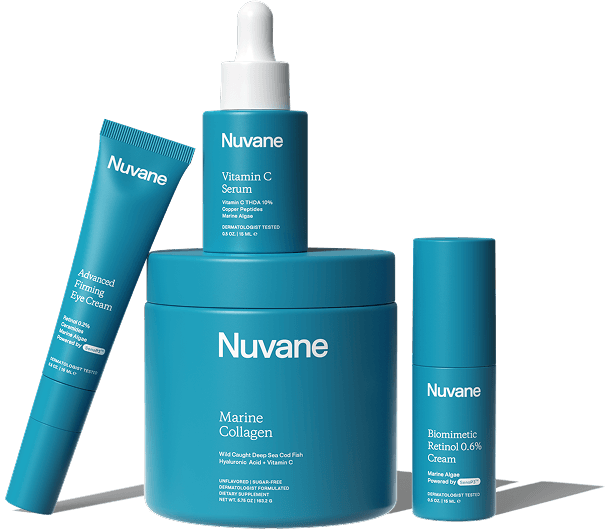
Nuvane is built around personalized anti-aging support for adults who want both prevention and correction. The system focuses on a morning antioxidant serum, customized night creams, and targeted treatments. That makes sense for men over 40, because this is the point where skincare should stop being random and start being tailored.
Which Nuvane Ingredients Are Especially Compelling?
The Nuvane formulas feature several evidence-aligned actives:
- Stable vitamin C in the serum
- Retinol in 0.3% and 0.6% night creams
- Bakuchiol as a gentler retinol alternative
- Niacinamide
- Sodium hyaluronate
- Marine algae extract
- SenoP3 peptide complex
This is a strong lineup because it addresses the major concerns of mature skin from multiple angles: antioxidant support, renewal, hydration, barrier care, and firmness.
Why Highlight SenoP3?
Because SenoP3 is Nuvane’s signature differentiator and the part that gives the formula architecture more substance than marketing fluff. It is a triple-peptide complex designed to support collagen, elasticity, smoother texture, and reduced wrinkle appearance.
In a category full of loud promises and glossy nonsense, a well-constructed peptide system is a much more interesting story.
What Does the Ingredient List Suggest About Product Design?
It suggests that Nuvane is not trying to build an entire anti-aging strategy around one flashy hero ingredient and a good publicist. Instead, the formulas combine retinol or bakuchiol with hydrators, barrier-supportive ingredients, peptides, and antioxidants.
That layered design is exactly what mature skin tends to need: not brute force, but intelligent support.
What Should You Always Do?
Use sunscreen every day. Start actives slowly. Moisturize consistently. Apply products to the neck too. Give products enough time to work before declaring them useless over coffee three mornings in.
What Should You Stop Doing?
Stop using harsh soap on your face. Stop skipping SPF because it is cloudy. Stop introducing every active at once like you are drafting a fantasy team. Stop confusing irritation with effectiveness. And stop expecting one ambitious week of skincare to undo a decade of sun exposure and bad decisions.
What Are the Most Common Questions Men Ask About Skincare After 40?
Can Men Use the Same Anti-Aging Skincare as Women?
Yes. Skin needs matter more than packaging. The best products are chosen by function, not by whether the bottle looks like it belongs in a sports car commercial.
Is Retinol Too Harsh After 40?
Not necessarily. Start with a lower strength, use it a few nights a week, and build gradually. If your skin is sensitive, bakuchiol is a very solid alternative.
Do Men Really Need Eye Cream?
Only if the eye area is a concern. It can be useful for crow’s feet, puffiness, dark circles, and crepey texture, but it is not mandatory. This is skincare, not conscription.
What Is the Single Most Important Product?
Broad-spectrum sunscreen. It protects against ongoing damage and helps preserve the benefits of everything else in your routine. It is the least exciting answer and the most correct one.
Should Oily Skin Still Use Moisturizer?
Yes. Oily skin can still be dehydrated, irritated, and barrier-impaired. The goal is not to remove all moisture and live like a parchment scroll. The goal is balance.
Is Vitamin C Worth It for Men Over 40?
Yes. It is especially helpful for dullness, uneven tone, and antioxidant support. It earns its place.
Can You Use Retinol and Vitamin C in the Same Routine?
Yes. The easiest approach is vitamin C in the morning and retinol at night. Let each one do its job without crowding the room.
How Much Skincare Is Too Much?
If your skin is red, flaky, stinging, and behaving like it has filed an HR complaint, you are doing too much.
What Is the Bottom Line on the Best Skincare for Men After 40?
The best skincare for men after 40 is simple, strategic, and consistent. Cleanse gently, protect daily, renew at night, and support the barrier. Retinol, vitamin C, niacinamide, peptides, hydrators, and sunscreen have the strongest case for this age group because they address the actual mechanics of aging skin rather than just decorating the idea of improvement.
Nuvane’s formulation strategy fits that logic well, especially through its use of stable vitamin C, retinol, bakuchiol, sodium hyaluronate, niacinamide, marine algae, and the SenoP3 biomimetic peptide complex. For men after 40 who want science-backed skincare without turning the bathroom counter into a wellness startup, that is a persuasive setup.
References:
[1] Blanes-Mira C, et al. A synthetic hexapeptide with antiwrinkle activity. Int J Cosmet Sci. 2002.
[2] Bissett DL, et al. Topical niacinamide improves skin appearance in photoaged skin. Dermatol Surg. 2004/2005.
[3] Dhaliwal S, et al. Prospective, randomized, double-blind assessment of topical bakuchiol and retinol for facial photoageing. Br J Dermatol. 2019.
[4] Farris PK. Topical vitamin C: mechanisms of action and clinical applications. J Clin Aesthet Dermatol. 2014.
[5] Kafi R, et al. Improvement of naturally aged skin with vitamin A topical treatment. Arch Dermatol. 2007.
[6] Leyden JJ, et al. Skin care benefits of copper peptide-containing facial creams. Int J Cosmet Sci. 2002.
[7] Maquart FX, et al. Stimulation of collagen synthesis in fibroblast cultures by the tripeptide-copper complex GHK-Cu. FEBS Lett. 1988/1993.
[8] Schagen SK. Topical peptide treatments with effective anti-aging results. J Drugs Dermatol. 2017.
[9] Sitohang IBS, et al. Topical tretinoin for treating photoaging: a systematic review of randomized controlled trials. Clin Cosmet Investig Dermatol. 2022.
[10] Telang PS. Vitamin C in dermatology. Indian Dermatol Online J. 2013.
What Should They Click Next?
- How to Build a Minimalist Anti-Aging Routine That Actually Works
- Retinol 0.3% vs 0.6%: Which Strength Is Right for Your Skin?
- Bakuchiol vs Retinol: Which One Fits Sensitive Skin Best?
- Why Peptides Matter in Modern Anti-Aging Skincare
Find the most effective anti-aging products for you by taking the free skin assessment.
Enjoyed this article? Add Nuvane as a preferred source on Google.