
Ferritin Face: Can Low Iron Make Your Skin Look Pale?

Quick answer: is "ferritin face" real?
- "Ferritin face" is a social media term for the pale, tired, washed-out look some people link to low iron stores. Low iron can contribute to it, but you cannot diagnose low ferritin from your face alone.
- Ferritin is the protein that stores iron, and a blood ferritin test is the best single measure of your iron reserves [1][2].
- Iron deficiency can show on the skin as pallor, dullness, dryness, itching, cracks at the corners of the mouth, and brittle nails [1][3].
- Dark circles, sallowness, and dull skin have many causes, including genetics, sleep, sun damage, thinning skin, and inflammation, so a blood test is the only way to know whether iron is involved [4][5].
- Rebuilding iron stores under medical guidance, plus a skin longevity routine with vitamin C, retinol, and peptides, addresses both the inside and the outside.
What is "ferritin face," and where did it come from?
This section explains the trend and what it gets right and wrong.
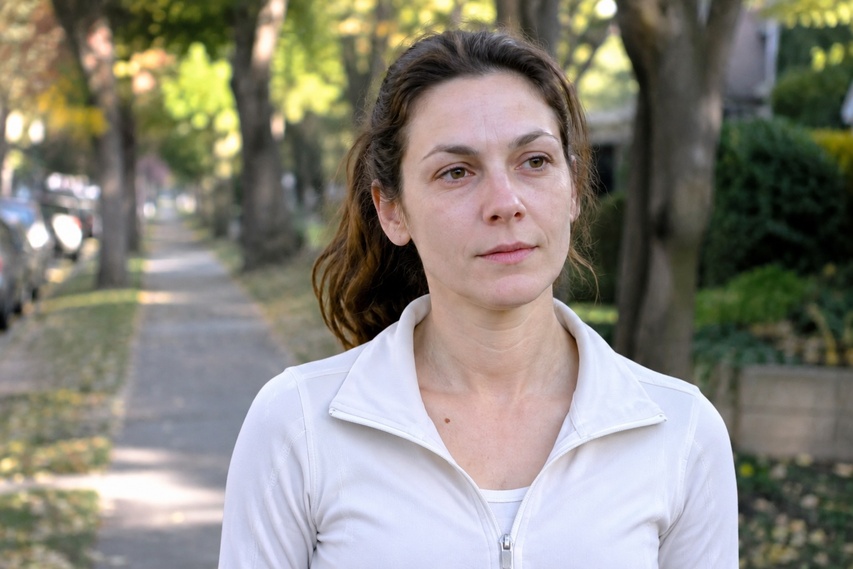
"Ferritin face" describes a cluster of looks: a pale or greyish complexion, lips that look less pink, shadowy under-eyes, and skin that seems to have lost its glow. The idea spreading online is that this appearance reveals low iron stores, and that topping up ferritin restores color and radiance.
The trend gets one thing right. Iron deficiency is extremely common, especially in women who menstruate, and it can affect the skin. Many women have low iron stores for years without being told, because routine blood counts can stay normal until iron is severely depleted [2].
What the trend gets wrong is the shortcut. A pale, tired face is not a lab test. Doctors who look for pallor in the face and eyelids miss a large share of people with anemia, and the face is even less reliable for detecting low ferritin without anemia [6]. Your complexion can point you toward a blood test, but it cannot replace one.
What is ferritin, and why does it matter for your skin?
Understanding the difference between iron and ferritin explains why your skin can change before your blood count does.
Iron is the mineral your body uses to make hemoglobin, the oxygen-carrying pigment in red blood cells. Ferritin is the protein that stores iron inside cells, like a reserve tank your body draws from when it needs more [1][2].
Iron deficiency happens in stages. First, ferritin falls as reserves are spent. Then the iron available to tissues drops. Only at the end does hemoglobin fall and iron deficiency anemia appear [2]. Skin, hair, and nails can respond during the earlier stages, which is why some people notice changes long before a doctor finds anemia.
Iron matters to skin in two main ways:
- Color and oxygen delivery. Hemoglobin gives skin, lips, and inner eyelids their pink-red tone. When hemoglobin falls, less red pigment flows through the small vessels of the skin, so the complexion looks paler or slightly yellow-grey [2][6].
- Collagen production. The enzymes that stabilize new collagen, prolyl and lysyl hydroxylases, need both iron and vitamin C to work [7]. Low iron is one more stressor on a collagen system that already slows with age.
Why can ferritin look normal when iron is actually low?
Ferritin rises during infection and inflammation, so it can look reassuring even when iron is low. For this reason, ferritin is usually interpreted with C-reactive protein (CRP), transferrin saturation, and a complete blood count (CBC) [2].
What skin signs can point to low iron?
These are the skin and nail changes most often linked to iron deficiency. None of them is proof on its own.
Iron deficiency has been associated with several visible changes in the skin and its appendages [1][3]:
- Pallor: a paler face, paler lips, and pale inner lower eyelids (the conjunctiva is one of the more useful places to look) [6]
- Dullness and loss of radiance: skin that looks flat or "washed out" rather than rosy
- Dry, rough skin (xerosis) and, in some people, generalized itching without a rash [8]
- Angular cheilitis: painful cracks at the corners of the mouth
- A smooth, sore tongue (atrophic glossitis)
- Brittle, thin, ridged, or spoon-shaped nails (koilonychia)
- Slower healing of small cuts and blemishes
- Diffuse hair shedding (more on this below)
Iron becomes a more likely cause when these signs come with fatigue, shortness of breath on stairs, a racing heartbeat, cold hands and feet, restless legs, or cravings for ice, and when you have risk factors such as heavy periods, a recent pregnancy, a plant-based diet, or rapid weight loss [2].
Does low iron cause dark circles under the eyes?
Dark circles are the most-shared "ferritin face" feature, and the most misunderstood.
Low iron may make dark circles look worse, mainly because paler surrounding skin makes the bluish under-eye vessels stand out more. Some studies of people with periorbital darkening have found anemia or low iron in a subset of patients [5]. But iron is rarely the whole story.
Most dark circles are driven by other factors [5]:
- Genetics and pigmentation, especially in deeper skin tones
- Thin under-eye skin that lets the blue-purple color of underlying vessels and muscle show through, which worsens as collagen declines with age
- Volume loss and hollowing that create shadows in the tear trough
- Fluid retention and puffiness, often from poor sleep, salt, or allergies
- Allergies and eye rubbing, which add pigment and inflammation
- Sun damage, which thins the skin and deepens pigmentation
If your dark circles are new, come with other signs of iron deficiency, or appear alongside pale lips and fatigue, a blood test is worth it. If they have been there for years, they are more likely structural, and topical care is where you will see the most improvement.
What ferritin level is considered low?
Lab cutoffs and the levels many clinicians aim for are not always the same.
Most laboratories flag ferritin as low below about 12–15 µg/L (the same as ng/mL), and the World Health Organization uses <15 µg/L to define iron deficiency in healthy adults [9]. Many clinicians treat ferritin below about 30 µg/L as depleted, and in people with symptoms such as hair shedding, many dermatologists aim for 40 µg/L or higher [1][10].
A practical way to read your result:
- Below 15 µg/L: iron deficiency. Treat, and find the cause.
- 15–30 µg/L: depleted stores; often treated when symptoms are present.
- 30–70 µg/L: generally adequate for most people.
- Above 150–200 µg/L in women: iron supplements are not appropriate; your doctor may look for inflammation or iron overload.
How do you restore iron safely?
The goal is to rebuild stores, fix the cause, and avoid taking iron you do not need.
Test before you supplement
Excess iron can be harmful, and people with hereditary hemochromatosis should not supplement at all. Ask your doctor for ferritin, a CBC, transferrin saturation, and CRP, and, if you have dull skin and fatigue, consider TSH (thyroid) and vitamin B12 too, since both can cause pallor and tiredness [2][9].
Eat for absorption
- Heme iron (red meat, poultry, fish, shellfish) is absorbed far better than plant iron.
- Plant iron (lentils, beans, tofu, spinach, pumpkin seeds, fortified cereals) absorbs better when eaten with vitamin C from citrus, berries, peppers, or tomatoes [11].
- Tea, coffee, and calcium reduce iron absorption; keep them one to two hours away from iron-rich meals.
Supplement smartly if prescribed
A single iron dose raises a hormone called hepcidin for about a day, which blocks absorption of the next dose. Studies show that taking iron every other day can improve total absorption and reduce stomach upset [12][13]. Gentler forms such as iron bisglycinate suit sensitive stomachs, and intravenous iron is an option when oral iron is not absorbed or tolerated. Ferritin is usually rechecked after 8–12 weeks.
How long until your skin looks better?
Color often improves within 4–8 weeks as hemoglobin rises. Nails and dryness take longer, typically 3–6 months, because nails grow slowly and the skin barrier renews in cycles.
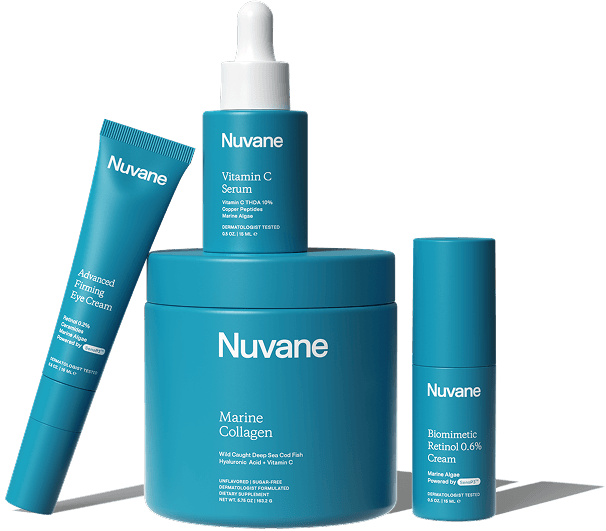
How does Nuvane help skin that looks pale, dull, and tired?
Iron is an inside-out fix. A skin longevity routine works on the outside at the same time.
Correcting iron deficiency restores the color that comes from healthy blood. But pale, dull skin is also shaped by collagen loss, a weakened barrier, slower cell turnover, and pigment irregularities, all of which accelerate with age. Nuvane's routine targets these at the skin level, built around the SenoP3™ triple-peptide complex:
- Palmitoyl Tripeptide-38 stimulates collagen and hyaluronic acid production for firmer, better-hydrated skin.
- Copper Tripeptide-1 (GHK-Cu) supports collagen and elastin synthesis and has antioxidant activity.
- Acetyl Hexapeptide-8 helps relax repetitive expression lines.
For a dull, washed-out complexion, the Advanced Vitamin C Serum pairs stable, lipid-soluble THD ascorbate with copper peptides, ceramides, and marine extracts. Vitamin C is a cofactor, together with iron, for the enzymes that build stable collagen [7], and it brightens uneven tone.
For under-eye shadows, the Firming Eye Cream combines retinol 0.2%, SenoP3™, caffeine, and ceramides to thicken thin under-eye skin over time, so vessels show through less, while caffeine helps with puffiness.
For overall radiance and texture, the Biomimetic Retinol Cream (0.3% or 0.6%) speeds cell turnover and builds collagen, with niacinamide and marine algae to support the barrier. If your skin is sensitive, the Biomimetic Bakuchiol Cream offers a retinol-free alternative.
From the inside, the Oral Marine Collagen Supplement combines hydrolyzed marine collagen, hyaluronic acid, and vitamin C. Taken with an iron-rich meal, its vitamin C also helps your body absorb plant-based iron [11]. It does not replace iron treatment, but it supports skin hydration and collagen while your stores rebuild.
Can low ferritin also cause hair loss?
Hair is often the first place low iron shows up, sometimes before the skin does.
Yes. The cells at the base of a growing hair follicle divide very rapidly and depend on iron. When stores run low, follicles can leave the growth phase early, leading to diffuse shedding (telogen effluvium) two to three months later [1][10]. Many dermatologists aim for a ferritin of 40 µg/L or higher in women with shedding, and the good news is that iron-related hair loss is usually reversible once stores are rebuilt.
For a full guide on ferritin levels, testing, iron dosing, and the hair regrowth timeline, read our sister brand's article: Can low ferritin cause hair loss—and what level is too low? on the MDhair blog.
Key takeaways
- "Ferritin face" points to a real connection between iron and skin, but your face cannot diagnose low ferritin; a blood test can.
- Low iron can cause pallor, dullness, dryness, itching, mouth-corner cracks, and brittle nails.
- Dark circles usually have structural causes; iron is one possible contributor, not the main one for most people.
- Test ferritin, CBC, transferrin saturation, and CRP before taking iron, and supplement only under medical guidance.
- Pair iron with vitamin C, and support skin from the outside with vitamin C, retinol, and peptides.
Frequently asked questions
Can low iron make your face look pale?
Yes. Iron deficiency anemia reduces hemoglobin, the red pigment in blood, so the face, lips, and inner eyelids can look paler [2][6]. Low ferritin without anemia is less likely to change skin color, which is why a blood test is needed.
Is "ferritin face" a medical diagnosis?
No. It is a social media term, not a recognized diagnosis. It describes a pale, tired look that can have many causes, including iron deficiency, thyroid problems, low vitamin B12, poor sleep, and simple genetics.
Can low iron cause dark circles?
It can contribute, especially by making surrounding skin paler so under-eye vessels look darker. For most people, though, dark circles come from genetics, thin skin, volume loss, pigmentation, or puffiness [5].
Does low iron cause dry or itchy skin?
It can. Iron deficiency has been linked to dry, rough skin and to generalized itching that improves when iron is replaced [3][8]. Other causes of dryness, such as a damaged barrier or thyroid issues, are also common.
How long does it take for skin color to return after iron treatment?
Color often improves within 4–8 weeks as hemoglobin recovers. Nail and dryness changes can take 3–6 months.
Should I take iron for dull skin?
Only if a blood test shows you need it. Taking iron without a deficiency will not brighten your skin and can cause side effects or, in some people, iron overload.
What helps dull, pale skin from the outside?
A consistent routine with vitamin C for brightness and antioxidant protection, retinol for cell turnover and collagen, peptides for firmness, daily sunscreen, and a barrier-supporting moisturizer.
Can low ferritin cause hair loss too?
Yes. Low ferritin is a common, fixable cause of diffuse shedding in women. See the MDhair guide to ferritin and hair loss for details.
References
- Trost LB, Bergfeld WF, Calogeras E. The diagnosis and treatment of iron deficiency and its potential relationship to hair loss. Journal of the American Academy of Dermatology. 2006;54(5):824–844.
- Camaschella C. Iron-deficiency anemia. New England Journal of Medicine. 2015;372(19):1832–1843.
- Almohanna HM, Ahmed AA, Tsatalis JP, Tosti A. The role of vitamins and minerals in hair loss: a review. Dermatology and Therapy. 2019;9(1):51–70.
- Sheth PB, Shah HA, Dave JN. Periorbital hyperpigmentation: a study of its prevalence, common causative factors and its association with personal habits and other disorders. Indian Journal of Dermatology. 2014;59(2):151–157.
- Sarkar R, Ranjan R, Garg S, Garg VK, Sonthalia S, Bansal S. Periorbital hyperpigmentation: a comprehensive review. Journal of Clinical and Aesthetic Dermatology. 2016;9(1):49–55.
- Kalantri A, Karambelkar M, Joshi R, Kalantri S, Jajoo U. Accuracy and reliability of pallor for detecting anaemia: a hospital-based diagnostic accuracy study. PLoS One. 2010;5(1):e8545.
- Pinnell SR. Regulation of collagen biosynthesis by ascorbic acid: a review. Yale Journal of Biology and Medicine. 1985;58(6):553–559.
- Takkunen H. Iron-deficiency pruritus. JAMA. 1978;239(13):1394.
- World Health Organization. WHO guideline on use of ferritin concentrations to assess iron status in individuals and populations. Geneva: WHO; 2020.
- Kantor J, Kessler LJ, Brooks DG, Cotsarelis G. Decreased serum ferritin is associated with alopecia in women. Journal of Investigative Dermatology. 2003;121(5):985–988.
- Hallberg L, Brune M, Rossander L. The role of vitamin C in iron absorption. International Journal for Vitamin and Nutrition Research, Supplement. 1989;30:103–108.
- Moretti D, Goede JS, Zeder C, et al. Oral iron supplements increase hepcidin and decrease iron absorption from daily or twice-daily doses in iron-depleted young women. Blood. 2015;126(17):1981–1989.
- Stoffel NU, Cercamondi CI, Brittenham G, et al. Iron absorption from oral iron supplements given on consecutive versus alternate days and as single morning doses versus twice-daily split dosing in iron-depleted women: two open-label, randomised controlled trials. Lancet Haematology. 2017;4(11):e524–e533.
Find the most effective anti-aging products for you by taking the free skin assessment.
Enjoyed this article? Add Nuvane as a preferred source on Google.