
What's the quick answer: PDRN, Botox, or peptides?


Quick Answer: These three treatments are not competitors — they act on three different layers of the aging face. Botox (botulinum toxin) quiets muscle movement. PDRN ("salmon sperm" injections) feeds fibroblasts the raw material and the signal to rebuild. Peptide therapy — the topical, daily layer — keeps the collagen you have and slows the enzymes that break it down. The real question isn't which one wins; it's which one your skin needs first.
Key Takeaways
- Botox treats motion, not tissue. It blocks acetylcholine release at the neuromuscular junction, softening dynamic lines for roughly 3–4 months. It does not thicken the dermis or replace lost collagen [1].
- PDRN (polydeoxyribonucleotide) is purified DNA from salmon or trout gonads. It works through adenosine A2A receptor activation and the nucleotide salvage pathway, increasing collagen synthesis in a dose-dependent way that hyaluronic acid does not produce [2].
- Topical PDRN is a delivery problem, not a science problem. PDRN fragments run 50–1,500 kDa, far above the ~500 Dalton threshold for passive skin penetration — which is why injected PDRN has strong data and most PDRN serums do not [3].
- Peptides are small enough to work topically. Tripeptides and hexapeptides sit in the 300–800 Dalton range, which is why Copper Tripeptide-1 (GHK-Cu), Palmitoyl Tripeptide-38, and Acetyl Hexapeptide-8 have measurable dermal effects from a cream [4][5][6].
- The best protocol is layered by decade. In your 30s, prevention and peptides. In your 40s, peptides plus targeted biostimulation. In your 50s and beyond, structural rebuilding plus daily peptide maintenance — because injections stop the day you stop paying for them, and your daily routine doesn't.
Why is the aesthetics conversation shifting from "smoother" to "stronger"?
This section explains the change in patient goals that reframed the whole PDRN-vs-Botox debate.
For about fifteen years, the default aesthetic menu was subtractive and additive: neuromodulators to remove movement, fillers to add volume. It produced a recognizable look, and for a while patients wanted that look. What has changed — visibly, in clinic and in the data — is the goal itself. Patients are no longer asking to look younger in the abstract. They are asking to look like themselves, at an earlier point.
That shift has a biological correlate. Skin aging is not primarily a volume problem. It's a matrix problem: fewer and less active fibroblasts, degraded collagen I and III, fragmented elastin, a thinner dermal-epidermal junction, and accumulating senescent cells that secrete inflammatory signals into their neighborhood. None of those are addressed by relaxing a muscle or by placing a gel where volume used to be.
Regenerative aesthetics — the umbrella term for PDRN, polynucleotides, biostimulators, growth factors, and peptide signaling — is an attempt to work upstream of the visible sign. The distinction matters commercially, too, because it changes what you're buying. Filler is a rental. Collagen your own fibroblasts synthesized is an asset that integrates into existing dermal architecture and persists.
How does Botox actually work, and what can it never do?
Botulinum toxin is exceptional at one job and structurally incapable of another.
Botulinum toxin type A cleaves SNAP-25, a component of the SNARE protein complex that vesicles need in order to fuse with the nerve terminal membrane and release acetylcholine. No acetylcholine release means no muscle contraction. Onset is typically 3–7 days, peak effect around two weeks, and duration of 3–4 months for most patients before nerve terminals sprout new connections and function returns [1].
For dynamic lines — the ones that appear when you move — this is genuinely unmatched. Glabellar frown lines, forehead lines, and crow's feet respond to nothing else nearly as well. It is also the single most effective preventive intervention for keeping a dynamic line from etching into a static one.
What it cannot do is rebuild tissue. It does not increase fibroblast activity, does not thicken the dermis, and does not restore the elastin network. There is emerging interest in intradermal or "micro" toxin techniques for pore size, sebum, and skin quality, and small studies suggest real effects on those parameters — but the mechanism there is glandular and vascular, not matrix synthesis [7]. Additionally, long-term repeated treatment of a muscle produces measurable disuse atrophy of that muscle, which is desirable in the masseter and less desirable elsewhere [8].
The practical summary: Botox removes the cause of one specific type of line. It does not improve the quality of the skin lying over it. A person with beautiful movement-free skin that is thin, crepey, and dull has been treated with the wrong tool.
What is PDRN, and does "salmon sperm" deserve the hype?
PDRN is real regenerative pharmacology with an unfortunate marketing name.
PDRN (polydeoxyribonucleotide) is a purified, sterilized mixture of DNA fragments extracted from the gonadal tissue of salmon or trout — species chosen because their DNA shares high homology with human DNA, and because the source material is a controlled food-industry byproduct. The related term PN (polynucleotide) describes a higher-molecular-weight version of the same chemistry; the proposed "Marques cutoff" separates PN at ≥1,500 kDa from PDRN below it [2].
Two mechanisms are documented. First, PDRN is an adenosine A2A receptor agonist. Binding that receptor damps down inflammatory signaling through the MAPK and NF-κB pathways and simultaneously promotes angiogenesis and fibroblast proliferation. Second, PDRN feeds the salvage pathway — supplying nucleotides and nucleosides so that stressed or hypoxic cells can rebuild DNA without paying the full metabolic cost of de novo synthesis [2].
The clinical result, when injected, is that fibroblasts increase collagen output in a dose-dependent manner — a behavior specifically noted as different from what happens with hyaluronic acid, which hydrates and lifts but does not instruct [2]. A narrative review in the Journal of Cutaneous and Aesthetic Surgery (2026) catalogs the applications with the most support: skin rejuvenation and collagen synthesis, hair density, wound healing and scar remodeling, melanogenesis inhibition in pigmentary disorders, and anti-inflammatory effects in conditions like lichen sclerosus [2]. Split-face comparative work has shown injectable PDRN producing higher Global Aesthetic Improvement Scale scores at 16 weeks and greater reduction in skin roughness by week 28 than hyaluronic acid comparators [3].
The honest caveats: much of the evidence base is small, industry-adjacent, and heterogeneous. The same review that endorses the mechanism calls explicitly for more controlled studies. Contraindications include pregnancy, lactation, active infection, and autoimmune disease. And the treatment requires a series — typically three to four sessions spaced two to four weeks apart — with maintenance thereafter.
Why do most PDRN serums underperform the injections?
This is the part the category doesn't advertise. Passive penetration of intact skin follows roughly the 500 Dalton rule: molecules much above 500 Da don't get through the stratum corneum on their own. PDRN fragments range from about 50 to 1,500 kilodaltons — three orders of magnitude above that ceiling [3].
Dermatology Times' review of the category found that most topical PDRN brands do not disclose their molecular weight, their encapsulation method, or any in-vivo data showing dermal delivery — and concluded that visible improvement from these serums most plausibly comes from the co-formulated hyaluronic acid, niacinamide, and peptides rather than from PDRN reaching a fibroblast [3].
That is not a reason to dismiss PDRN. It's a reason to be precise about route. Injected PDRN is a credible regenerative treatment. Topical PDRN, absent a validated delivery system, is mostly an expensive humectant.
Where does peptide therapy fit — and why is it the only one you can do daily?
Peptides are the only member of this trio small enough to work from a cream, which makes them the maintenance layer the other two require.
Peptides are short chains of amino acids that function as biological messages rather than structural building blocks. They don't add collagen; they tell cells to make it, or tell enzymes to stop degrading it. And critically, tripeptides and hexapeptides typically land between roughly 300 and 800 Daltons — inside the window where topical delivery is physically plausible.
Copper Tripeptide-1 (GHK-Cu) — the repair signal
GHK-Cu is a naturally occurring human tripeptide whose plasma concentration falls sharply with age — from roughly 200 ng/mL at 20 to around 80 ng/mL by 60. Gene-expression work shows GHK-Cu resets a strikingly broad transcriptional program: it upregulates collagen and elastin synthesis, modulates the MMP/TIMP balance that governs matrix breakdown, and carries antioxidant and anti-inflammatory activity [4]. In a controlled surgical setting, topical copper tripeptide applied to CO₂ laser-resurfaced skin improved healing and cosmetic outcome versus control [9].
GHK-Cu is, notably, the same molecule that peptide clinics deliver by injection or sublingual strip — but unlike PDRN, it is small enough that the topical route is not a compromise.
Palmitoyl Tripeptide-38 — the matrix builder
This is the "make more of everything" peptide. Palmitoyl Tripeptide-38 stimulates a broad panel of extracellular matrix constituents — collagen I, III, and IV, fibronectin, hyaluronic acid, and laminin-5 — with the palmitoyl lipid tail added specifically to improve penetration through the lipid bilayers of the stratum corneum [5]. Where GHK-Cu resets the signaling environment, Palmitoyl Tripeptide-38 drives synthesis of the structural proteins themselves.
Acetyl Hexapeptide-8 — the topical analogue of the neuromodulator idea
Acetyl Hexapeptide-8 (argireline) is a biomimetic peptide modeled on a fragment of the SNAP-25 protein. By competing for a position in the SNARE complex, it modestly reduces neurotransmitter release at the neuromuscular junction — the same conceptual target as botulinum toxin, at a fraction of the potency and with none of the injection. A foundational clinical study reported that a 10% Acetyl Hexapeptide-8 cream reduced periorbital wrinkle depth by up to 30% over 30 days of twice-daily use [6].
It is not a substitute for Botox and shouldn't be sold as one. What it is, is a way to add a mild expression-line-softening vector to a daily routine — and, for patients who extend their Botox intervals, a reasonable bridge.
Which one should you choose — by age, skin type, and goal?
This is where the comparison becomes useful, because the right answer changes by decade.
Late 20s to 30s — prevention, and almost nothing invasive
Collagen density is already declining by about 1% per year, but the visible signs are minimal and mostly dynamic. This decade is served best by daily peptide signaling plus disciplined photoprotection, with retinoid introduction. PDRN is largely unnecessary — you are not yet rebuilding a deficit. Micro-dosed neuromodulator for a deeply etching glabellar line is defensible as prevention; anything more is treating a problem you don't have.
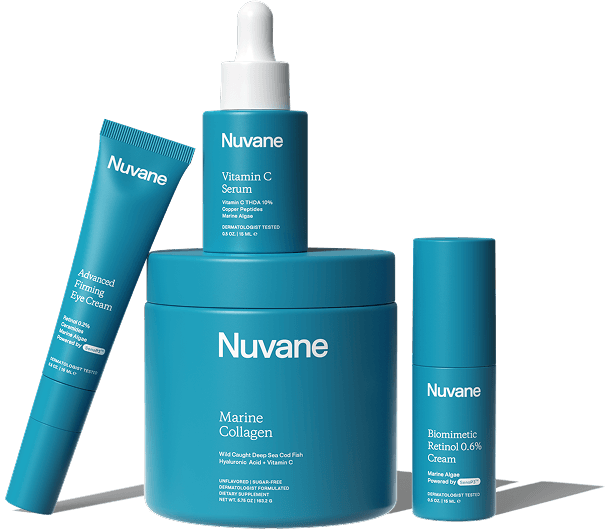
Nuvane fit: the Biomimetic Bakuchiol Cream or Biomimetic Retinol Cream 0.3% with SenoP3™, plus the Advanced Vitamin C Serum in the morning for antioxidant and photoprotective support.
40s — the inflection decade
This is where dermal thinning becomes measurable and where the strategic decision matters most. Estrogen decline begins accelerating collagen loss in the perimenopausal window; women lose roughly 30% of dermal collagen in the first five years after menopause, with a slower ongoing decline afterward. In your 40s, the highest-leverage combination is daily peptide therapy as the foundation plus targeted biostimulation if budget allows — PDRN for skin quality and dermal thickness, or a collagen biostimulator for structural support.
Botox in this decade is still doing its correct job on dynamic lines, but on its own it will leave you with a smooth, thinning face — the classic sign that only the motion was addressed.
Nuvane fit: Biomimetic Retinol Cream 0.6% with SenoP3™, Firming Eye Cream, and the Oral Marine Collagen Supplement for systemic substrate support.
50s and menopause — rebuild, then maintain
Now the deficit is structural. Barrier function is compromised, hydration falls, and the matrix has lost both collagen and elastin. A rebuilding phase makes sense here — injectable PDRN or polynucleotides in a series, potentially alongside a biostimulator — but the outcome is only durable if it's defended. This is the demographic where the daily topical layer stops being optional. Injections stop working the month you stop them. A cream you use every morning does not.
Barrier tolerance also drops, which is why peptide-plus-retinoid formulations with niacinamide, ceramides, trehalose, and marine algae are better tolerated than high-strength retinoid monotherapy.
Nuvane fit: Biomimetic Retinol Cream 0.6%, Regenerative Dark Spot Corrector for post-menopausal pigment change, Firming Eye Cream, and Advanced Vitamin C Serum.
60s and beyond — tolerance-first regeneration
Skin fragility, not wrinkle depth, becomes the governing constraint. Aggressive resurfacing and high-strength retinoids frequently backfire. Peptides are the standout category here precisely because their mechanism is signaling rather than controlled irritation — you get matrix stimulation without a barrier penalty.
Nuvane fit: Biomimetic Bakuchiol Cream or the 0.3% retinol strength, with SenoP3™ and the marine collagen supplement.
Men after 40
Male skin is roughly 20–25% thicker with higher baseline collagen density, but it declines linearly rather than dropping off a cliff, and it carries more cumulative photodamage from lower lifetime sunscreen use. Men tend to want a low-step routine, which is an argument for multi-active peptide creams over multi-product regimens, and for peptides over injectable series they won't reliably return for.
Deeper skin tones (Fitzpatrick IV–VI)
The dominant aging signs are pigmentary and textural, not volume loss, and any treatment carrying inflammatory risk carries post-inflammatory hyperpigmentation risk. This makes non-inflammatory mechanisms disproportionately valuable. Topical peptides are essentially PIH-neutral. PDRN is interesting here for its documented melanogenesis-inhibiting and anti-inflammatory effects [2]. Aggressive lasers and deep peels demand real caution.
Nuvane fit: Regenerative Dark Spot Corrector (alpha arbutin + retinol + SenoP3™ + niacinamide) with the Advanced Vitamin C Serum.
GLP-1 users
Rapid weight loss produces the "Ozempic face" pattern: volume loss outpacing skin retraction, in patients often simultaneously under-nourished in protein. Filler addresses the silhouette. Neither filler nor Botox addresses the underlying loss of dermal density, and neither does anything about reduced protein intake. Peptide signaling plus collagen substrate is the mechanistically appropriate response.
How does Nuvane's SenoP3™ complex fit into this picture?
Nuvane's position is straightforward: the injectable categories are legitimate, and the daily layer is what makes their results last.
SenoP3™ is Nuvane's triple-peptide complex, built from three peptides chosen because each addresses a different failure mode of aging skin — and because each is small enough to be delivered from a cream without a proprietary encapsulation story:
- Palmitoyl Tripeptide-38 — stimulates synthesis of collagen I, III, IV, fibronectin, hyaluronic acid, and laminin-5, with a lipid tail engineered for penetration.
- Copper Tripeptide-1 (GHK-Cu) — restores a signaling molecule that falls by roughly 60% between ages 20 and 60, supporting collagen and elastin synthesis, MMP/TIMP rebalancing, and antioxidant defense.
- Acetyl Hexapeptide-8 — softens expression-line formation by interfering with SNARE complex assembly.
In a 12-week, IRB-supervised clinical evaluation of the SenoP3™ AI-personalized regimen (38 per-protocol subjects; results presented at EADV 2026), expert grading on a modified Griffiths scale found improvement in fine lines in 86.8% of subjects, with 92.1% reporting improved smoothness and 94.7% overall satisfaction; hydration was measured by corneometry and barrier function by TEWL [10].
Where each Nuvane product sits:
- Biomimetic Retinol Cream (0.3% / 0.6%) — stabilized retinol plus SenoP3™, niacinamide, trehalose, marine algae, and hyaluronic acid. The core matrix-building step.
- Biomimetic Bakuchiol Cream — retinol-free, with bakuchiol, peptides, a vitamin C derivative, Centella asiatica, and marine algae, for sensitive, reactive, or fragile skin.
- Advanced Vitamin C Serum — THD ascorbate (stable, lipid-soluble) with copper peptides, ceramides, and marine extracts.
- Regenerative Dark Spot Corrector — alpha arbutin, retinol, SenoP3™, niacinamide, and marine algae for pigment.
- Firming Eye Cream — 0.2% retinol with SenoP3™, caffeine, and ceramides for periorbital laxity and puffiness.
- Oral Marine Collagen Supplement — hydrolyzed marine collagen with hyaluronic acid and vitamin C, providing the peptide substrate that topicals signal for.
The framing worth holding onto: if you are investing in PDRN or biostimulator series, the daily peptide layer is what protects that investment between sessions. If you are not investing in injectables at all, it's the mechanism most likely to move the same biology, slower, at a fraction of the cost.
Key takeaways
- Match the tool to the tissue. Botox for dynamic movement. PDRN for dermal quality and thickness. Peptides for daily matrix maintenance and defense. Choosing between them as if they compete is a category error.
- Route determines efficacy for PDRN. Injected PDRN has real evidence; topical PDRN faces a 500-Dalton penetration wall that most brands don't address or disclose.
- Peptides are the only daily-use member of the trio — and the only one whose benefit doesn't stop the month you stop paying.
- Your decade sets the priority. Prevention in your 30s, peptides plus targeted biostimulation in your 40s, rebuild-and-defend in your 50s, tolerance-first in your 60s.
- Skin tone changes the risk calculus. For Fitzpatrick IV–VI, non-inflammatory mechanisms are worth more than aggressive ones because PIH risk is the constraint.
- Nothing here replaces sun protection. UV exposure remains the largest single modifiable driver of extrinsic aging, and no injectable or peptide outruns it.
Frequently asked questions
Is PDRN really made from salmon sperm?
Yes — PDRN is DNA purified from salmon or trout gonadal tissue, which is why the ingredient picked up the nickname. Salmon DNA is used because it has high sequence homology with human DNA and is a well-characterized, controlled byproduct of the food industry. The final product is a sterilized, purified nucleotide mixture, not raw tissue.
Can I do PDRN and Botox at the same time?
They're commonly sequenced together because they act on different targets. Most practitioners will separate the appointments by a week or two to keep any post-injection swelling from confounding toxin placement, and to avoid attributing a reaction to the wrong treatment. Ask your injector about their preferred spacing.
Is a PDRN serum worth buying?
Be skeptical unless the brand publishes its molecular weight, its encapsulation or delivery technology, and in-vivo evidence of dermal delivery. Without that, you are most likely paying a premium for the hyaluronic acid, niacinamide, and peptides also in the bottle [3].
Can peptides replace Botox?
No — and any brand claiming otherwise is overselling. Acetyl Hexapeptide-8 shares a conceptual mechanism with botulinum toxin and has shown roughly 30% reduction in periorbital wrinkle depth in a foundational study [6], but the effect size and reliability are not comparable. Peptides do something Botox cannot, though: they build matrix. That's the honest trade.
How long until I see results from each?
Botox: 3–7 days to onset, two weeks to peak. PDRN: cumulative over a series of three to four sessions, with skin-quality changes typically apparent between weeks 8 and 16. Topical peptides: hydration and smoothness within 2–4 weeks, line and firmness change over 8–12 weeks, and continued improvement with continued use.
Which is better value over five years?
Injectables are recurring costs with no residual once discontinued — Botox especially, since its effect is entirely pharmacological. PDRN and biostimulators leave behind tissue you built, which retains value. A daily peptide routine is the lowest cost per day of the three and the only one that works on the days you don't have an appointment.
Is PDRN safe for sensitive or reactive skin?
The published safety profile is favorable, with side effects generally limited to injection-site redness and swelling for one to three days. It is contraindicated in pregnancy, lactation, active infection, autoimmune disease, and under age 18 [2]. Anyone with a fish or seafood allergy should raise it before treatment.
Do copper peptides and vitamin C cancel each other out?
This concern is repeated widely and overstated for modern formulations. The classic warning applies to L-ascorbic acid at low pH mixed directly with copper peptides. Nuvane's Advanced Vitamin C Serum uses THD ascorbate, a stable, lipid-soluble, pH-neutral derivative formulated to sit alongside copper peptides rather than compete with them. If you're using separate products from different brands, applying vitamin C in the morning and peptides at night removes the question entirely.
I'm in my 30s. Should I start any of this yet?
Start with the daily layer — peptides, a retinoid or bakuchiol, and sunscreen. That's the intervention with the best long-term return in this decade. Injectable regenerative treatments are best deployed against a measurable deficit, and in your 30s you generally don't have one yet.
References
- Nigam PK, Nigam A. "Botulinum Toxin." Indian Journal of Dermatology, 2010;55(1):8–14.
- Arora G. "Polynucleotides and polydeoxyribonucleotides in dermatology – A narrative review." Journal of Cutaneous and Aesthetic Surgery, 2026;19(1):17–28.
- Dermatology Times Editorial Board. "Social Media Mythbusters: PDRN Serums." Dermatology Times, 2025.
- Pickart L, Margolina A. "Regenerative and Protective Actions of the GHK-Cu Peptide in the Light of the New Gene Data." International Journal of Molecular Sciences, 2018;19(7):1987.
- Sederma / Croda. "Matrixyl® Synthe'6 (Palmitoyl Tripeptide-38): technical and clinical dossier." 2013.
- Blanes-Mira C, et al. "A synthetic hexapeptide (Argireline) with antiwrinkle activity." International Journal of Cosmetic Science, 2002;24(5):303–310.
- Zhang H, et al. "Intradermal Botulinum Toxin A on Skin Quality and Facial Rejuvenation: A Systematic Review and Meta-analysis." Aesthetic Plastic Surgery, 2024. PMID: 39185380.
- Baldwin M, et al. "Botulinum toxin in the masseter muscle: Lingering effects of denervation." The Anatomical Record, 2022;305(5):1215–1226.
- Abergel RP, et al. "Effects of Topical Copper Tripeptide Complex on CO₂ Laser-Resurfaced Skin." Archives of Facial Plastic Surgery, 2006;8(4):252–259.
- Nuvane / SGS. "12-week clinical evaluation of the SenoP3™ AI-personalized regimen (Protocol C25-D123)." Presented at EADV Congress, 2026.
- Lampridou S, et al. "The Effectiveness of Polynucleotides in Esthetic Medicine: A Systematic Review." Journal of Cosmetic Dermatology, 2025.
- Pickart L, Vasquez-Soltero JM, Margolina A. "GHK Peptide as a Natural Modulator of Multiple Cellular Pathways in Skin Regeneration." BioMed Research International, 2015;2015:648108.
Related search terms
PDRN vs Botox, salmon sperm facial results, polynucleotide injections for skin, is PDRN serum worth it, PDRN molecular weight penetration, copper peptides vs Botox, GHK-Cu topical benefits, best peptide cream for women over 50, Acetyl Hexapeptide-8 versus botulinum toxin, regenerative aesthetics explained, do polynucleotides build collagen, Rejuran before and after evidence, peptide therapy for aging skin, skincare after Botox to maintain results, best anti-aging treatment for dark skin tones, SenoP3 peptide complex
Find the most effective anti-aging products for you by taking the free skin assessment.
Recommended Read
Best copper peptides (GHK-Cu) for aging skin and hair?
Can topical argireline really mimic botox?
Best biomimetic peptides vs. traditional anti-aging
Best exosome products in 2026: hype vs. real results
Find the most effective anti-aging products for you by taking the free skin assessment.
Enjoyed this article? Add Nuvane as a preferred source on Google.